





UTS - Growing talent with care
We are dedicated to help students feel safe, cared for and respected as they embark upon their educational journey with UTS.

UTS - Growing talent with care
We are dedicated to help students feel safe, cared for and respected as they embark upon their educational journey with UTS.
UTS - Growing talent with care
We are dedicated to help students feel safe, cared for and respected as they embark upon their educational journey with UTS.
UTS - Growing talent with care
We are dedicated to help students feel safe, cared for and respected as they embark upon their educational journey with UTS.
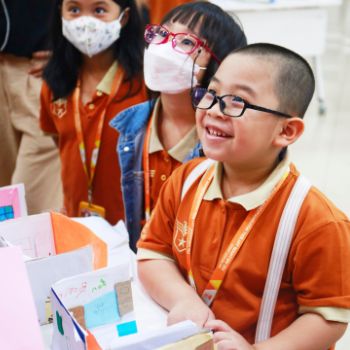
UTS Students are always prepared to thrive in a future full of changes
UTS puts effort into creating a learning environment that meets international standards, facilitating students to become global citizens.
UTS Students are always prepared to thrive in a future full of changes
UTS puts effort into creating a learning environment that meets international standards, facilitating students to become global citizens.
UTS Students are always prepared to thrive in a future full of changes
UTS puts effort into creating a learning environment that meets international standards, facilitating students to become global citizens.
UTS Students are always prepared to thrive in a future full of changes
UTS puts effort into creating a learning environment that meets international standards, facilitating students to become global citizens.
UTS Students are always prepared to thrive in a future full of changes
UTS puts effort into creating a learning environment that meets international standards, facilitating students to become global citizens.
UTS Students are always prepared to thrive in a future full of changes
UTS puts effort into creating a learning environment that meets international standards, facilitating students to become global citizens.
- High quality Learning and Teaching
-
Study pathways

-
Learning programs
-
Summer Program
-
Competency assessment

UTS students learn life-long lessons
Our programs are designed by the Academic council and the partnership with trustworthy educational institutions worldwide.


- Each child is a talent
- Student project
- Student achievements
- Student clubs
- Student support
- The UTS House System
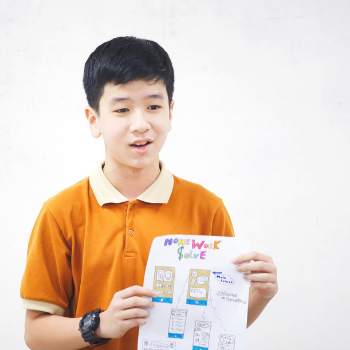
Every child possess unique talent
We believe talent is present in every child, which a dedicated educator can always realise.
Every child possess unique talent
We believe talent is present in every child, which a dedicated educator can always realise.
Every child possess unique talent
We believe talent is present in every child, which a dedicated educator can always realise.
Every child possess unique talent
We believe talent is present in every child, which a dedicated educator can always realise.
Every child possess unique talent
We believe talent is present in every child, which a dedicated educator can always realise.
Every child possess unique talent
We believe talent is present in every child, which a dedicated educator can always realise.
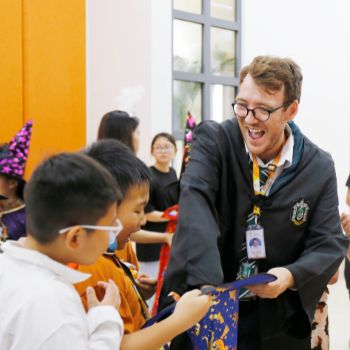
Every child needs at least one adult who believes in them and support them to succeed
UTS is a supportive community where educators and parents are caring, trusted friends and guides for every student.
Every child needs at least one adult who believes in them and support them to succeed
UTS is a supportive community where educators and parents are caring, trusted friends and guides for every student.
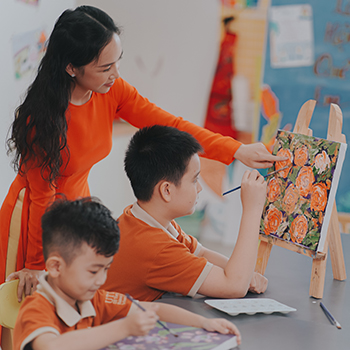
We care about every aspect of a child’s development
We provide an educational environment where all areas of a child’s growth are genuinely supported.
We care about every aspect of a child’s development
We provide an educational environment where all areas of a child’s growth are genuinely supported.
We care about every aspect of a child’s development
We provide an educational environment where all areas of a child’s growth are genuinely supported.
Learning days at UTS are filled with excitement.
Learning at UTS is always engaging and full of excitement. Through diversity teaching and learning activities, student develop lasting motivation and a genuine love for learning.
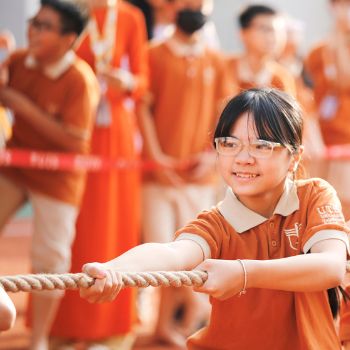
Learning days at UTS are filled with excitement.
Learning at UTS is always engaging and full of excitement. Through diversity teaching and learning activities, student develop lasting motivation and a genuine love for learning.



Understanding International Bilingual Schools: What Are the Key Differences?
TIN TỨC

18/12/2025

In the context where parents are increasingly concerned about their children’s holistic development, international bilingual schools have emerged as a prominent choice thanks to their high-quality educational programs, modern learning environments, and advanced teaching methodologies. Amid the rapid growth of this educational model, the following article offers a comprehensive perspective to help parents make informed decisions when choosing the most suitable school for their children.
Definition of an International Bilingual School
An International Bilingual School is an educational model that integrates the Vietnamese national curriculum with an international curriculum, in which students study in both Vietnamese and another language across multiple subjects. The primary goal of this model is to establish a strong academic foundation, foster independent thinking, and develop global citizenship skills, equipping students to confidently integrate into the international community in the future.
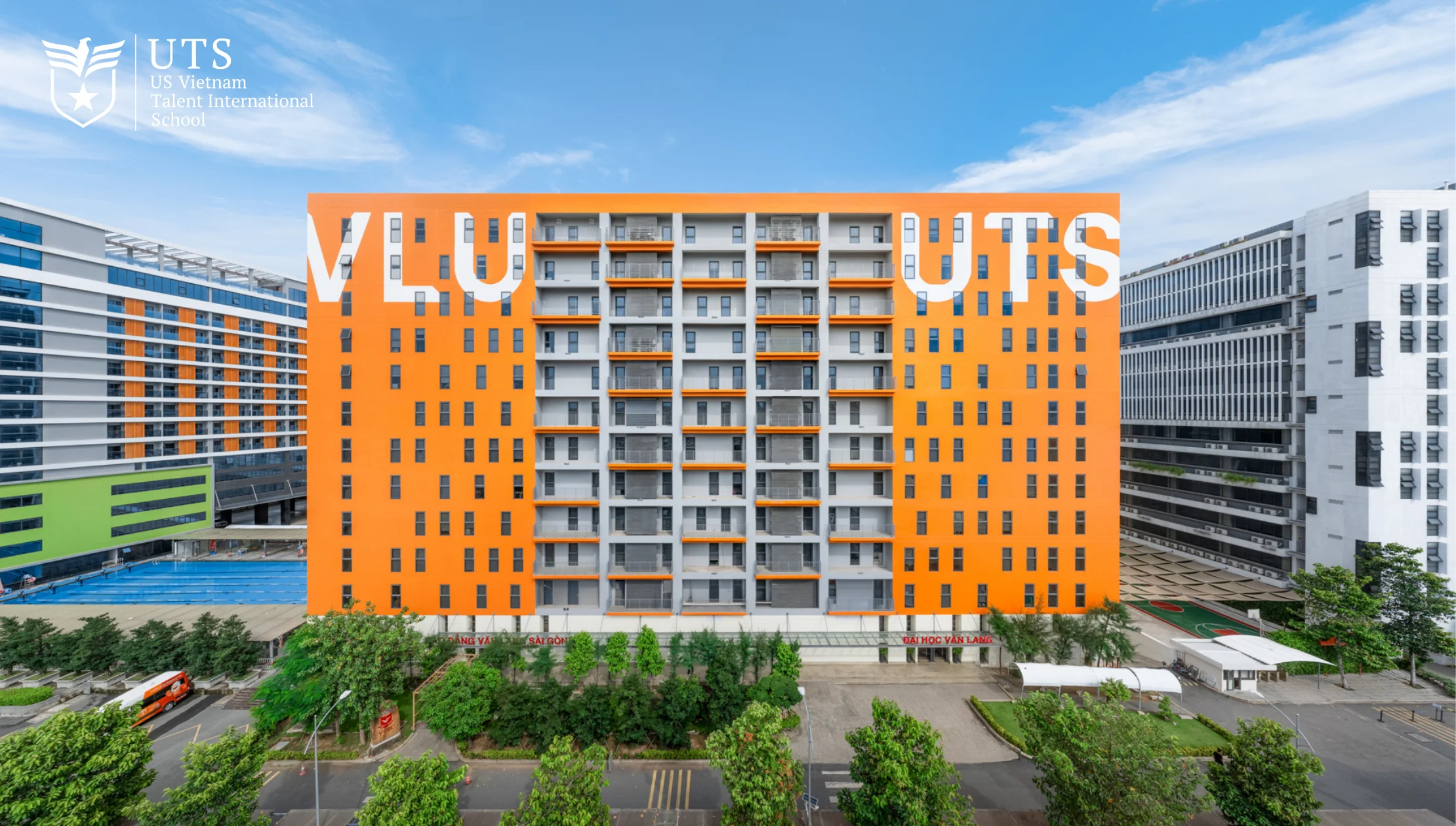
International Bilingual Schools as a Growing Educational Trend in Ho Chi Minh City
Key Features of International Bilingual School Curricula
The curriculum at international bilingual schools is distinguished by four core characteristics.
Firstly, the curriculum is developed based on educational standards from leading countries such as the United Kingdom, the United States, and Australia, with a strong emphasis on creative thinking, critical thinking, communication skills, and responsibility toward global issues.

The international bilingual education model aims for the holistic development of students
Secondly, through subjects taught in a second language and daily engagement in a multicultural and multilingual environment, students rapidly develop multilingual proficiency and gain confidence in communicating across diverse international contexts.

Learning in a bilingual environment helps students develop flexible and effective foreign language skills
Thirdly, by applying modern international teaching approaches such as differentiated instruction, project-based learning, and inquiry-based learning, students cultivate a proactive learning mindset, along with strong research and problem-solving skills.
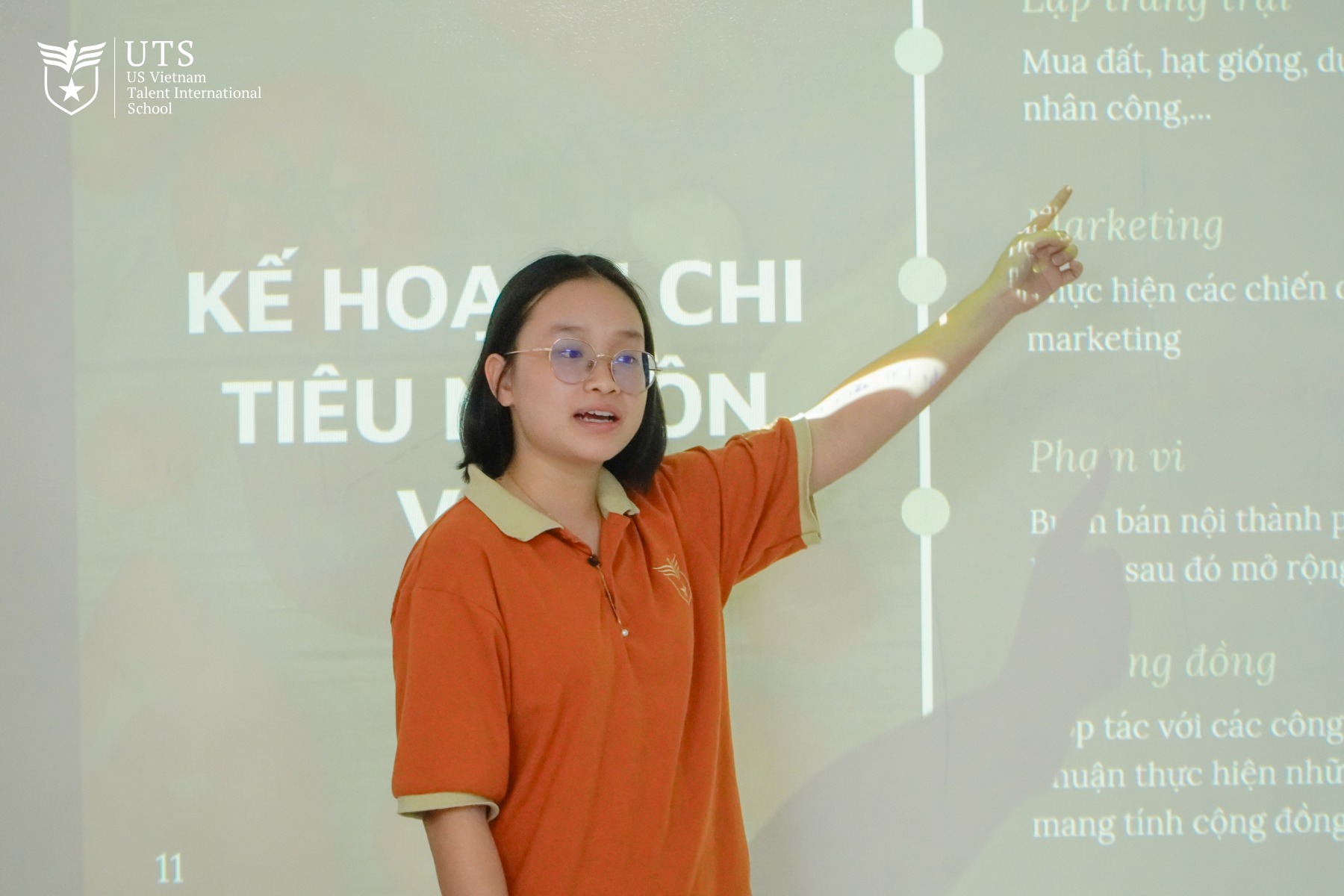
Students engage with subjects through innovative, student-centered, and real-world–oriented learning methods
Ultimately, international bilingual education emphasizes the comprehensive development of students, encompassing academic competence, physical well-being, talents, character formation, and social skills. This approach supports well-rounded growth and equips students with the essential skill set needed for successful global integration.
Learn more: Teaching methodologies at Vietnam International Schools
Benefits of Enrolling Children in International Bilingual Schools
Experiencing an International Learning Environment
Students study in a multicultural environment with teachers from various countries, gaining exposure to innovative teaching styles and experiential learning. This enables them to communicate confidently, broaden their perspectives, and develop a global citizen mindset from an early age.

Experiencing the subject “Sustainability” in a multicultural learning environment.
Learn more: Sustainability - A new subject that UTS pioneers in teaching in the Oxford International Curriculum
Outstanding Development of Bilingual Competence
By using Vietnamese and a foreign language simultaneously and continuously through academic subjects and daily communication, students naturally and progressively strengthen their bilingual abilities. Daily exposure to both Vietnamese and English across subjects and authentic interactions allows students to develop strong bilingual competence, build confidence in communication, critical thinking, and public speaking, and adapt easily to international learning environments.

Students develop critical thinking skills at international bilingual schools
Modern Facilities Meeting International Standards

The modern dining area at an international bilingual school
Modern facilities serve as a powerful foundation that transforms each school day into an inspiring journey of discovery. At international bilingual schools, students learn within a fully integrated educational ecosystem, including technology-enabled classrooms, science laboratories, STEM spaces, open libraries, and international-standard sports facilities.

Advanced computer systems in ICT rooms provide optimal conditions for students to acquire knowledge and digital skills
Each area is designed to maximize the learning experience, enabling students to experiment, innovate, and develop physically in a safe and inspiring environment.
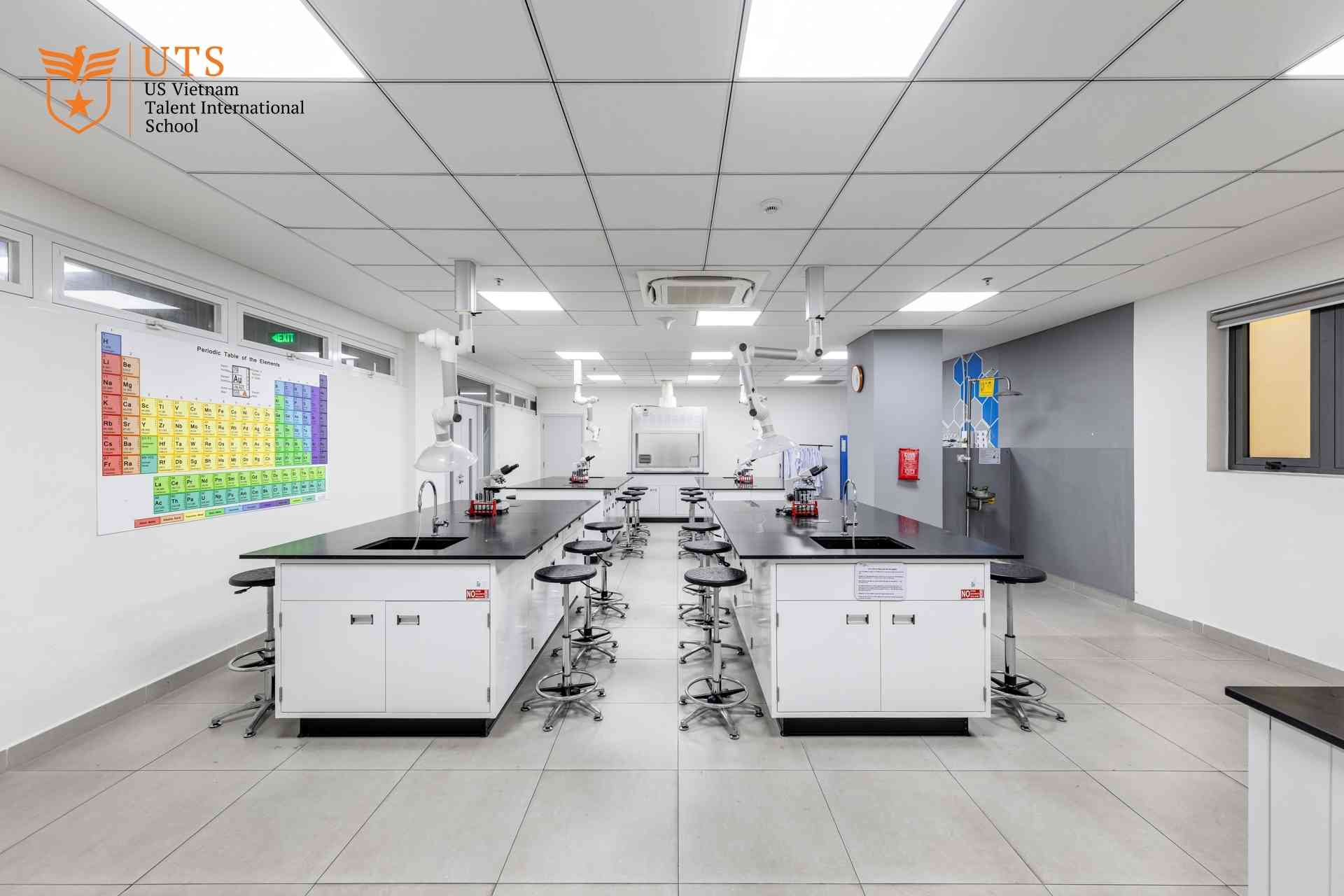
Modernly equipped laboratories at international bilingual schools
Thanks to this comprehensive infrastructure, students not only absorb knowledge more effectively but also develop harmoniously in intellect, skills, and physical well-being, true to the holistic education philosophy that international bilingual schools strive to deliver.
International Academic Pathways and Study-Abroad Orientation
Academic programs at international bilingual schools are structured along a clear and coherent pathway from primary to secondary education. With internationally recognized qualifications such as GCSEs and A-Levels as graduation outcomes, students can seamlessly transition to higher levels of education in countries around the world.
To achieve this, early career orientation combined with studying multiple subjects in English helps students develop a global academic mindset, confidently pursue study-abroad goals, and unlock diverse international educational opportunities in the future.
Distinguishing International Bilingual Schools from Other Educational Models
Comparison with International Schools
When compared with the monolingual international school model, international bilingual schools offer a more flexible option for many families. In terms of curriculum, monolingual international schools deliver a fully international programme with 100% instruction in a foreign language. In contrast, international bilingual schools harmoniously integrate the Vietnamese national curriculum with international subjects, preserving core cultural and academic foundations while simultaneously expanding students’ foreign language proficiency and global thinking.
Regarding learning outcomes, monolingual international schools are well suited to students who plan to study abroad at an early stage and follow a fully international pathway from the outset. Conversely, the international bilingual model allows for greater flexibility: students may continue their education in Vietnam, transition to advanced international programmes such as GCSEs and A Levels, or pursue overseas study when they are ready.
Finally, in terms of tuition fees, monolingual international schools typically require a significantly higher financial investment due to the exclusive use of international curricula and teaching staff. International bilingual schools offer a more accessible level of investment while still ensuring a modern academic environment, clear learning outcomes, and strong international integration opportunities.
Comparison with High-Quality Private Schools
Compared to high-quality private schools, which primarily follow the Ministry of Education and Training curriculum and enhance English instruction without integrating international standards, the bilingual model provides more flexible learning outcomes. Students are able to pursue domestic education while also being well prepared for potential overseas study.
In terms of tuition, international bilingual schools generally have higher fees than high-quality private schools due to their international-standard facilities and foreign teaching staff. However, their tuition remains lower than that of monolingual international schools, which fully implement international curricula and primarily serve students with early study-abroad orientations.
Educational Models Comparison Table: International Bilingual Schools, International Schools, and High-Quality Private Schools
| Criteria | Bilingual International School | International School | High-Quality Public School |
| Curriculum | Integrated Vietnamese Ministry of Education & Training (MOET) curriculum + international programs (Oxford, Common Core, IPC...) | 100% international curriculum | Vietnamese MOET curriculum, with enhanced English in some subjects |
| Language of Instruction | Bilingual (English–Vietnamese), with a high proportion of subjects taught in English | 100% of subjects taught in a foreign language | Mainly taught in Vietnamese, with increased English instruction |
| Teachers | High proportion of foreign teachers + Vietnamese teachers meeting international standards | Mainly foreign teachers | Mainly Vietnamese teachers |
| Learning Environment | Multicultural, international-standard | Fully International | Focused on domestic academic standards |
| Post-graduation Pathways | Suitable for studying abroad or attending Vietnamese universities | 100% oriented toward overseas study | Continue to Vietnamese high school and universities |
| Tuition Fees / year | 100-500 million VND (some schools up to 600 million VND) | 350 million VND - over 1 billion VND | 70–250 million VND (may be lower or higher depending on the school and program) |
UTS International School System - A Reputable International Bilingual Education Environment in Ho Chi Minh City
Introduction to UTS and Its Distinctive Academic Programmes
The UTS International School System is a trusted choice in Ho Chi Minh City for parents seeking an international-standard bilingual education for their children.
UTS offers two academic pathways that allow students to develop according to their individual strengths:
- The Oxford (UK) Pathway is ideal for students with clear academic goals who prefer a structured and rigorous curriculum framework.
- The American Common Core Pathway is well suited to dynamic students who value English proficiency development and global-minded thinking.
Upon completing their 12-year educational journey at UTS, students achieve the following outcomes:
U.S. Common Core Standards-based International Program:
- SAT or AP certification (recommended)
- National Upper Secondary School Graduation Diploma
- English proficiency equivalent to IELTS 7.0
Oxford International Curriculum (UK):
- International GCSEs and A-Levels certificates
- National Upper Secondary School Graduation Diploma
- English proficiency equivalent to IELTS 7.5
Learn more: Curriculum Structure at UTS
Learn more: Explore the Oxford International Pathway at UTS International School
Facilities and Teaching Staff at UTS
UTS features a modern campus system with smart classrooms, specialised functional rooms, Music and Piano rooms for Primary students, science laboratories, STEM and ICT rooms, and dedicated libraries for each educational level. Sports facilities and outdoor experiential learning areas enable students to stay active and explore daily. The campus layout is thoughtfully designed by grade level to ensure a safe, age-appropriate, and supportive learning environment.
Currently, UTS operates three campuses from early childhood to secondary education, located in convenient and highly accessible areas across Ho Chi Minh City.
UTS Van Lang Complex Campus:
- 68/69 Dang Thuy Tram Street, Binh Loi Trung Ward, Ho Chi Minh City
- 80/68 Duong Quang Ham Street, An Nhon Ward, Ho Chi Minh City
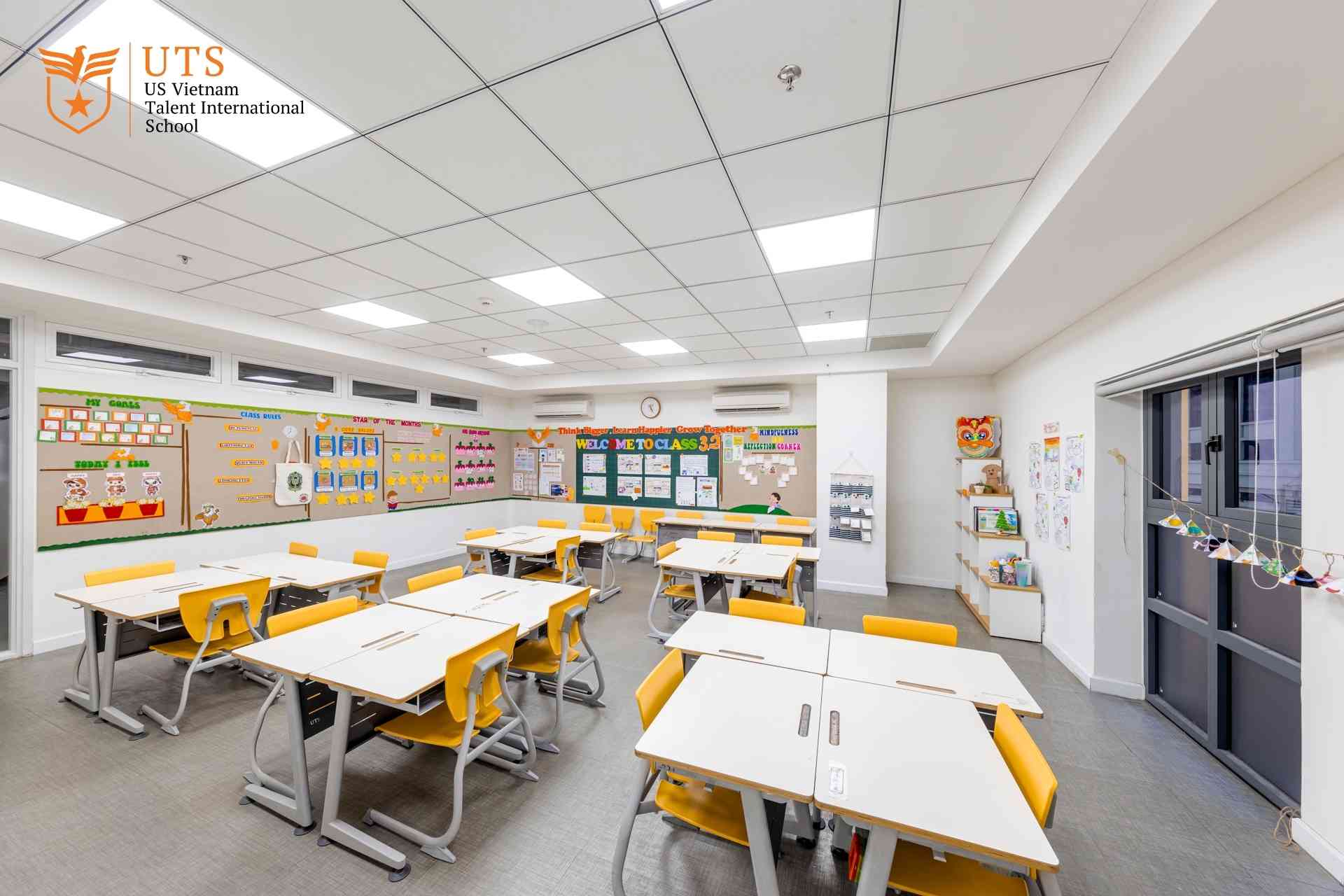

UTS Van Lang campus with an international-standard learning environment
UTS South Saigon Campus: 68 Street No. 22, Binh Hung, Ho Chi Minh City
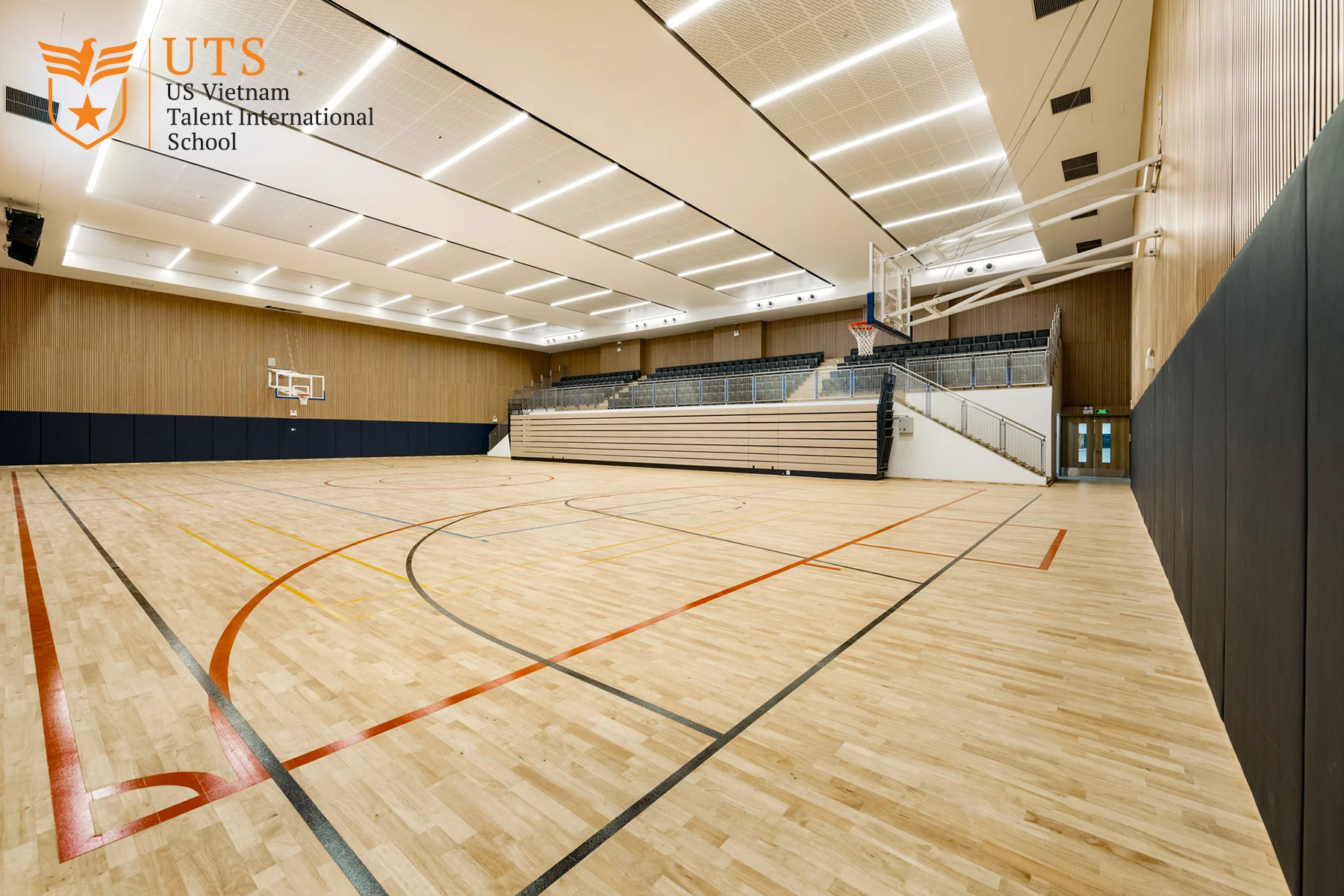

UTS Nam Saigon campus with modern facilities
UTS Botanique Campus: 360D Ben Van Don Street, Vinh Hoi Ward, Ho Chi Minh City


UTS Botanique campus surrounded by lush greenery
Regarding the teaching staff, UTS teachers are highly qualified, experienced, and carefully selected based on their pedagogical competence, understanding of student psychology, and strong dedication to the profession.
Teachers at UTS are not only instructors but also mentors, academic advisors, and sources of inspiration, supporting students in developing character, skills, and clear future pathways.

Teachers and students at UTS South American International School
With the ability to listen, respect individual differences, and support students in overcoming challenges, UTS teachers foster a safe, positive, and nurturing learning environment that helps students build confidence and grow stronger every day.
Learn more: Explore international schools in Ho Chi Minh City - Teaching staff overview
Register for a consultation today to help your child begin their learning journey in an international-standard bilingual environment!
International Bilingual Schools offer a harmonious integration of the Vietnamese national curriculum and international programs, enabling students to develop critical thinking, skills, and language proficiency in a natural and balanced way.
With a multicultural learning environment, modern teaching methods, and a clear academic pathway, the international bilingual model is an ideal choice for parents who wish to prepare their children for a global future.
To learn more, receive consultation, or arrange a campus tour, parents are warmly invited to visit HERE or contact us at 028 710 78887.
CHIA SẺ


Read this next

UTS Family Sport Day 2026 “Eagles Run,...
News
27/02/2026
We warmly invite families to come together and mark an energetic and memorable sporting day at UTS Family Sport Day 2026: Eagles Run, Eagles Go Beyond!

UTS United for Central Vietnam: A Heartfelt...
News
16/12/2025
UTS unites in support of Central Vietnam through a journey of mobilization, donation, relief distribution, and transparent reporting, spreading a spirit of community-driven action.

Understanding International Bilingual Schools: What Are the...
News
18/12/2025
By integrating Vietnamese and international curricula, bilingual international schools provide students with a flexible learning pathway, strong bilingual proficiency, and broad opportunities for overseas study.
Escalator school – A modern educational solution...
News
17/12/2025
A comprehensive guide to understanding all the fundamental and outstanding features of an integrated school, from its concept and advantages to curriculum and facilities. An essential handbook for parents and students.
Explore the Kindergarten campuses of UTS –...
News
15/12/2025
Explore the Kindergarten campuses of US Vietnam Talent International School in Ho Chi Minh City, featuring modern green learning spaces where every school day becomes a journey of discovery and growth.
What Is a Global Citizen and How...
News
06/11/2025
Explore the concept of global citizenship in the era of integration – what it means to be a global citizen, the essential skills to cultivate, and how to become one.
7 Comprehensive Development Goals for Preschoolers That...
News
07/10/2025
Explore the 7 comprehensive development goals for preschoolers that help parents build a strong foundation for their child’s physical, intellectual, and emotional growth.
UTS Opening Ceremony for the 2025 –...
News
03/10/2025
Discover the Opening Ceremony of the 2025–2026 Academic Year at UTS with the theme “Grow – Lead – Impact.” The event marks the beginning of a holistic development journey, where UTS-ers nurture knowledge, build resilience, and spread positive values to the community.
Latest Tuition Fee Update for UTS Kindergarten...
News
19/09/2025
Discover detailed tuition fees at UTS Kindergarten System and explore the British-standard curriculum that supports children’s holistic development.
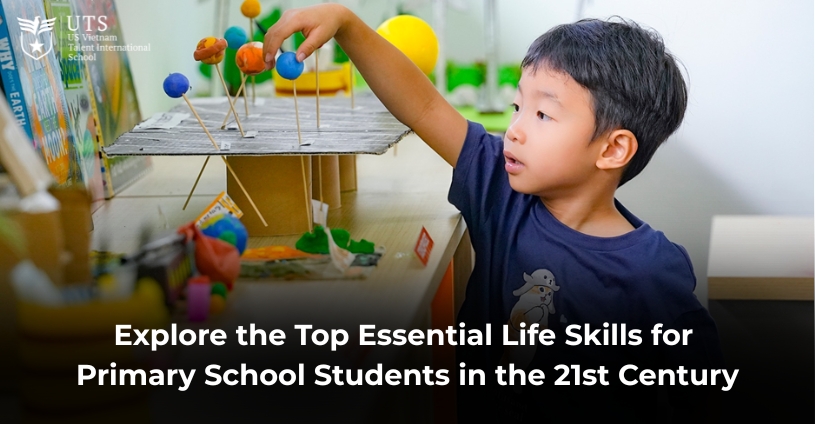
Explore the Top Essential Life Skills for...
News
02/08/2025
Discover important life skills to help primary school children develop comprehensively, confidently integrate and be steady into life.
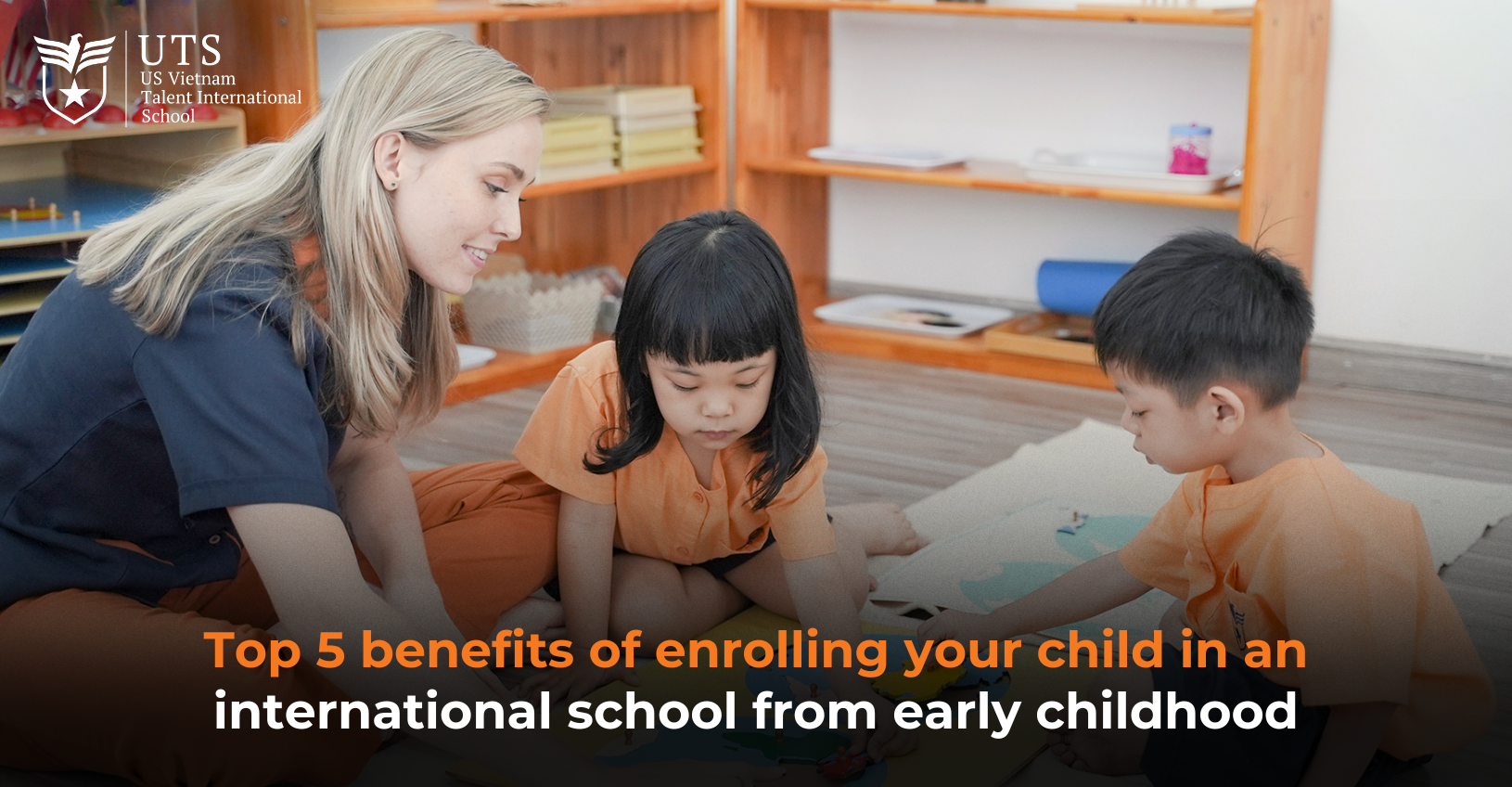
Top 5 benefits of enrolling children in...
News
02/08/2025
Let's explore the benefits of international preschool with UTS to make the right early education choice for your child.

Why students should be exposed to STEM...
News
27/07/2025
Discover the STEM program at UTS, where students develop creative thinking, problem-solving skills, and real-world application of knowledge, empowering them to thrive in the digital age
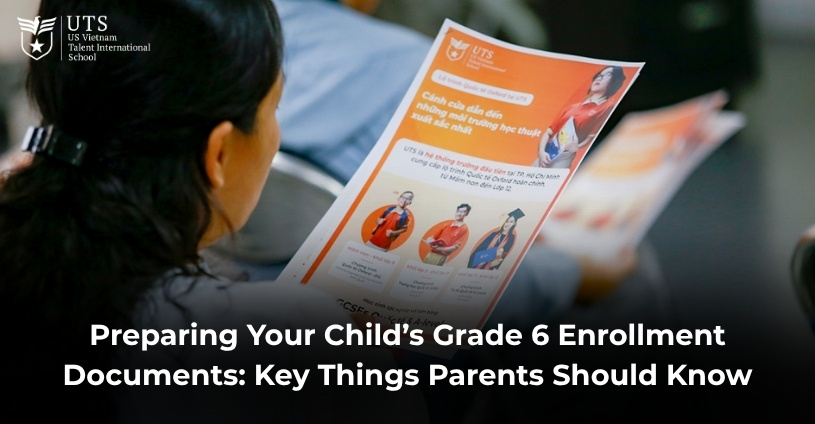
Preparing Your Child’s Grade 6 Enrollment Documents:...
News
24/07/2025
Learn about the 6th grade admission process and academic records. Get full updates on requirements and admission declarations for parents.

Khám phá những môn học đặc biệt...
News
11/07/2025
Discover unique subjects like Well-being, Global Citizenship, and Performing Arts at UTS, where holistic education empowers students both academically and in life skills

Discover International Schools and the Top Benefits...
News
10/07/2025
Find out what an international school is and the outstanding advantages of studying there: environment, programs and future learning opportunities.
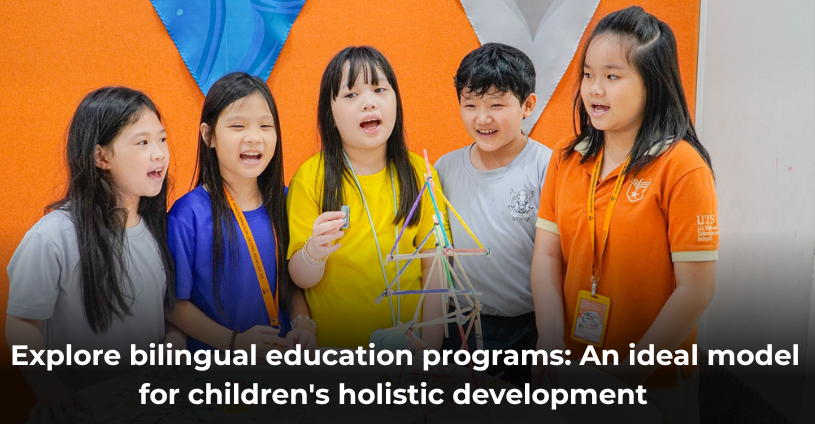
Explore bilingual education programs: An ideal model...
News
03/07/2025
This article provides information to help parents choose a suitable bilingual education solution, along with important considerations.
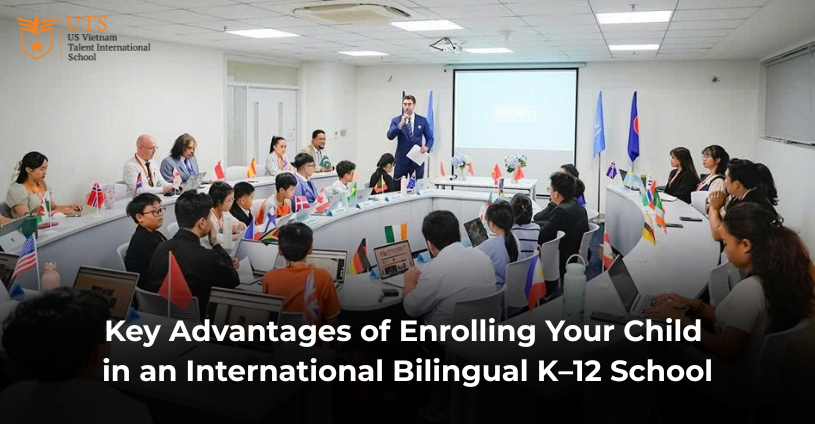
Key Advantages of Enrolling Your Child in...
News
30/06/2025
Discover the key advantages of an international bilingual K–12 school, from academic continuity to global citizenship.
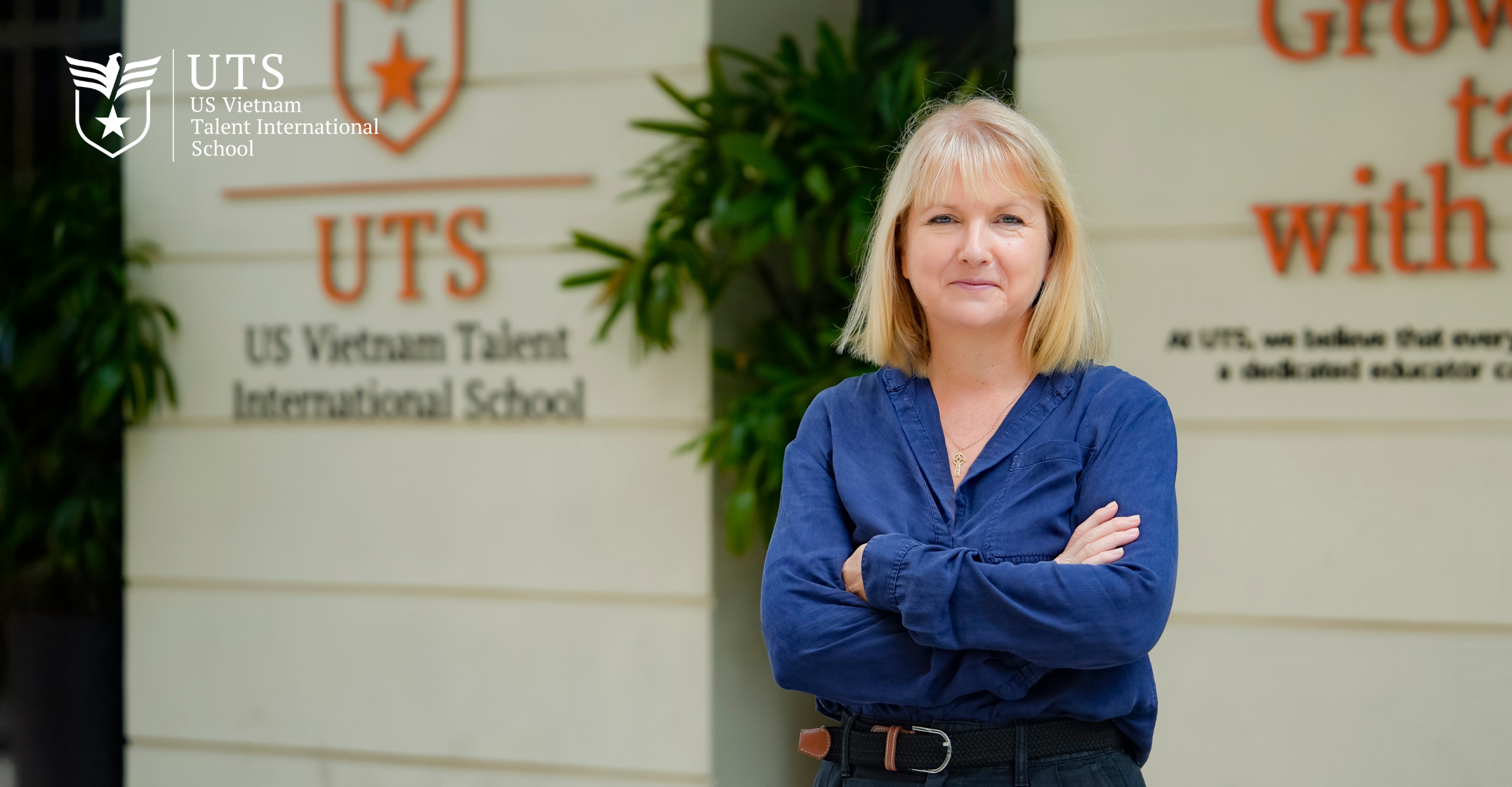
Welcome Ms. Anita Spittle – New Head...
News
20/06/2025
From June 2025, the Southern UTS International School System officially welcomes Ms. Anita Spittle as the new Head of School – a significant milestone in the school’s journey of holistic and sustainable development
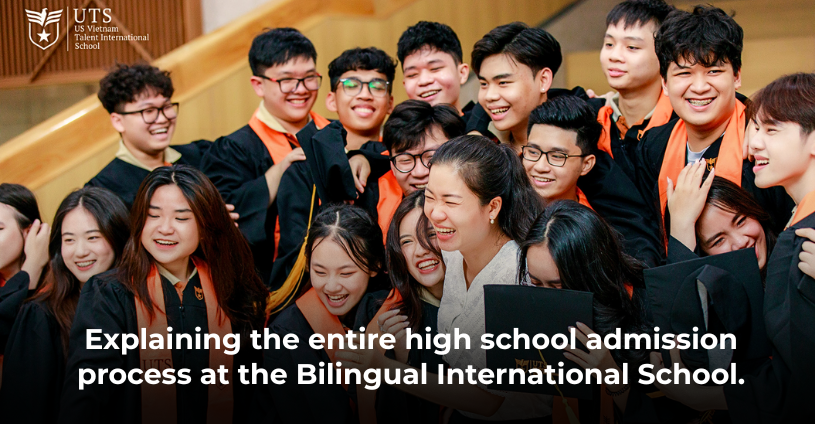
Comprehensive Guide to the High School Admissions...
News
19/06/2025
Learn about the 2025–2026 high school admissions process at bilingual international schools — including key steps, entry requirements, and essential tips for parents.
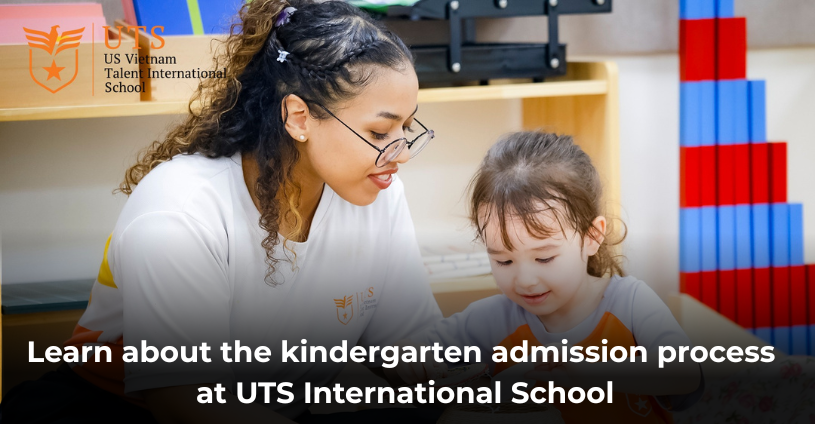
Learn about the kindergarten admission process at...
News
19/06/2025
This article provides information about kindergarten admissions at UTS, including detailed registration instructions for parents.
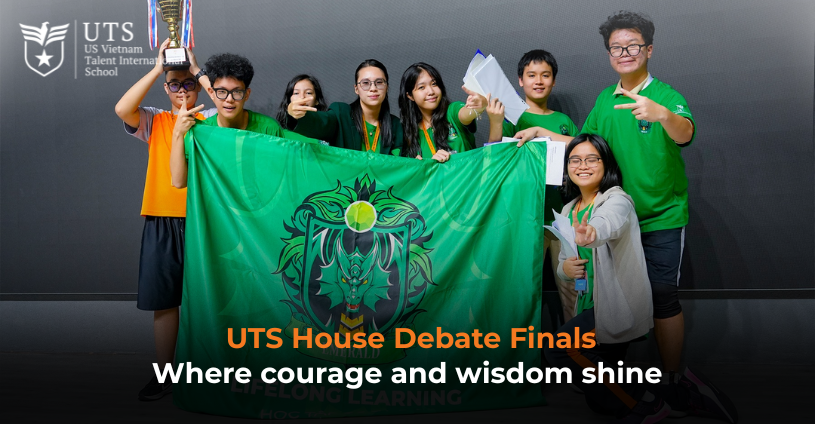
UTS House Debate Finals – Where courage...
News
18/06/2025
Wrapping up the UTS House Debate Finals — a dynamic intellectual playground where UTS-ers showcased not only sharp thinking but also strong teamwork. Let’s look back on this impressive journey of debating global issues and congratulate this year’s champions!
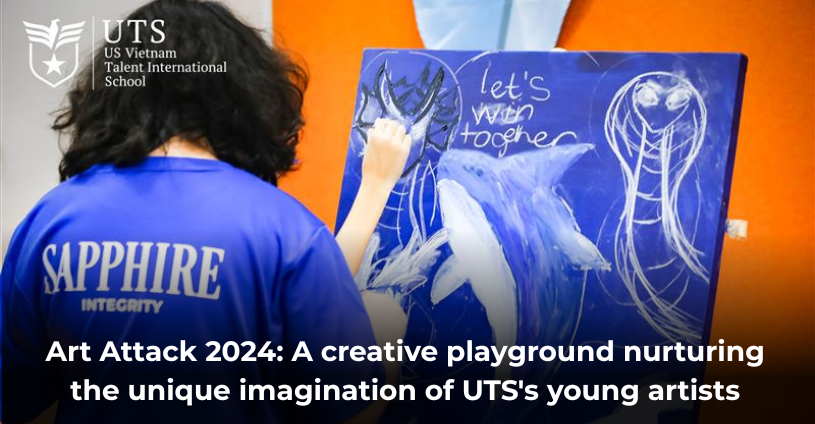
Art Attack 2024: A creative playground nurturing...
News
18/06/2025
Art Attack 2024 - here students freely express their creativity, embody House values, and connect the community through art.
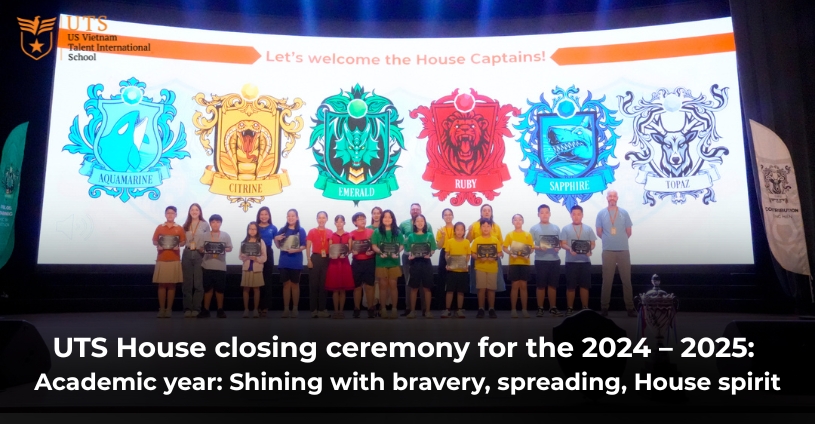
UTS House closing ceremony for the 2024...
News
18/06/2025
Closing the exciting school year, the UTS House system honors outstanding Houses to spread team spirit and passion for learning.
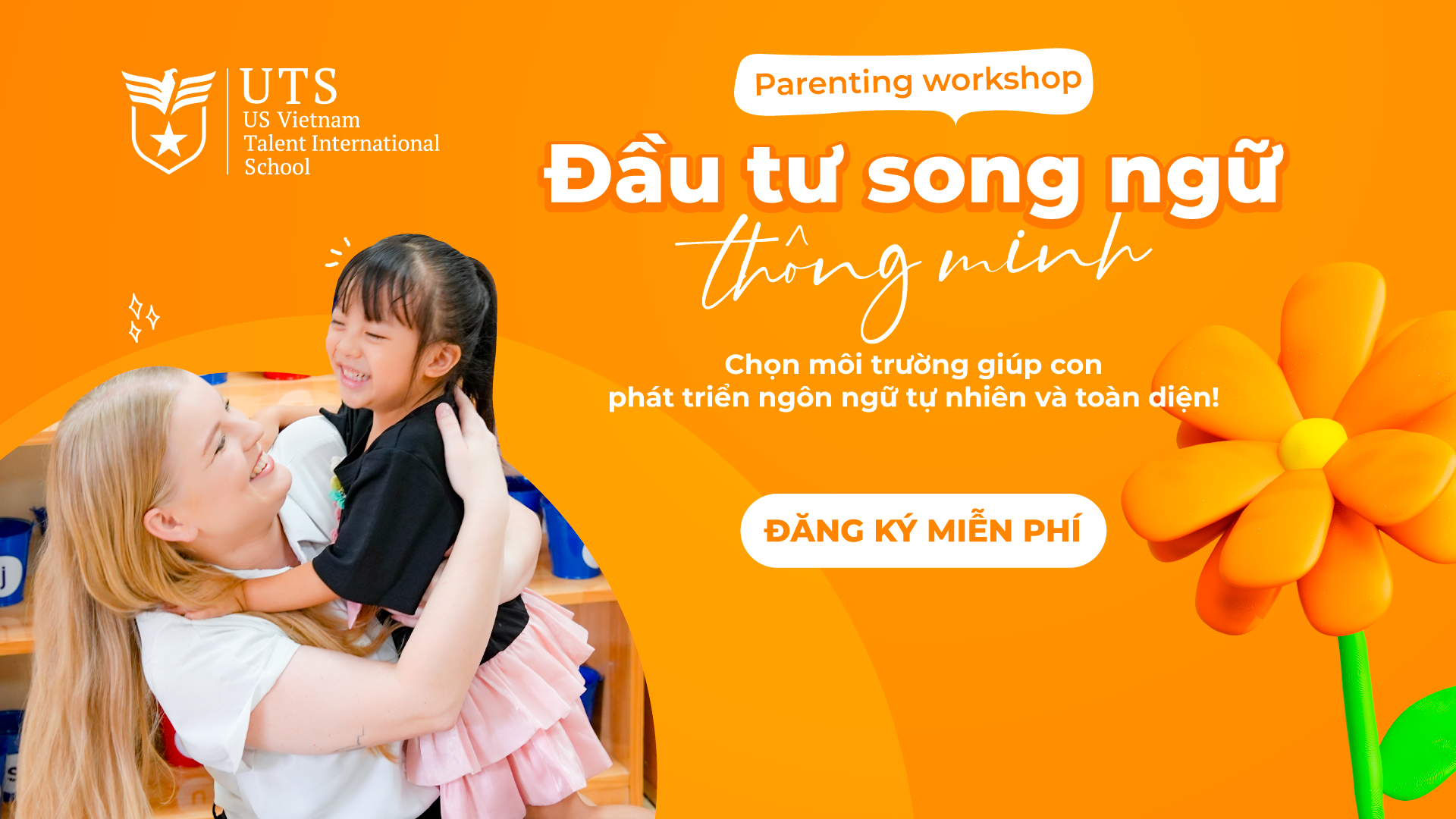
HELP YOUR CHILD MASTER ENGLISH WHILE PRESERVING...
Events
18/06/2025
Tips to help your child be good at English while still maintaining the best foundation in Vietnamese, sharing methods from UTS language experts.
Up-to-Date Details on How to Apply to...
News
16/06/2025
Explore steps for applying to international bilingual primary schools. A guide for parents preparing their child’s educational journey.
Explore the latest admissions process for secondary...
News
16/06/2025
A-to-Z guide to the latest middle school admissions process at international bilingual schools in H, helping parents prepare their applications thoroughly and effectively.
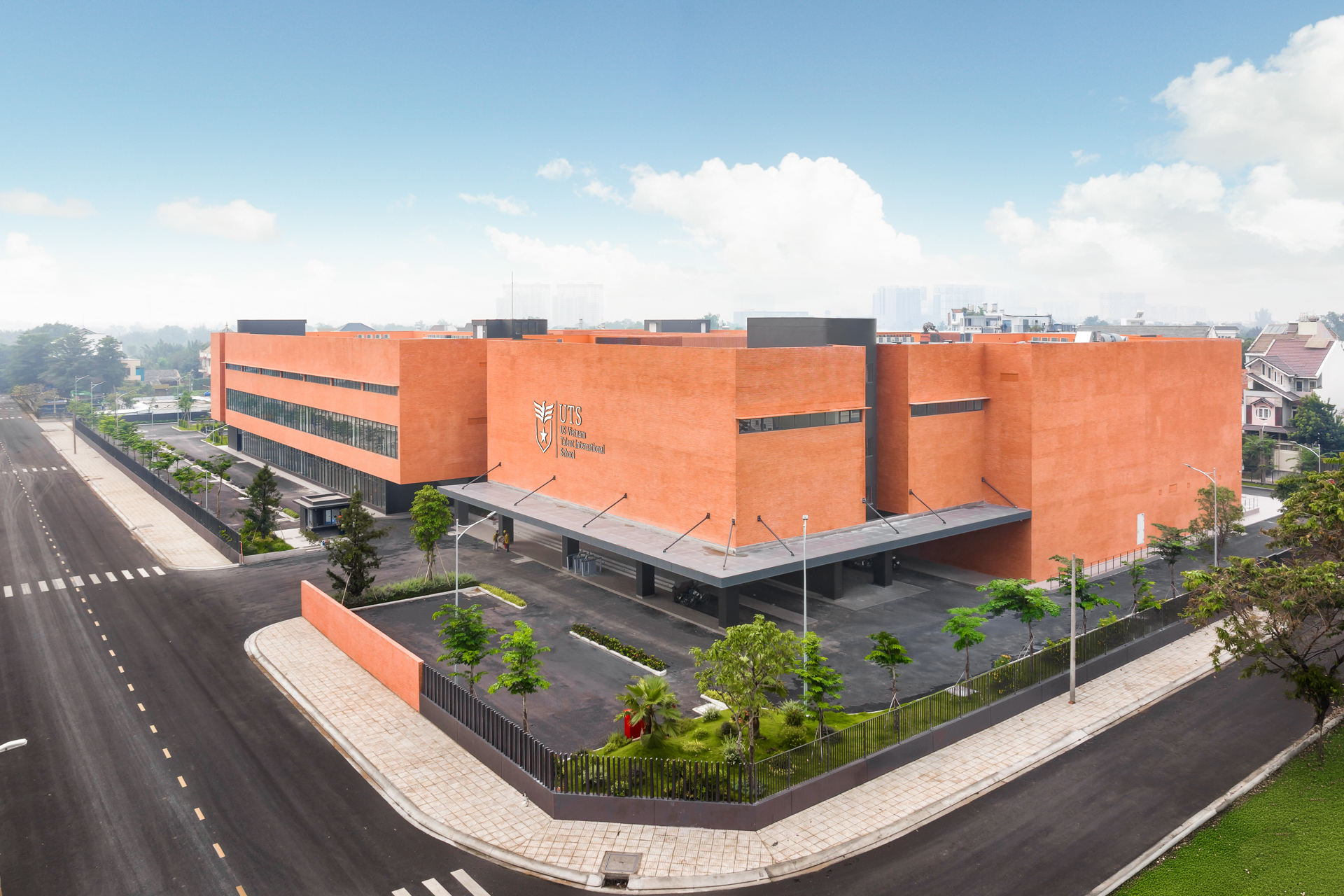
Annual Report for the 2024–2025 academic year
News
16/06/2025
US Vietnam Talent International School (UTS) would like to share the Annual Report for the 2024–2025 academic year, prepared in accordance with Circular No. 09/2024/TT-BGDĐT issued by the Ministry of Education and Training regarding information disclosure in educational institutions.
Exploring Bilingual Primary Schools And The Key...
News
14/06/2025
Discover the bilingual primary school model and its outstanding values to help parents choose the right educational direction for their child
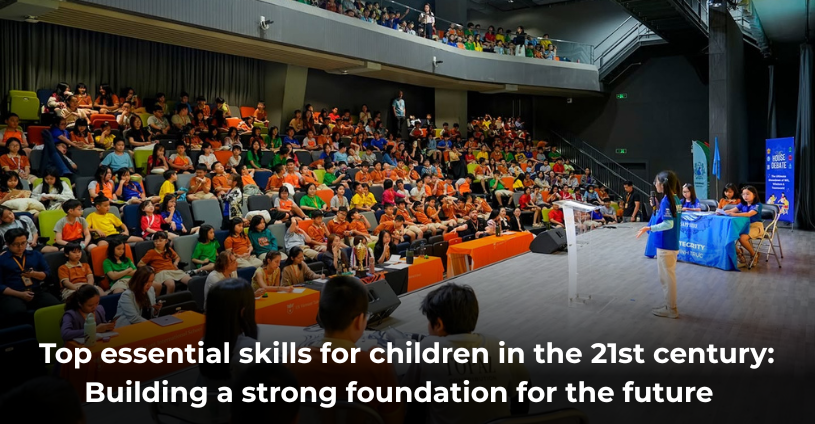
Top Essential Skills for Children in the...
News
02/06/2025
Bài viết tổng hợp và phân tích các nhóm kỹ năng thiết yếu và làm rõ vai trò của phụ huynh trong việc đồng hành và hỗ trợ con phát triển toàn diện.
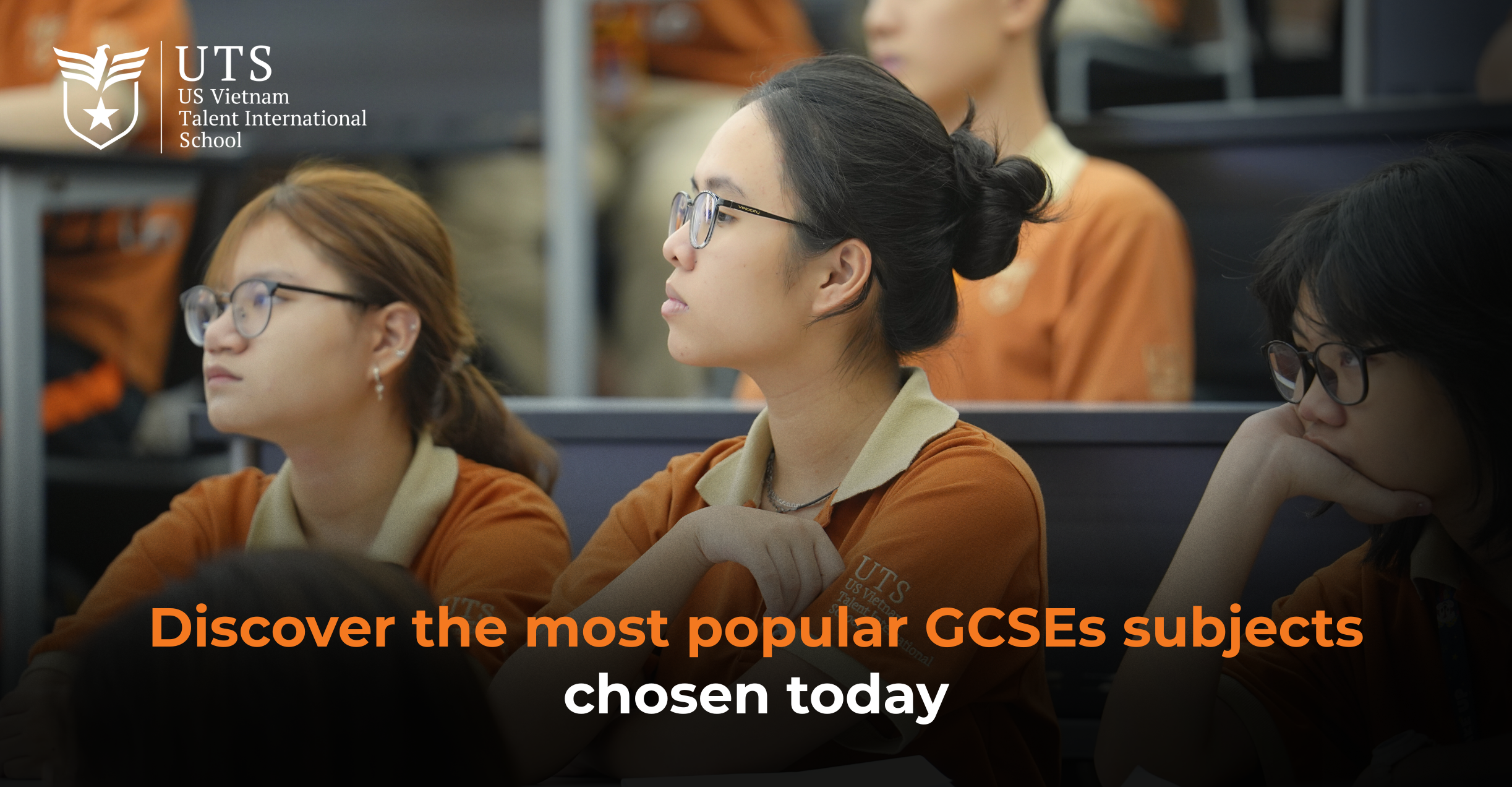
Discover the most popular GCSEs Subjects chosen...
News
28/05/2025
Explore the GCSE program and learn how to choose the right subjects to align with your academic goals, leverage your strengths, and expand your study abroad opportunities.

Comprehensive Tuition Guide at International Bilingual School...
News
21/05/2025
Learn about international bilingual school tuition fees, compare costs, influencing factors and useful advice for parents

Top 5 reasons why parents should enroll...
News
06/05/2025
What makes international schools stand out in your child's educational journey? Discover the top 5 reasons why more and more parents are choosing this model of education.

What Parents Should Know When Choosing a...
News
29/04/2025
Discover what a bilingual kindergarten thanks to its outstanding benefits for young children.
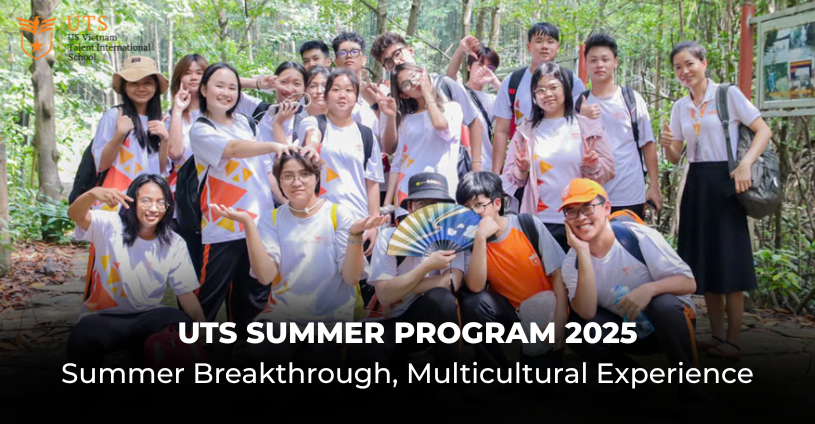
UTS Summer Program 2025 – Summer Breakthrough,...
News
25/04/2025
Discover UTS Summer Program 2025! A summer where children develops comprehensive skills and is ready to become a global citizen!

The ultimate guide to conquering the Advanced...
News
28/04/2025
Gaining an overview of the AP program helps students and parents plan an early strategy for admission to universities in the U.S. and Canada.
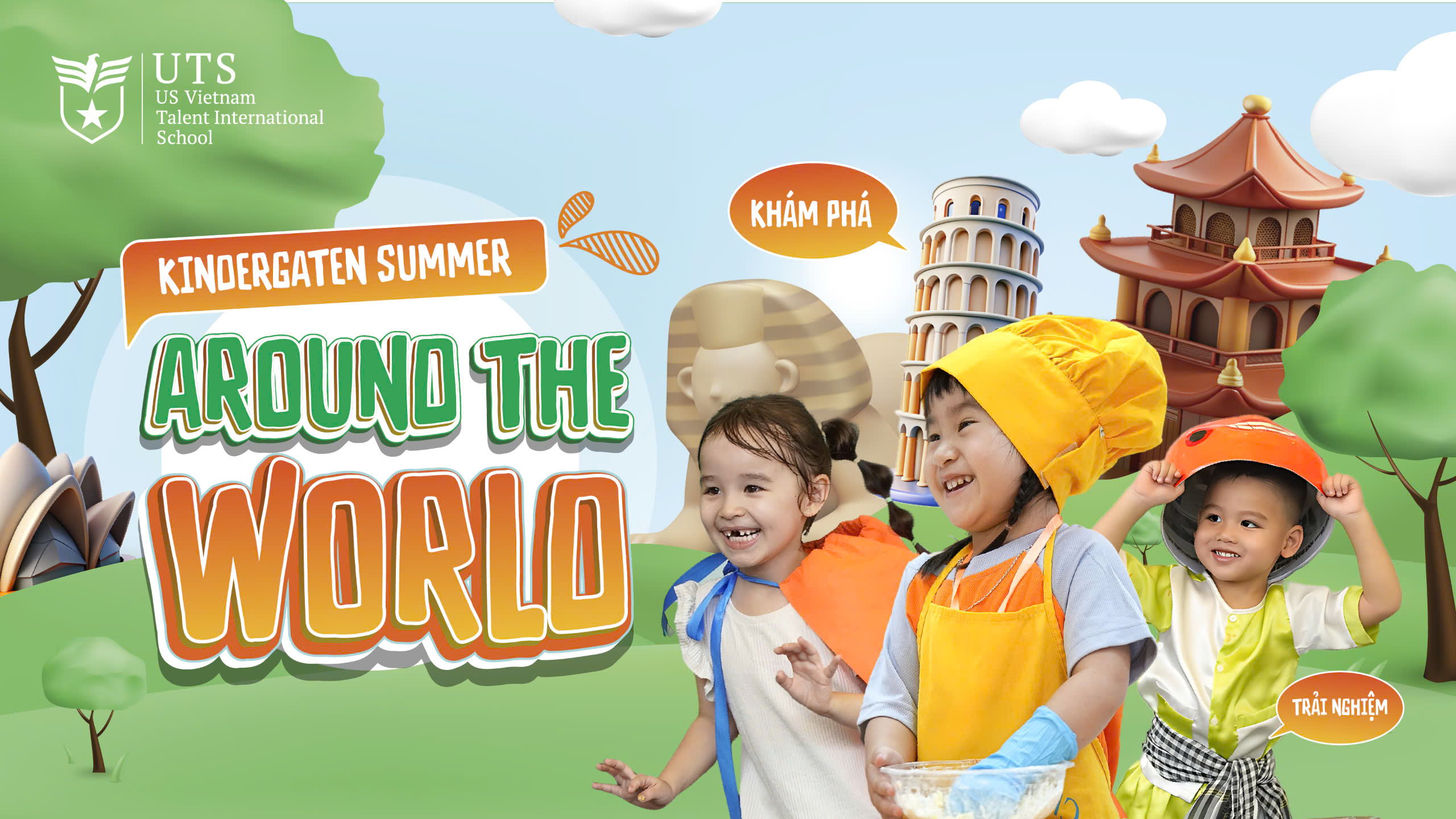
Khám phá chương trình Kindergarten Summer UTS...
News
21/04/2025
Chương trình Kindergarten Summer Around The World 2025 UTS kết hợp giáo dục và vui chơi, giúp trẻ phát triển toàn diện.
Nên cho con học trường mầm non...
News
21/03/2025
Cùng điểm qua chi tiết về ưu điểm, nhược điểm của trường mầm non quốc tế và công lập, giúp phụ huynh lựa chọn chuẩn xác phù hợp nhất cho con
Overview of popular teaching methods in international...
News
10/03/2025
Let's explore with UTS the most common primary education teaching methods today that help enhance teaching quality, which is essential knowledge for parents!
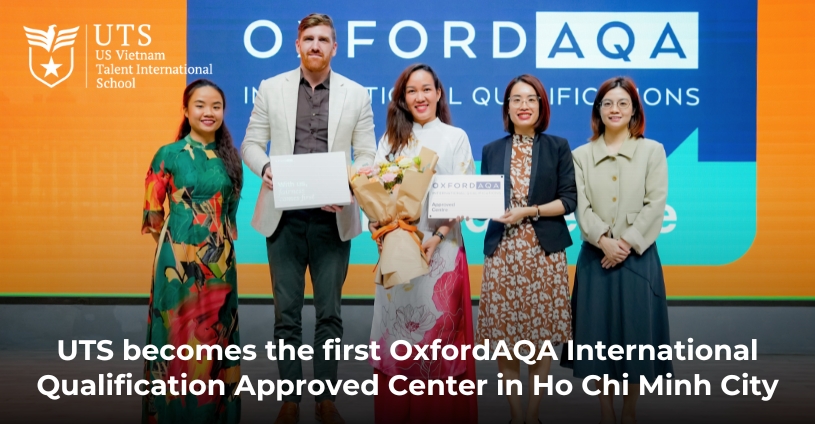
UTS becomes the first OxfordAQA International Qualification...
News
01/03/2025
US Vietnam Talent International School has officially become the first OxfordAQA International Qualification Approved Center in Ho Chi Minh City, authorized to deliver teaching and conduct examinations for GCSEs and A-levels.
UTS Robotacon 2025: Green footsteps leave their...
News
18/02/2025
Vòng chung kết UTS Robotacon 2025 khép lại với những màn thi đấu gay cấn, nơi tài năng trẻ tỏa sáng và đam mê công nghệ thăng hoa.
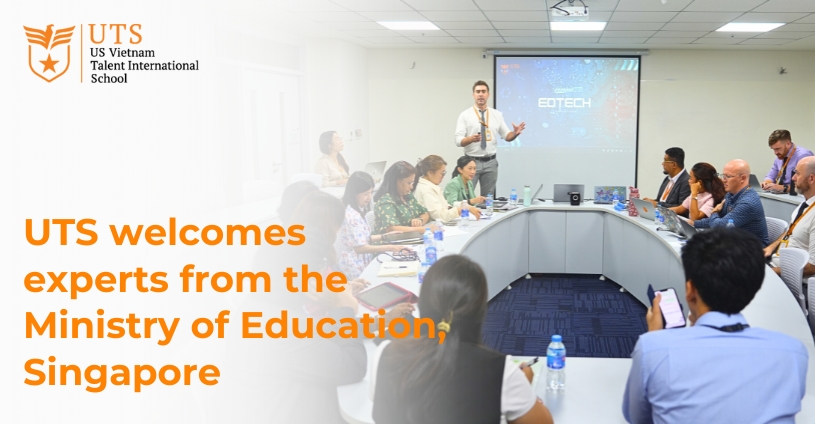
UTS welcomes experts from the Ministry of...
News
22/02/2025
Trường Quốc tế Nam Mỹ UTS chào đón đoàn chuyên gia từ tổ chức Academy of Singapore Teachers thuộc Bộ Giáo dục Singapore để chia sẻ kinh nghiệm giảng dạy.
What is a bilingual school? Discover the...
News
23/02/2025
Bilingual international schools help children develop flexible thinking, become proficient in two languages, and be ready to integrate into an advanced educational environment.
Discover the top-quality and leading international kindergarten...
News
16/01/2025
Let's discover UTS Kindergarten in Ho Chi Minh City with an international curriculum, green campus, and dedicated teachers.
8 “golden” criteria for choosing a kindergarten...
News
22/01/2025
Parents should know: 8 golden factors to ensure a safe, nurturing, and future-ready learning environment for your child.
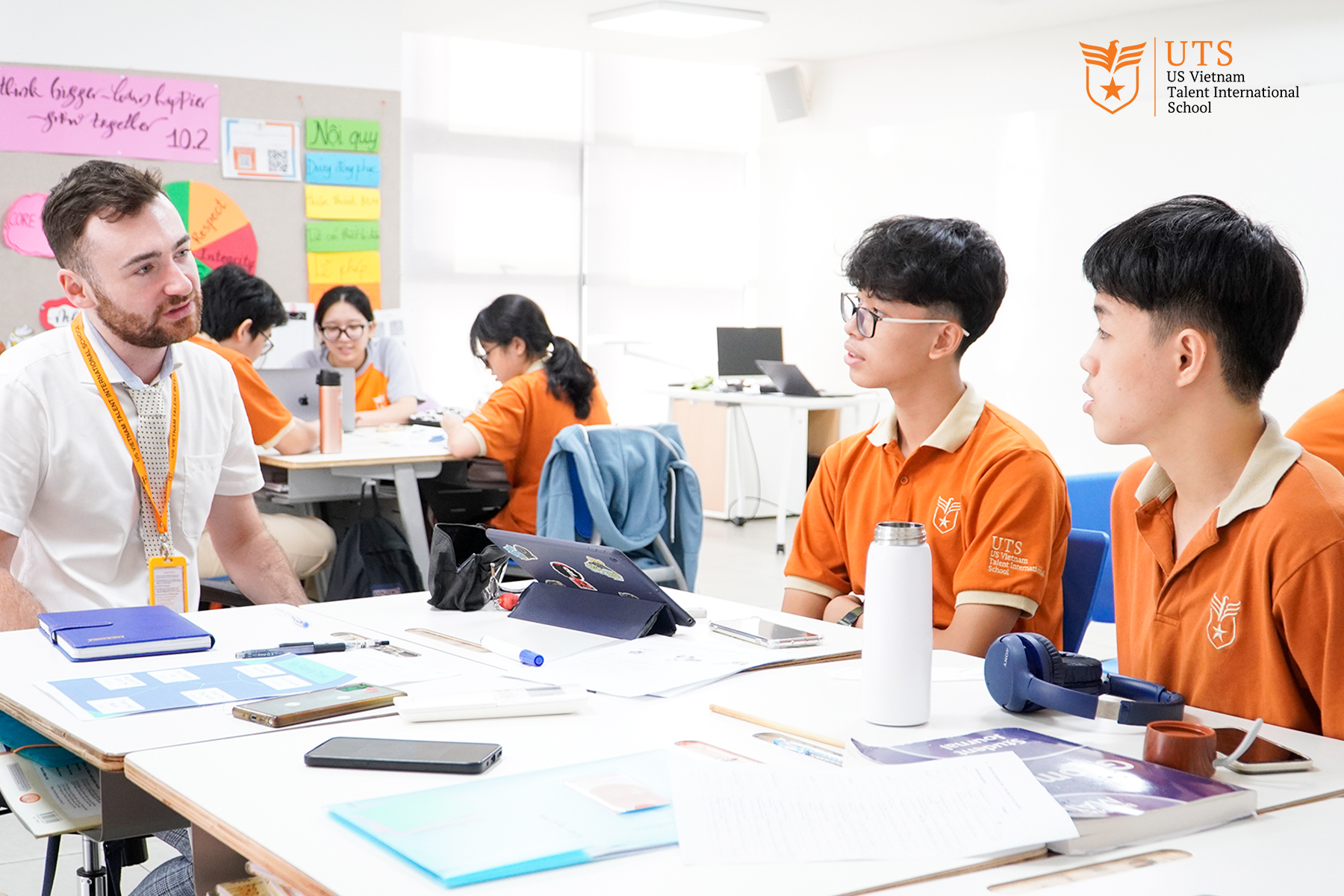
Learn about and distinguish between bilingual integrated...
News
30/12/2024
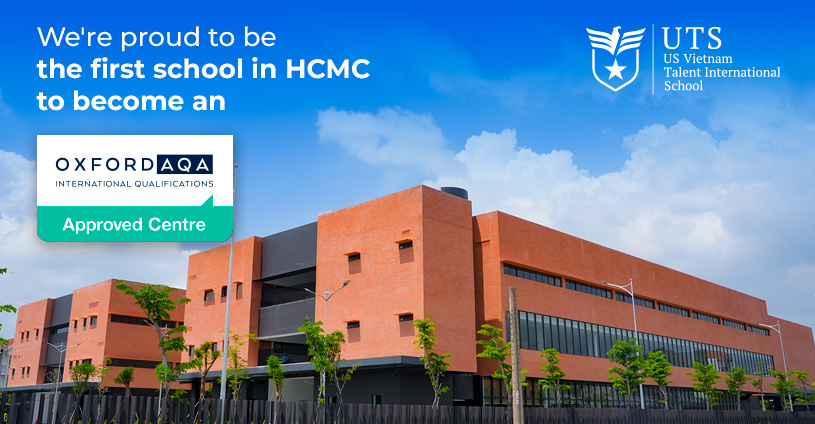
UTS – The first school in HCMC...
News
01/11/2024
UTS is the first school in Ho Chi Minh city provides comprehensive Oxford International Programme learning pathway.
Let Nature Embrace Your Child’s Childhood
Events
23/11/2024
Have you tried a weekend with your child at the green garden of UTS Botanique Campus? FREE to join, receive an admission discount of 35 million VND at the event!
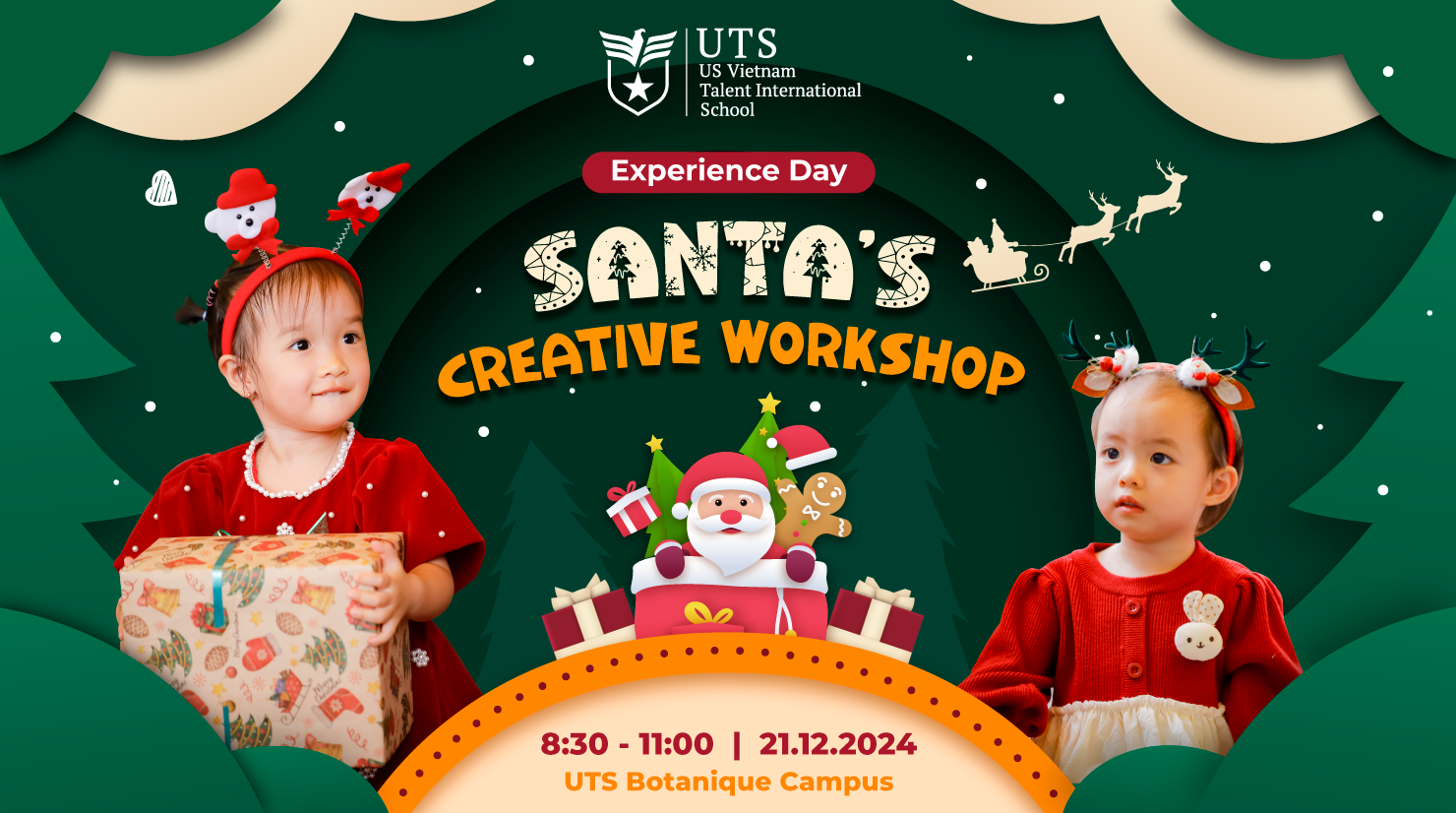
Santa’s Creative Workshop
Events
21/12/2024
Have you tried visiting Santa's "house" at UTS Botanique Campus with your child on a weekend? FREE to join, receive an admission discount of 35 million VND at the event!
UTS – The first school in HCMC...
News
01/11/2024
UTS is the first school in Ho Chi Minh city provides comprehensive Oxford International Programme learning pathway.
UTS – The first school provides the...
News
01/11/2024
UTS is the first school in Ho Chi Minh city provides comprehensive Oxford International Programme learning pathway

UTS co-hosts international symposium with Oxford University...
News
05/09/2024
More than 80 educators gathered to learn about the latest updates in the Oxford International Curriculum for the 2024 - 2025 academic year.

The first day of the 2024 –...
News
15/08/2024
UTS-ers are back to school, ready for the 2024-2025 academic year with the spirit of 'Think Bigger - Learn Happier - Grow Together'!

The lifelong learning journey of UTS educators...
News
20/08/2024
The 2024 PD Week at UTS included various workshops covering multiple aspects of education, emphasizing the value of "Lifelong Learning."
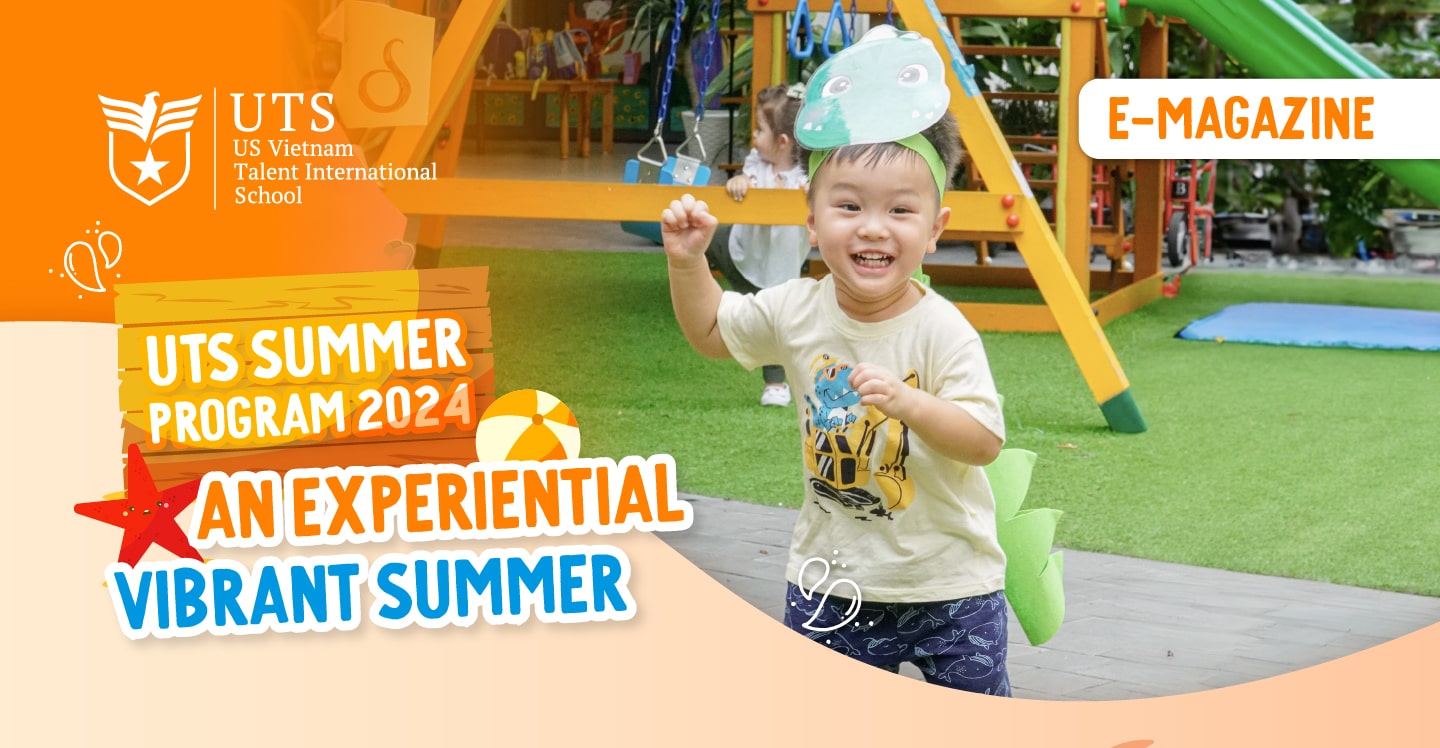
UTS Summer Program 2024 – An experiential...
News
09/08/2024
The UTS Summer Program 2024 has come to an end! Let’s take a look at the new places UTS-ers explored on this journey!
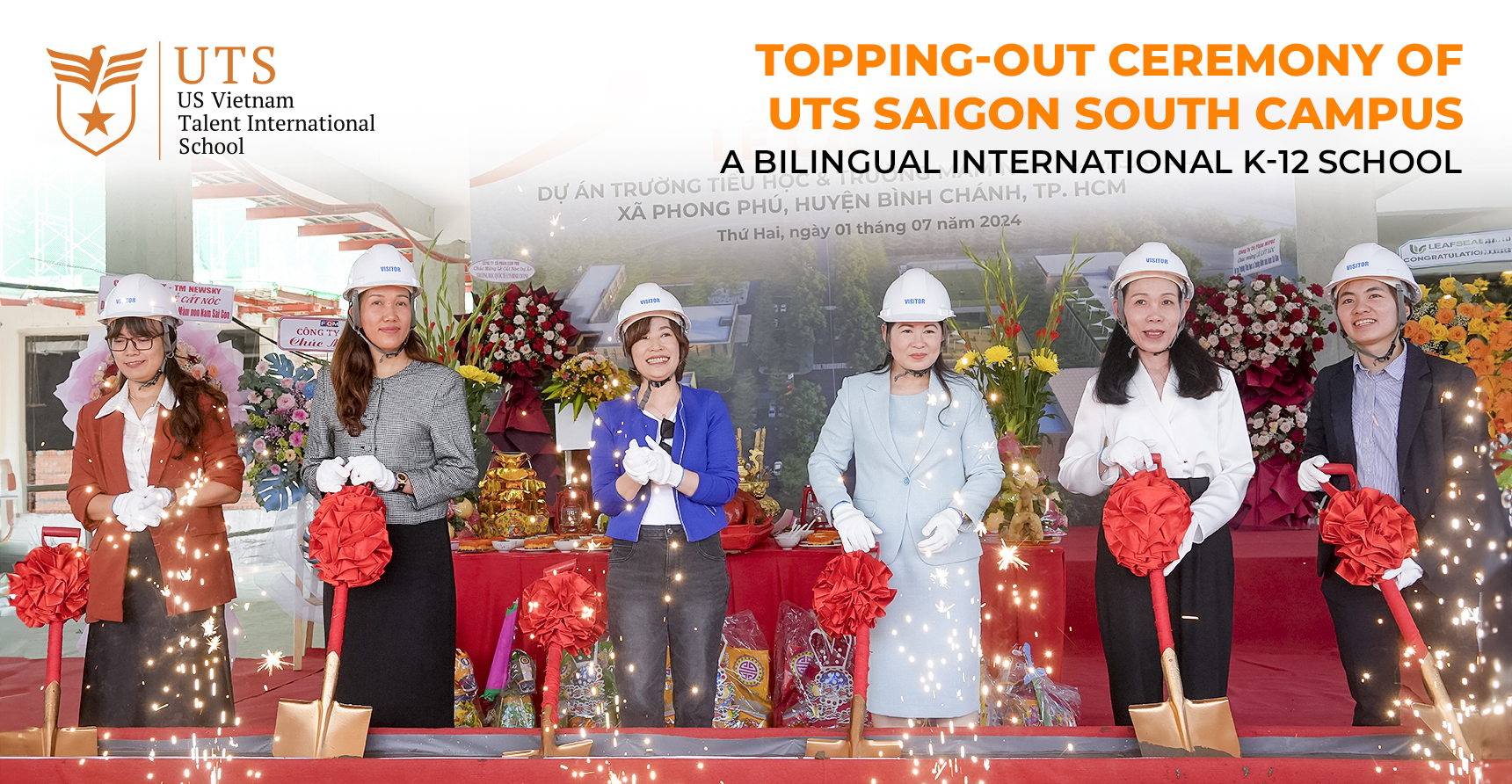
Topping-out ceremony of UTS Saigon South campus...
News
01/07/2024
UTS officially tops off its 3rd campus: UTS South Saigon Campus. Parents can find and learn more information here.
Topping-out ceremony of UTS Saigon South campus...
News
01/07/2024
UTS officially tops off its 3rd campus: UTS South Saigon Campus. Parents can find and learn more information here.
Topping-out ceremony of UTS Saigon South campus...
News
01/07/2024
UTS officially tops off its 3rd campus: UTS South Saigon Campus. Parents can find and learn more information here.
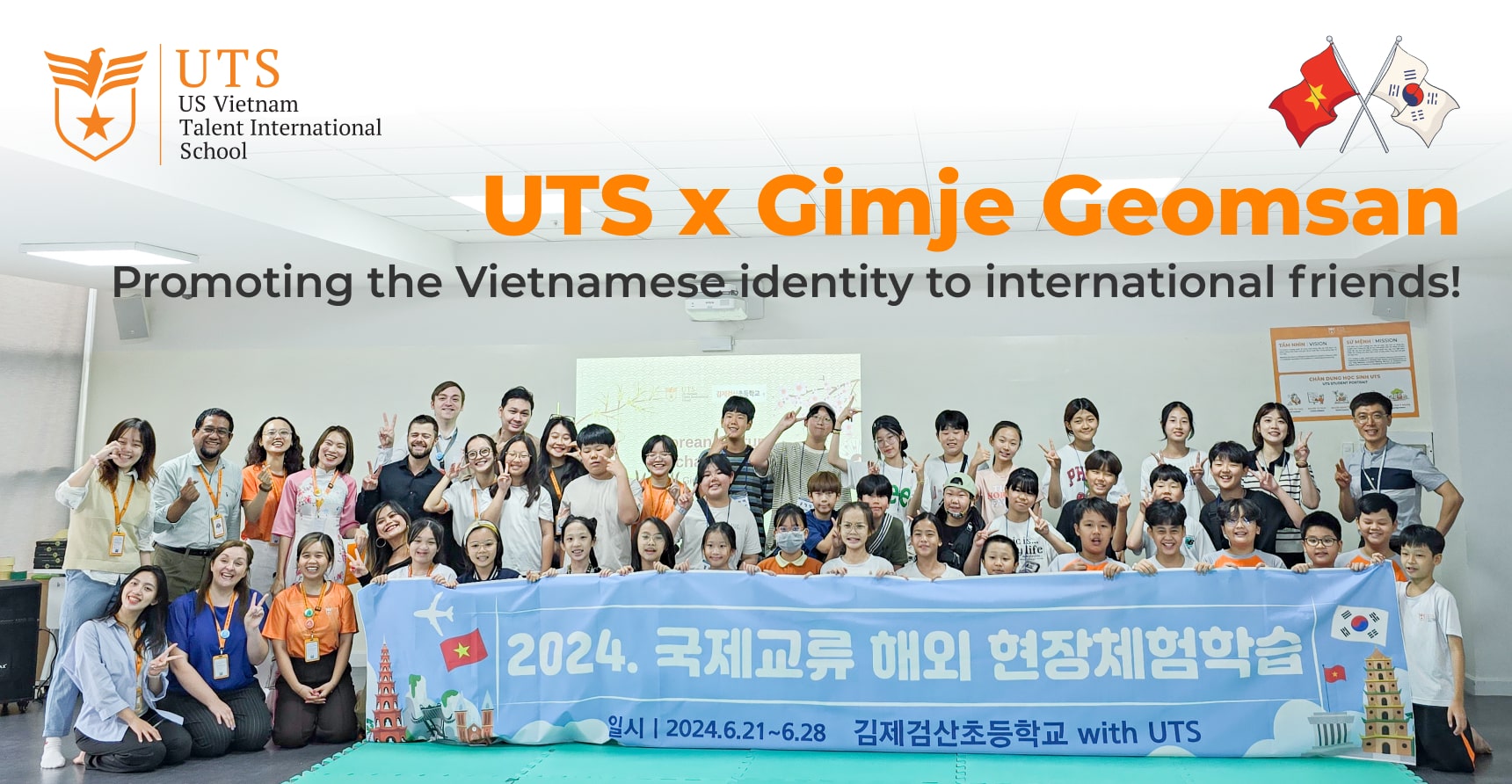
Cultural exchange with international friends, UTS-ers confidently...
News
02/07/2024
The Korean Language Club at UTS has collaborated with Gimje Geomsan Primary School (South Korea) to organize a series of exchange activities for primary students from both schools.
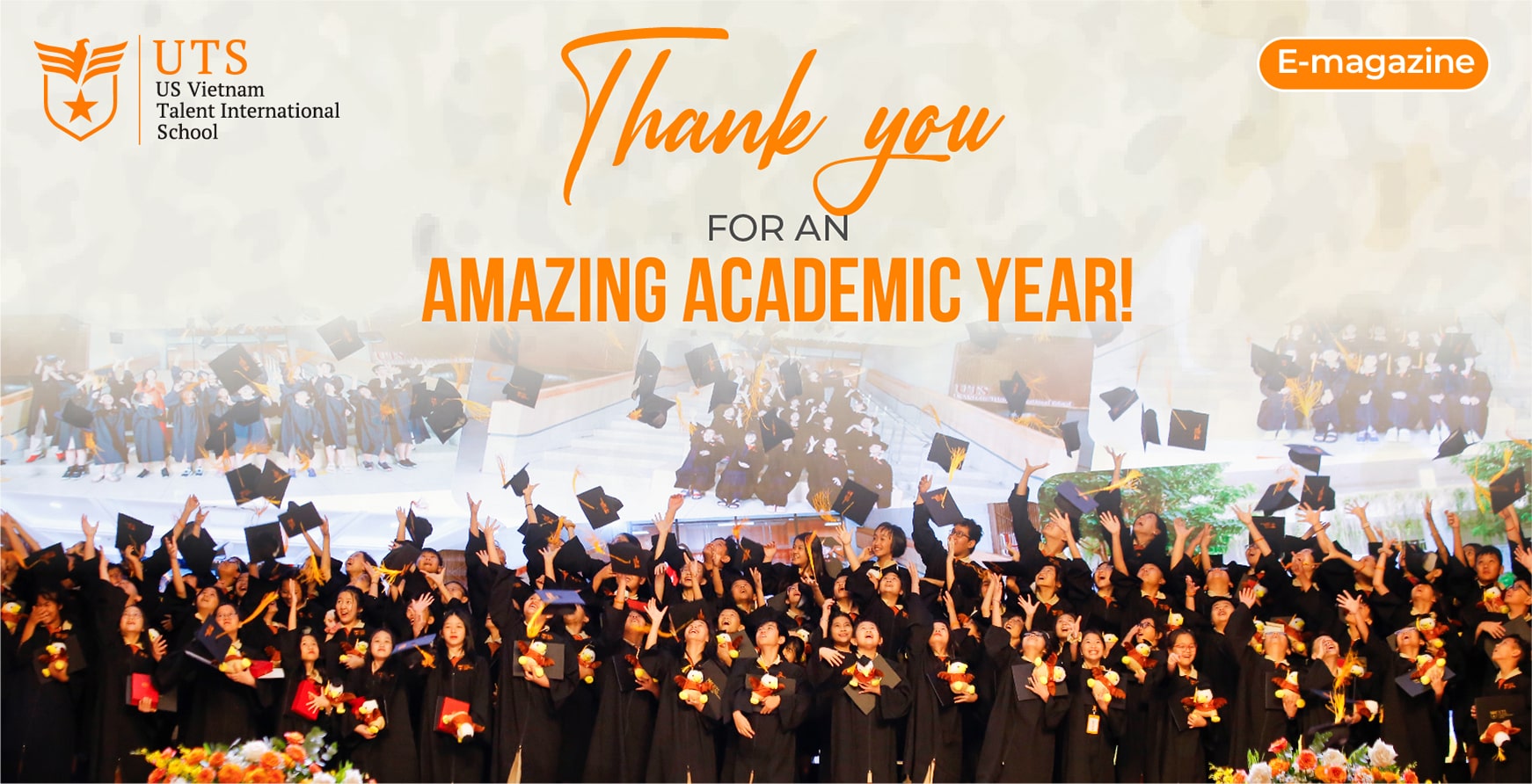
A look back at the 2023 –...
News
21/06/2024
The 2023 – 2024 academic year ended with memorable milestones at UTS. Let's review our highlights from the past year, UTS-ers!
UTS Reading Day: Read with me, grow...
Events
25/05/2024
Pocket interesting "tips" when reading books with your child, join for FREE, and receive an admission discount of 40 million VND at the event!
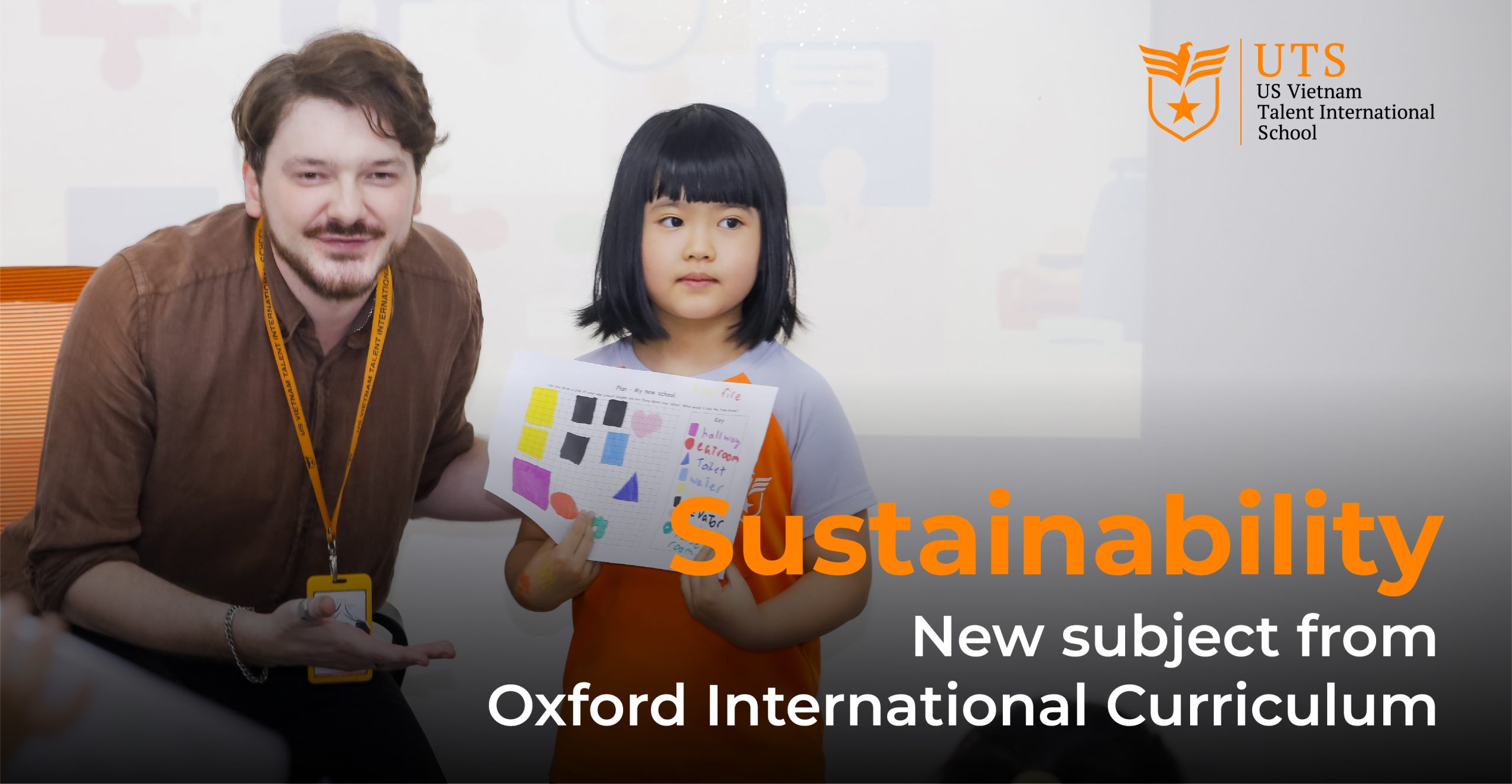
Sustainability – A new subject that UTS...
News
05/04/2024
Sustainability is a new subject in the Oxford International Curriculum (OIC). Let’s delve deeper into this subject with UTS!
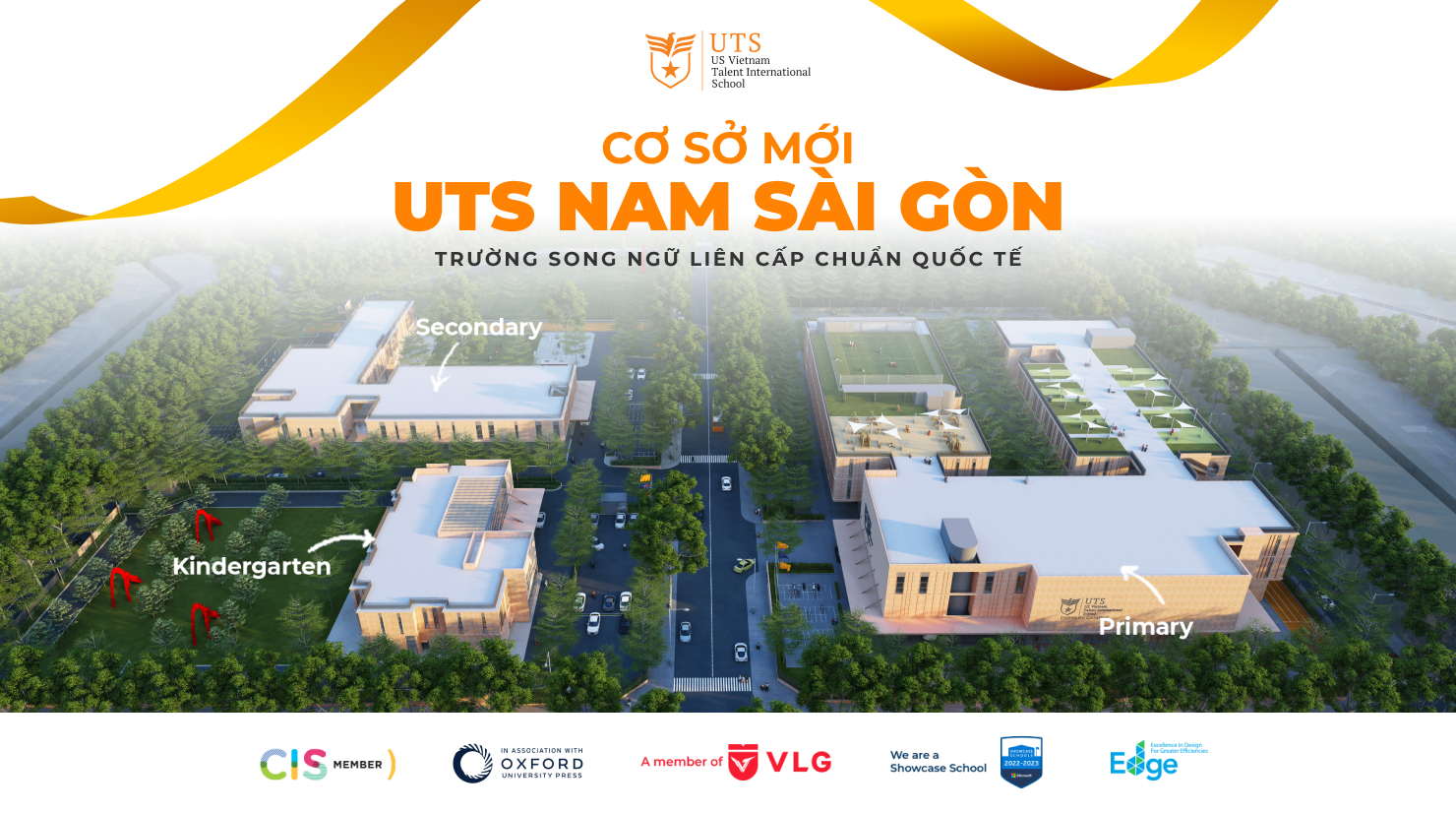
Officially launched UTS Saigon South Campus –...
News
24/03/2024
In Binh Chanh district, UTS Saigon South Campus was launched, aiming to become a counterpart of a quality educational institution with international standards for students.
UTS Summer Program 2024: BE AN EXPLORER
Events
17/06/2024
Register before April 30, 2024, to save 15% on tuition for the Summer Program: Be An Explorer!
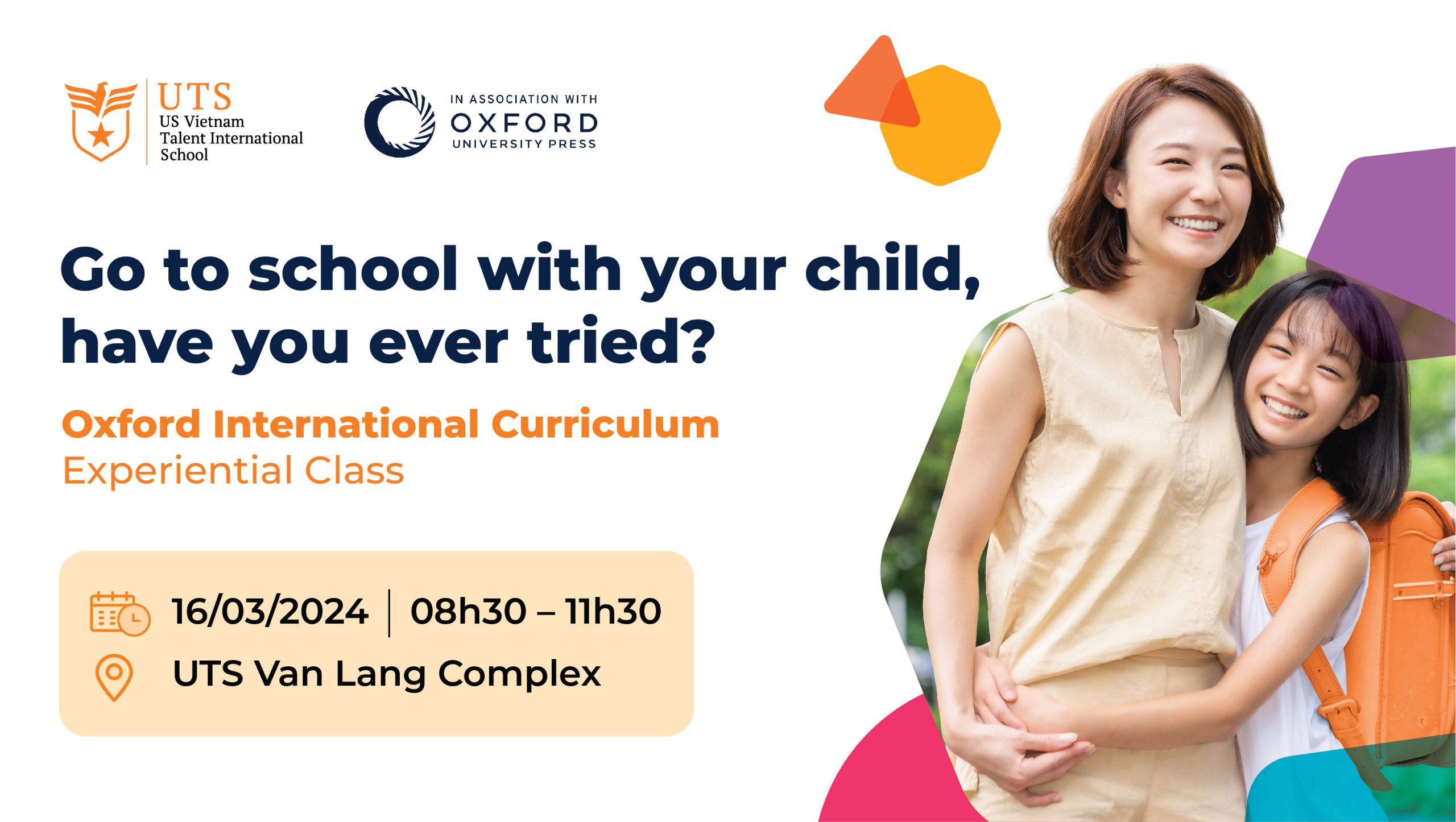
Go To School With Your Child, Have...
Events
16/03/2024
The event is an opportunity for parents to experience subjects in the Oxford International Curriculum to better understand UTS...
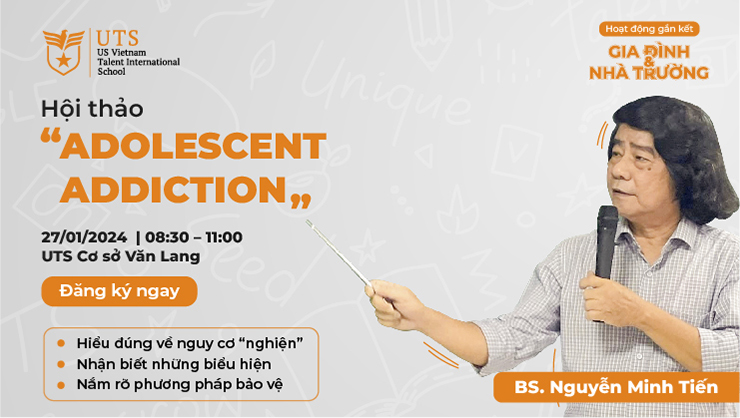
The Connecting Activities Between Family And School:...
Events
27/01/2024
Learn more about “Adolescent Addiction” throughout a seminar at UTS. This phenomenon has gradually become the worry of parents today.
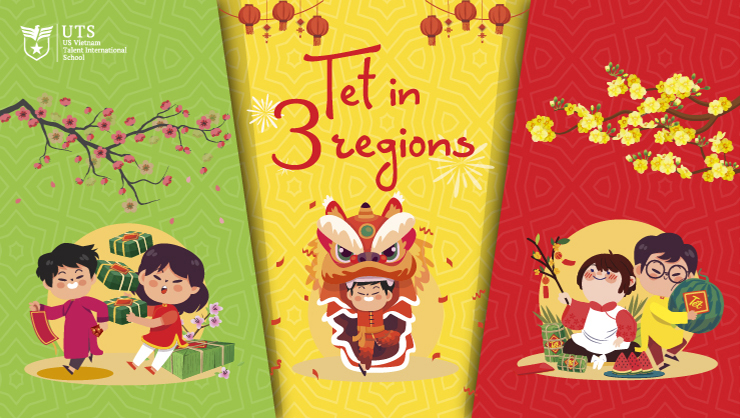
Spring Fair 2024: “Tet in 3 regions”
News
02/02/2024
The UTS Spring Fair 2024 aims to reproduce the traditional Tet space of 3 regions of the country through typical folk activities...
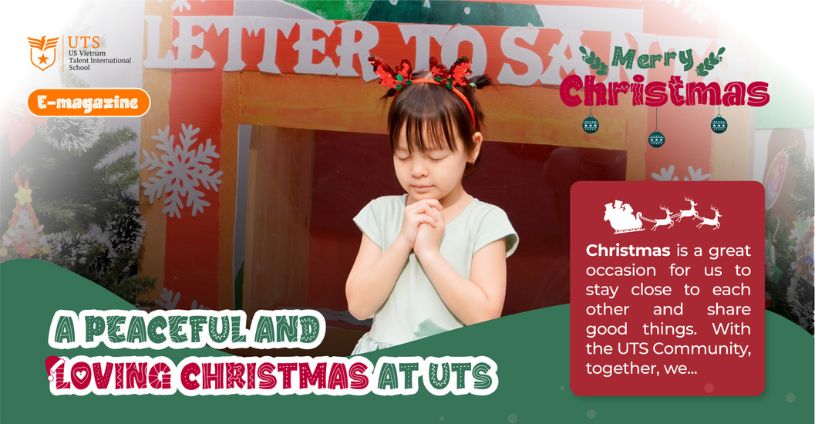
A peaceful and loving Christmas at UTS
News
01/01/2024
Another Christmas passed by, let's look back at the activities that the UTS Community has participated in together and created a wonderful Christmas season.
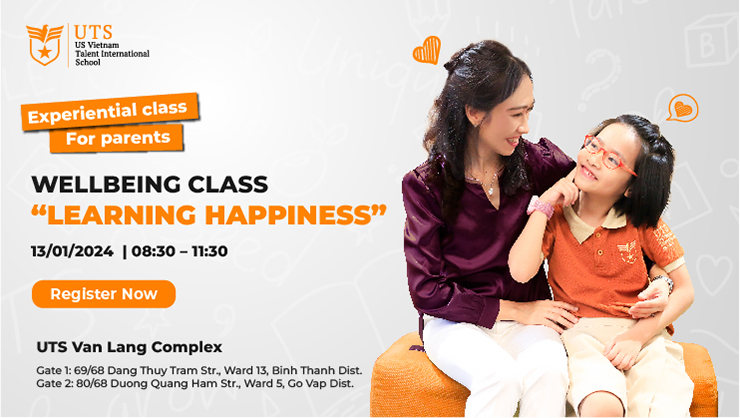
Experiential Class For Parents – Wellbeing Class:...
Events
13/01/2024
Learn about "bilingual lessons" in the Wellbeing subject and better understand each study program at UTS at the event. Click for more details.
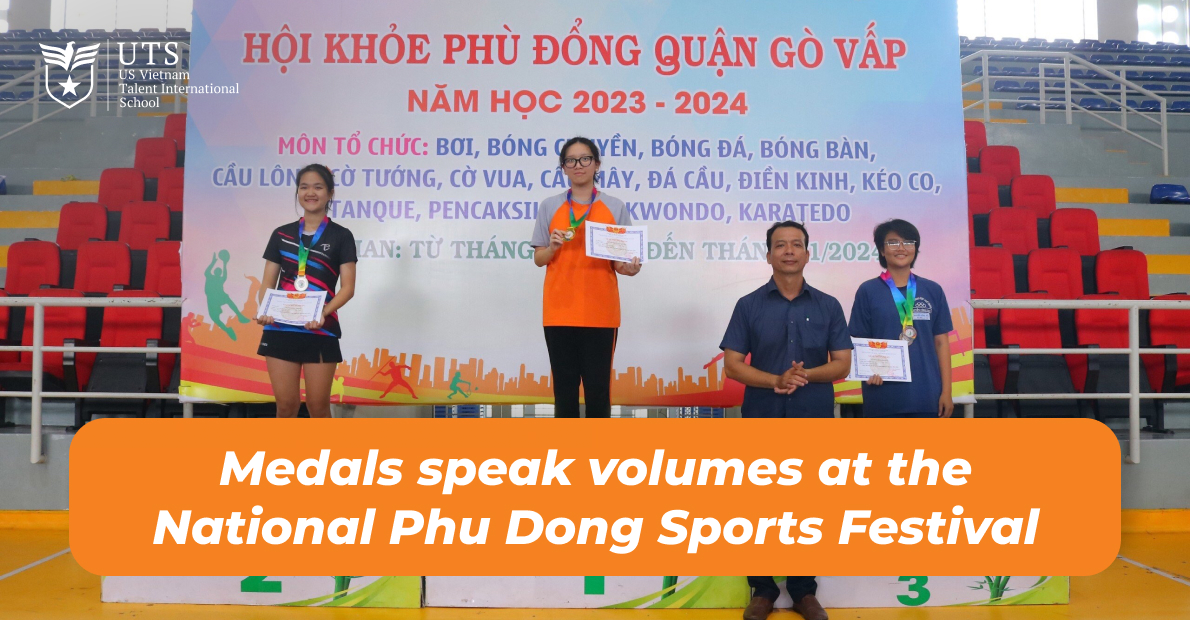
Medal speak volumes at the National Phu...
News
11/12/2023
In November, UTS-ers showcased their strengths in the field of sports at the District level competition for the National Phu Dong Sports Festival.
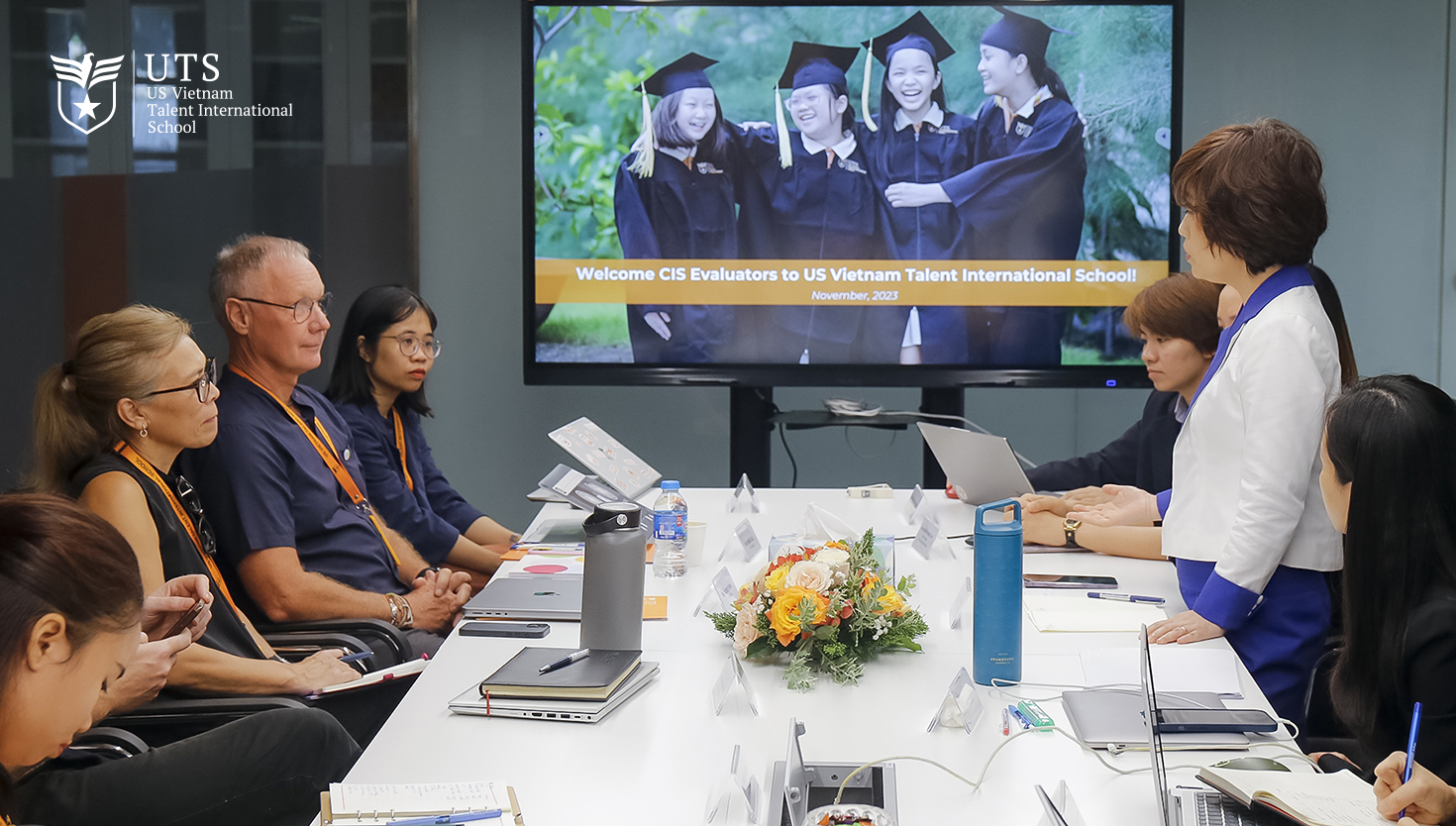
Journey To CIS Accreditation | We Are...
News
01/12/2023
From 27th to 30th, November, we are honored to welcome the CIS evaluators to visit UTS Van Lang Complex....
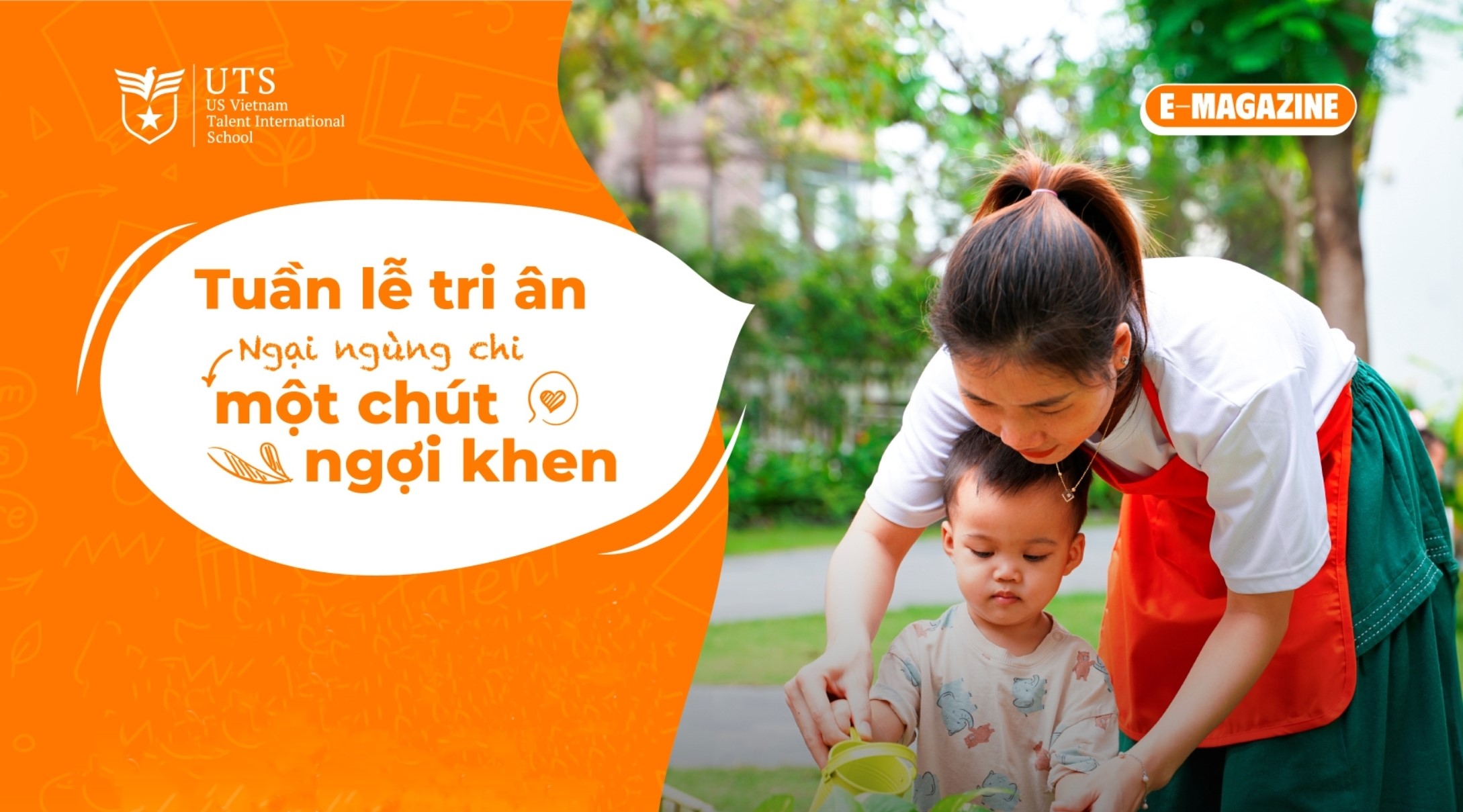
Appreciation week – Make others see the...
News
We understand that not only us who are trying the best on this journey, but our teachers are also doing the best with us every day.
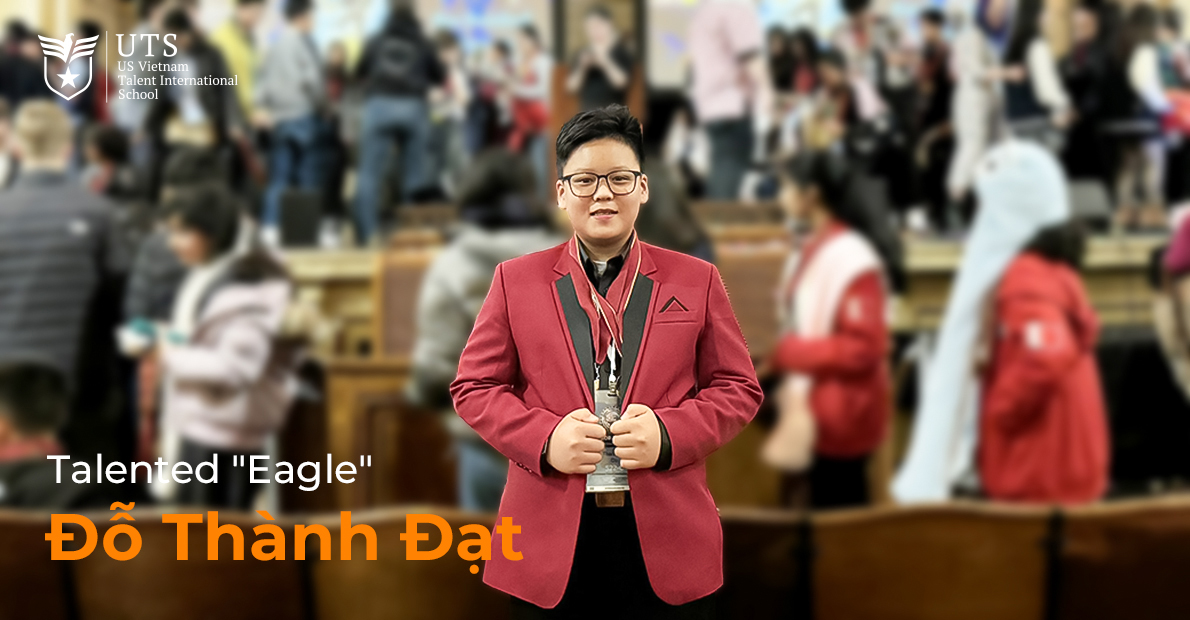
Human of UTS: Talented “eagle” Do Thanh...
News
22/11/2023
Bringing home two medals at the World Scholar's Cup, let's see about the development journey of "eagle" Do Thanh Dat at UTS!
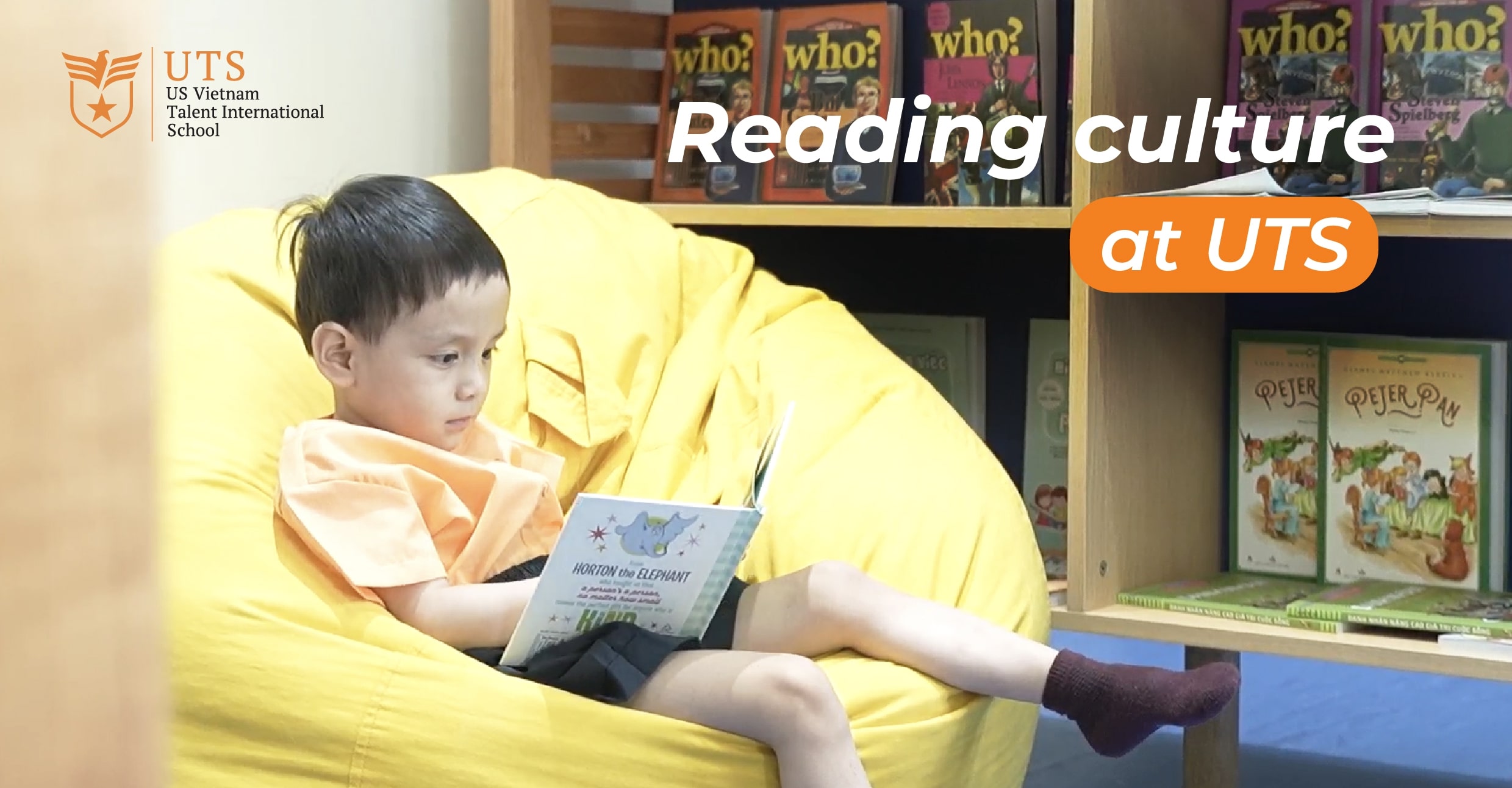
Reading Culture – The strong foundation of...
News
13/11/2023
What is reading culture and why do we need to focus on developing reading culture? How has UTS trained reading culture for students at school?
UTS Appreciation Week: Make others see the...
News
16/11/2023
Each UTS educator is a caring "nurturer" with the mission of growing the students to be excellent in character and in learning.
Anti-Bullying Week 2023
News
06/11/2023
Explore Anti-Bullying Week 2023 at UTS: "Make a noise about bullying" - express your thoughts and contribute your voice to the anti-bullying journey at school.
Open Day – The Golden Time To...
Events
18/11/2023
Kindergarten, Primary or High school, 4 years old, 6 years old or 16 years old, what will be the golden time to shape your child's future?
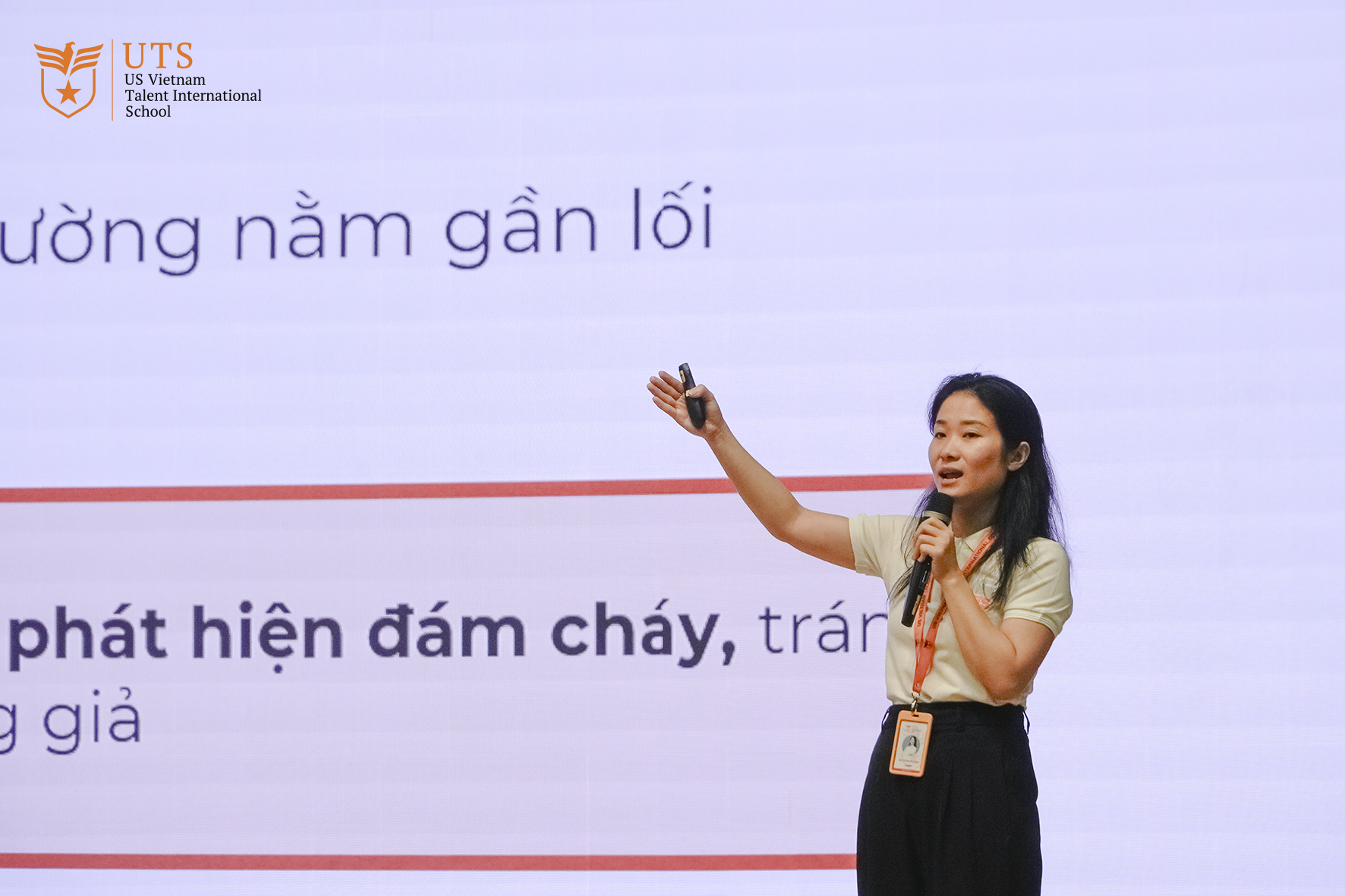
Training on Fire Prevention and Firefighting at...
News
26/10/2023
Equipping students with skills to protect themselves and to handle emergency situation is one of the top priorities at UTS.
UTSPook-a-thon: Let’s get spooky!
News
30/10/2023
UTS Halloween Festival called "UTSpook-a-thon" carries the meaning of a festive season with many interesting activities for students.
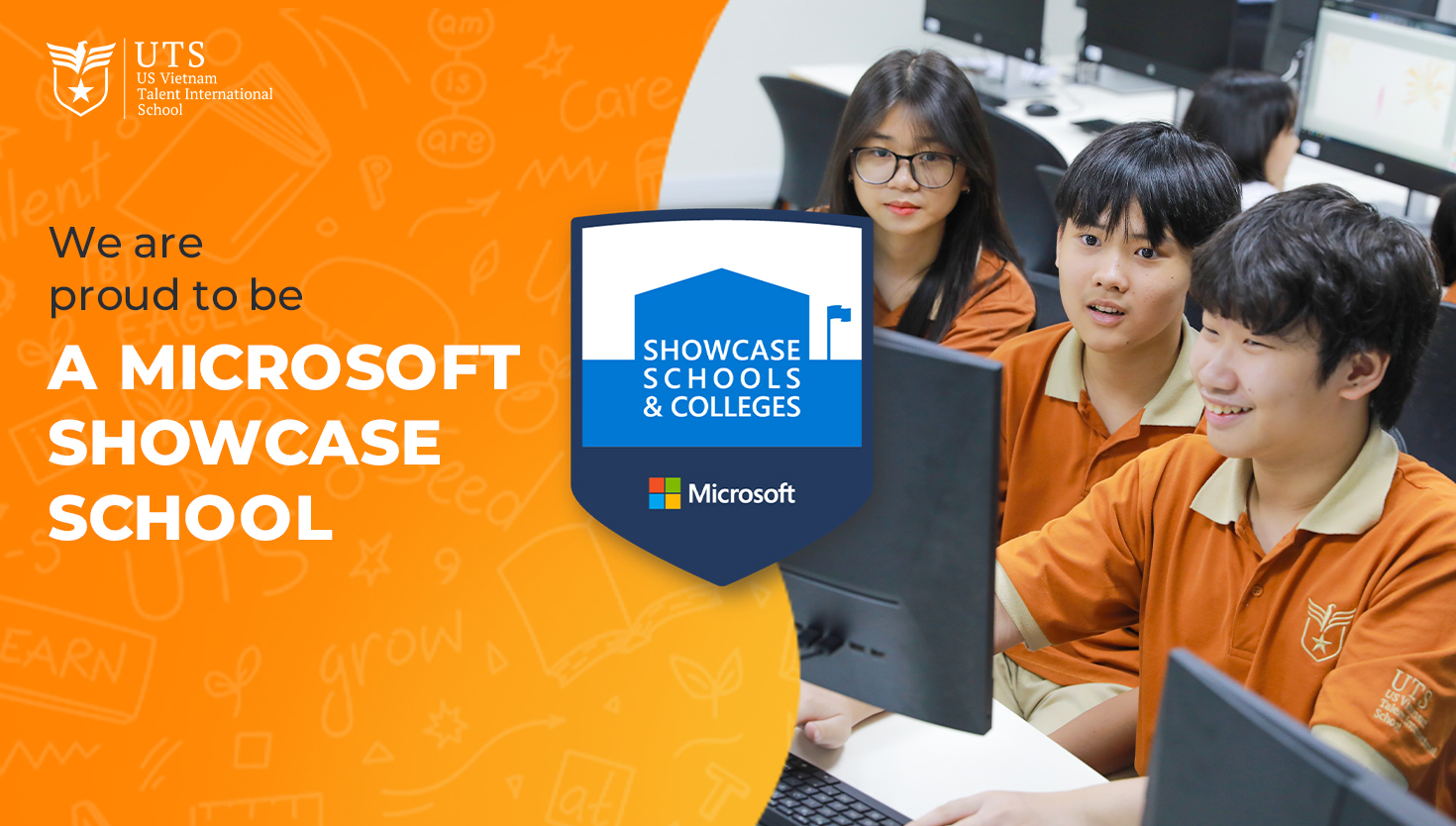
UTS Continues To Be Certified As A...
News
14/10/2023
UTS is proud to be marked the three consecutive years milestone in achieving Microsoft Showcase School....
What a meaningful Saturday of UTS at...
News
07/10/2023
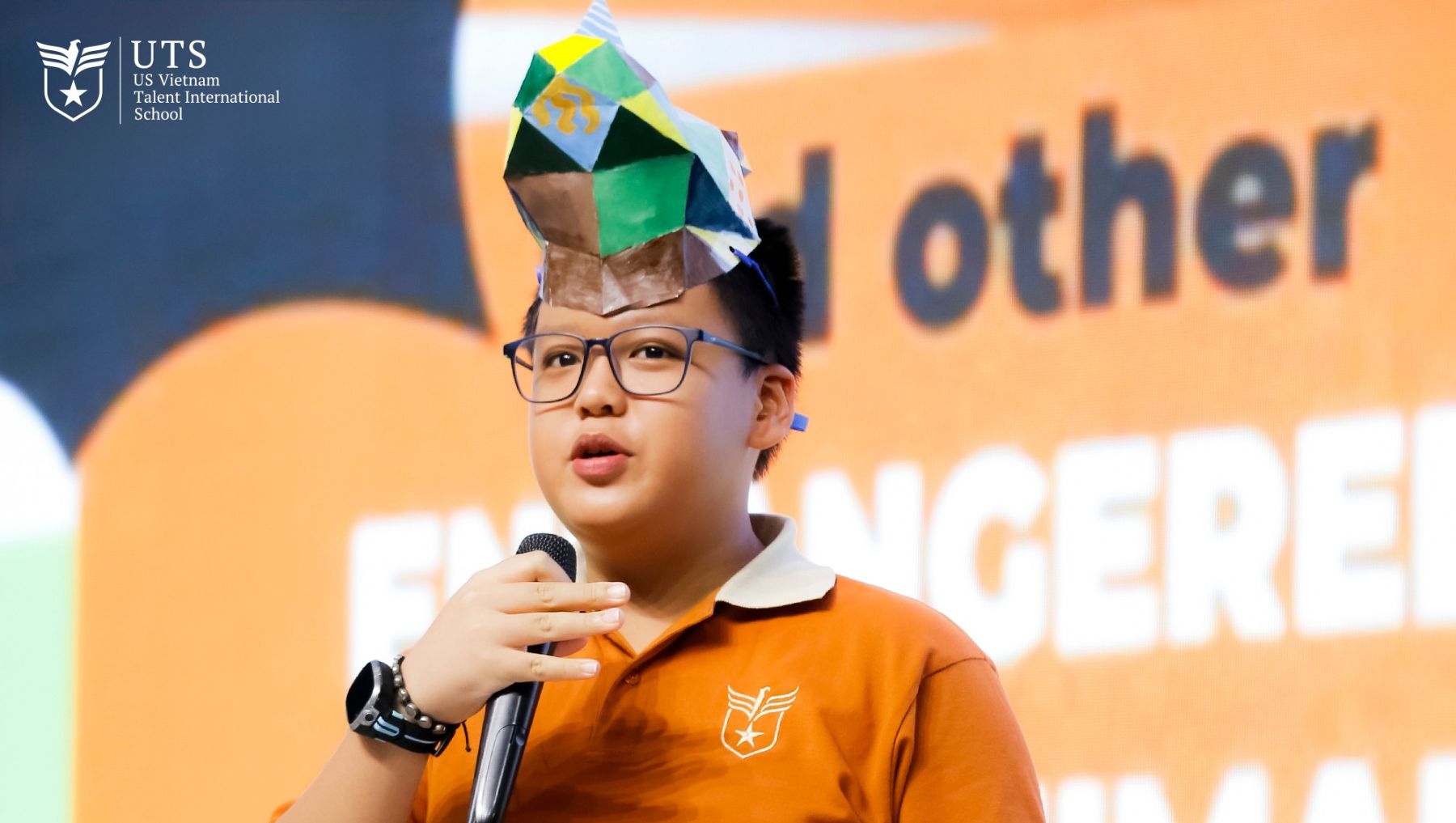
The UTS Community had a fantastic experience at UTS Van Lang Complex with a new friend named Rhino Ranger from Wild Rhino in the Rhino Day.
The House Kick-off Ceremony – Academic Year...
News
15/09/2023
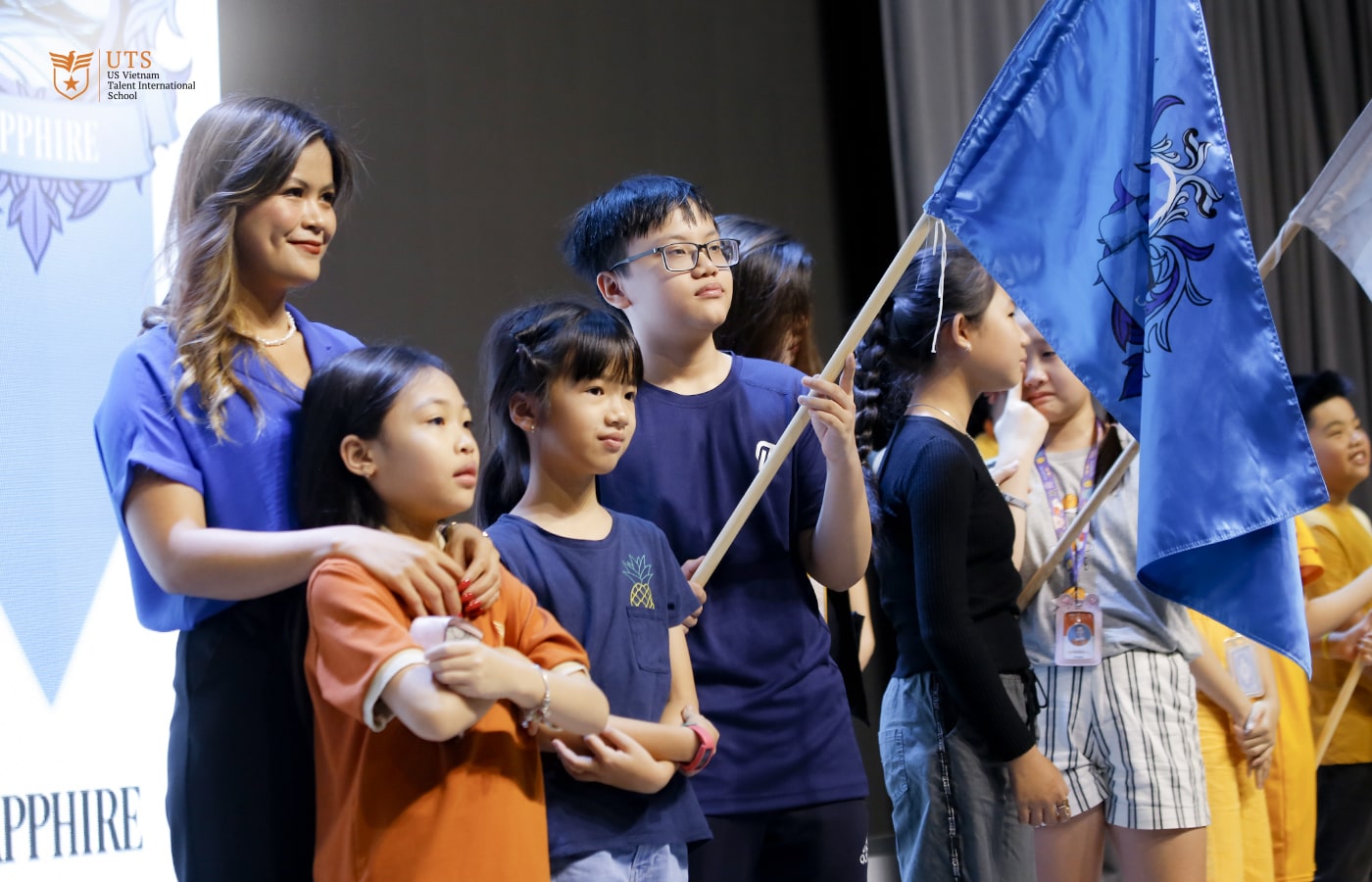
At UTS, each house is a unique color and has its own personality, representing six core values that we always uphold in all activities.
UTS x Wild Rhino: Protecting Rhinos and...
News
07/10/2023
UTS collaborates with The Wild Rhino to organize Rhino Day: “Protecting Rhinos and other endangered wild animals”.
UTS Full Moon-mory: The moon is on...
News
29/09/2023
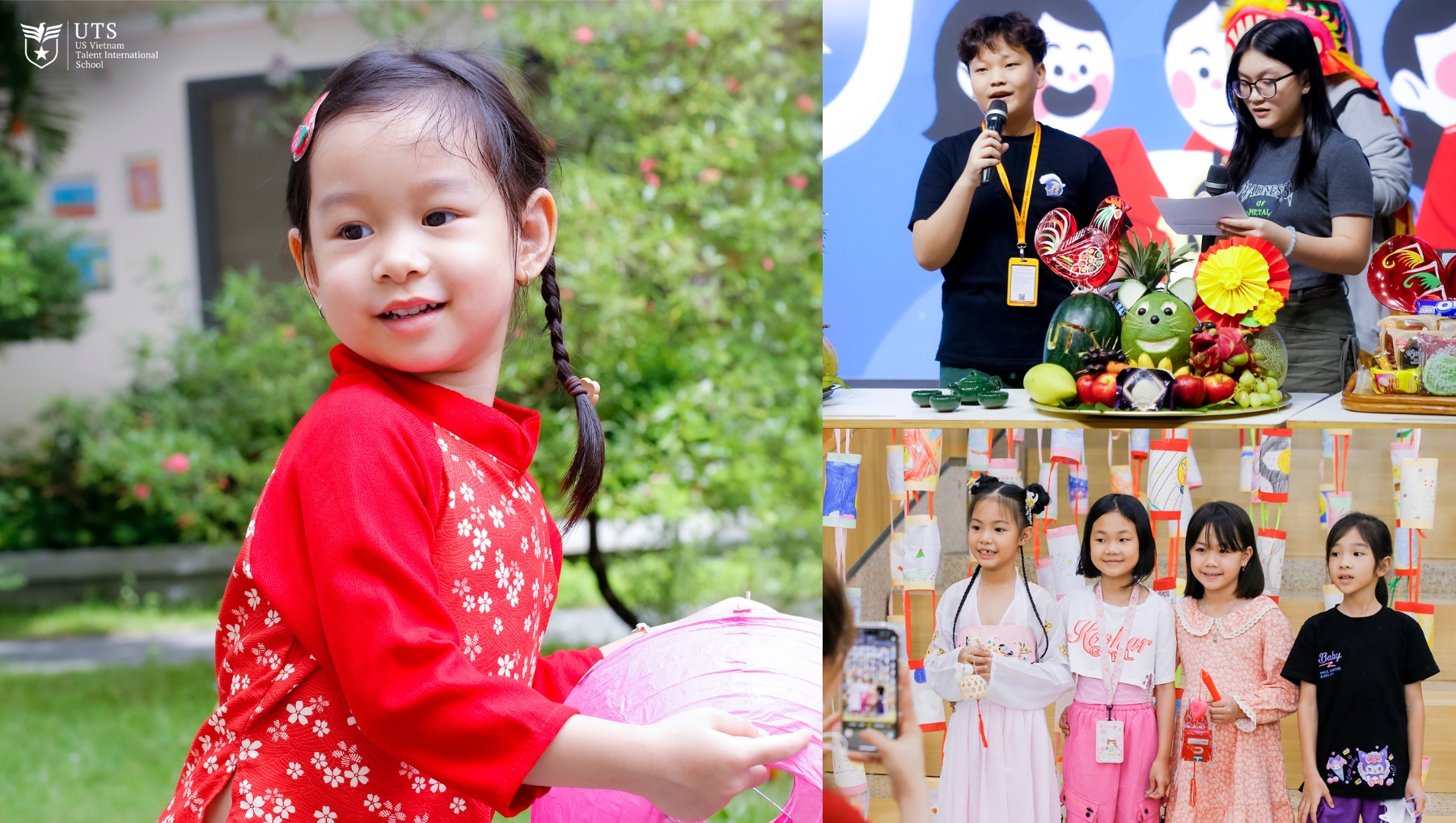
Our "UTS Full Moon-mory" symbolizes a Full Moon season filled with the most grateful memory by the beloved family and UTS community.
The Academic 2023 – 2024 Opening Ceremony
News
28/09/2023
The academic year 2023-2024, fulfilled with joy, has begun. Let's think bigger, learn happier, and grow together every day!
Mid-Autumn Festival – UTS Full Moon-Mory
News
29/09/2023
UTS Full Moon-mory symbolizes a Full Moon season filled with the most grateful memory by the beloved family and UTS community.
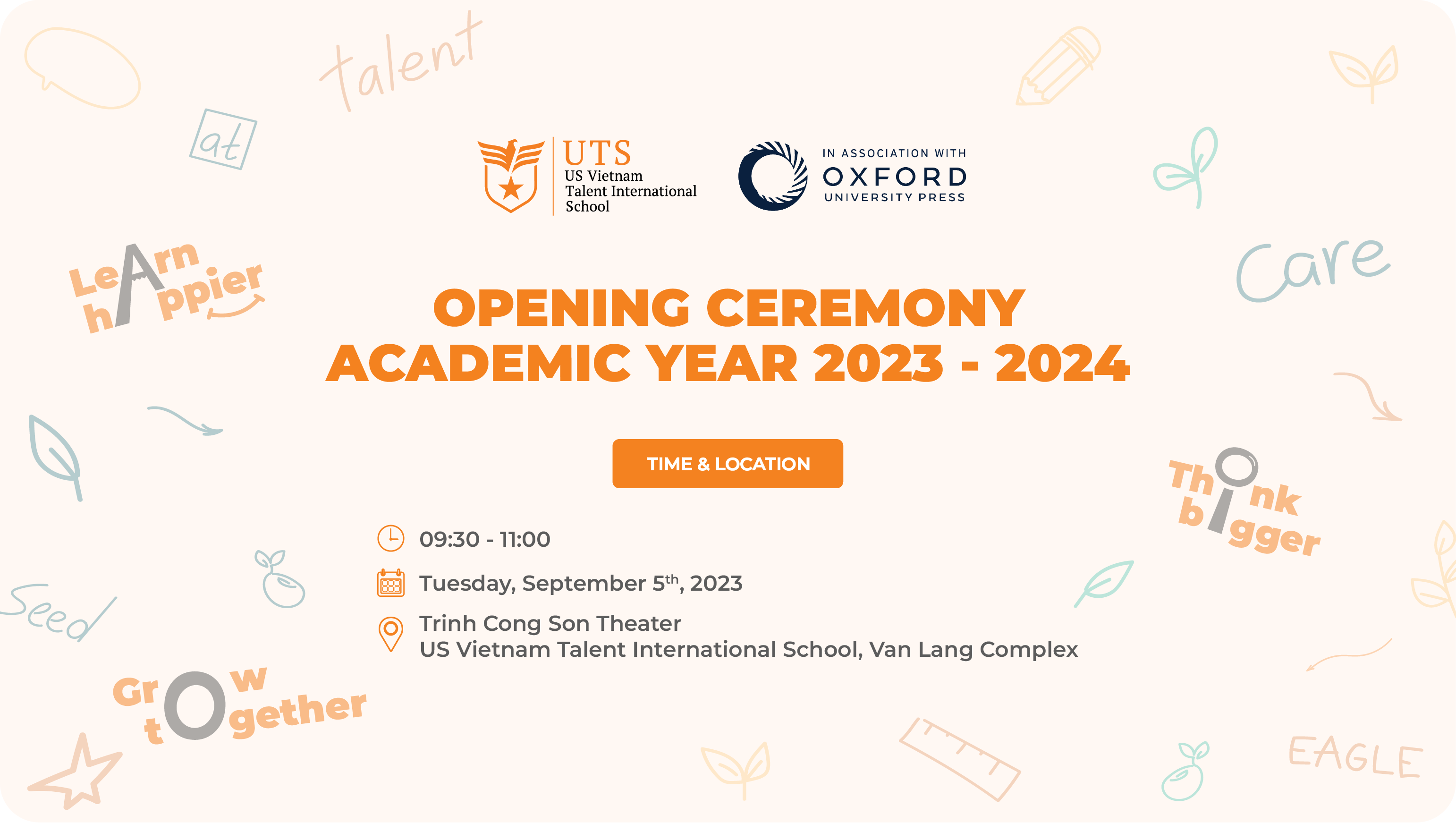
Opening Ceremony Of The Academic Year 2023...
News
05/09/2023
Entering the 6th year of the “Growing talent with care”, the Opening Ceremony of academic year 2023 - 2024 will mark a proud milestone...
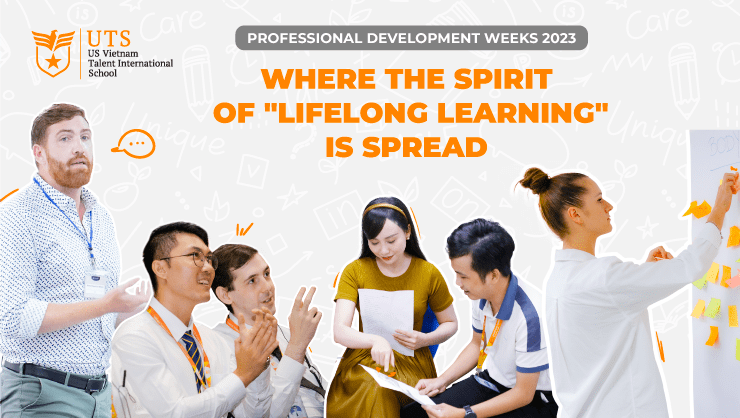
Professional Development Weeks 2023 (PD Weeks 2023)...
News
25/08/2023
PD Weeks 2023 at UTS promotes the spirit of lifelong learning, empowering teachers with sustainable professional growth.
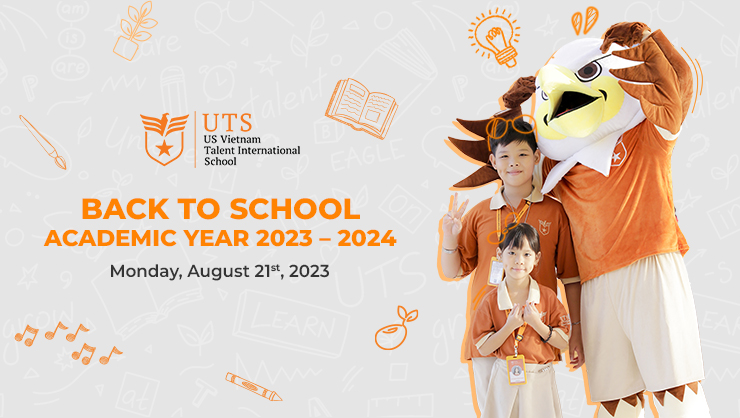
The Back-To-School Day Of Academic Year 2023...
Events
21/08/2023
To welcome UTS-ers back to school, the “nurturers” have prepared remarkable surprises and meaningful imprints...
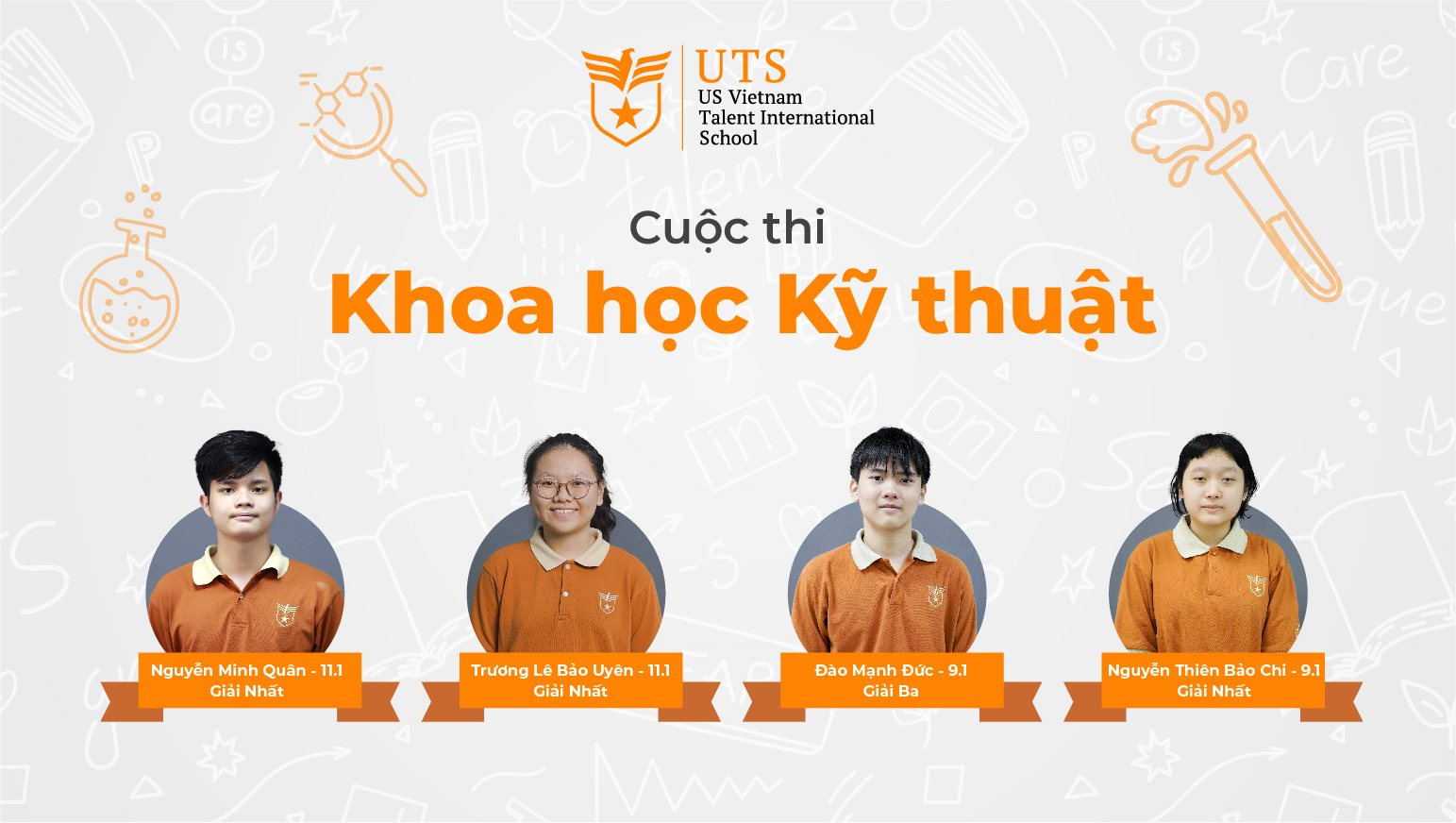
Science And Technology Competition
Competition
20/05/2023
This competition was organized for student, which aim to improve problem-solving skill in practical problem in science and technology
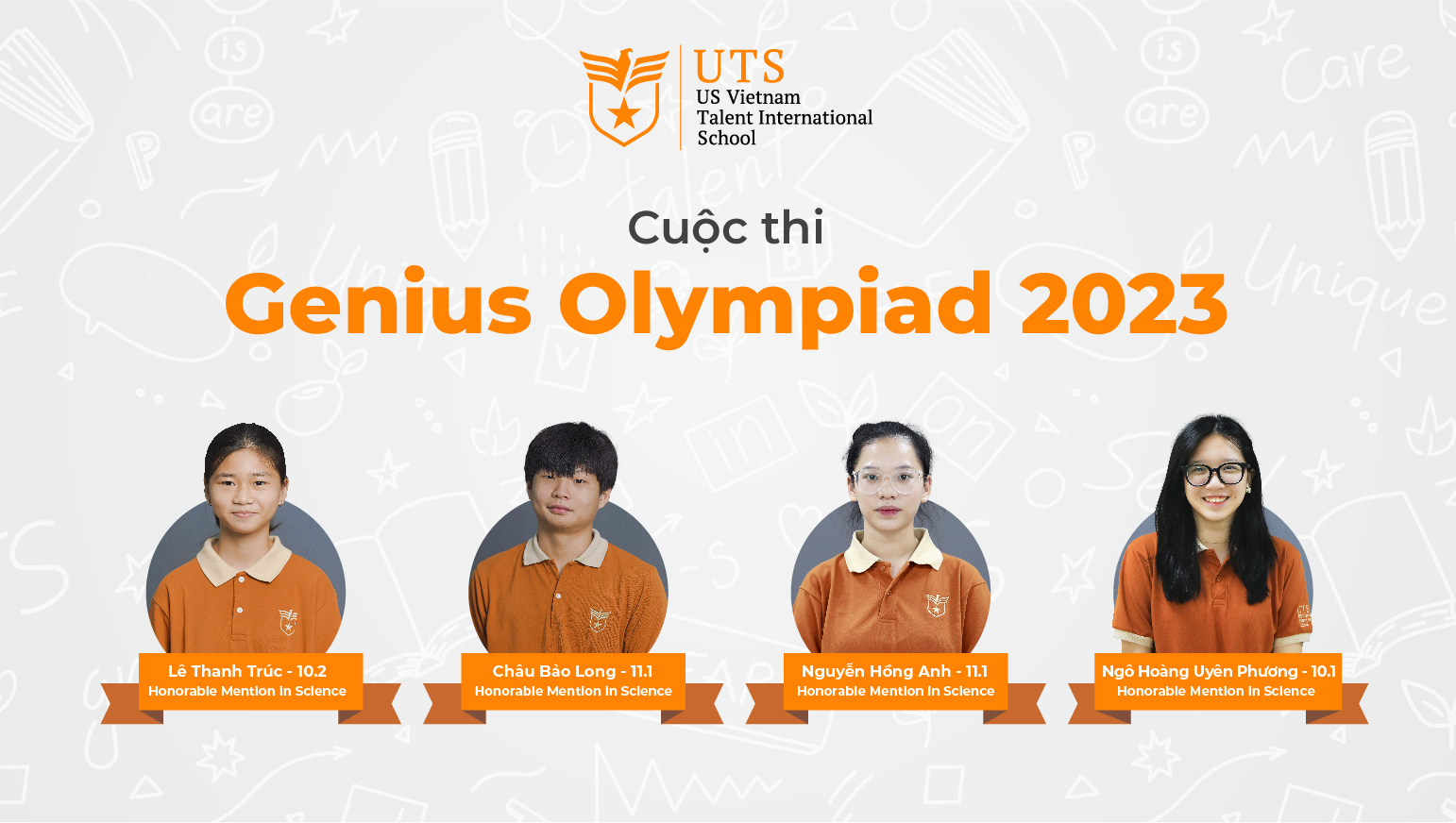
Genius Olympiad 2023
News
20/05/2023
GENIUS Olympiad is an international high school project competition about environmental issues.
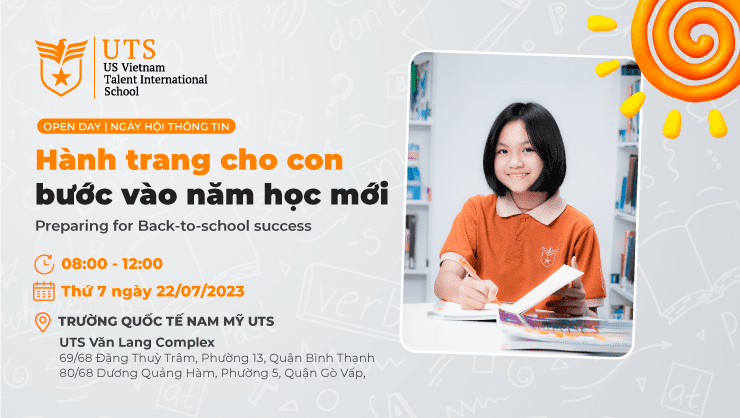
Open Day – Preparing For Back-to-school Success
Events
22/07/2023
Parents are cordially invited to attend the sharing session about important things to prepare in the upcoming new school year!
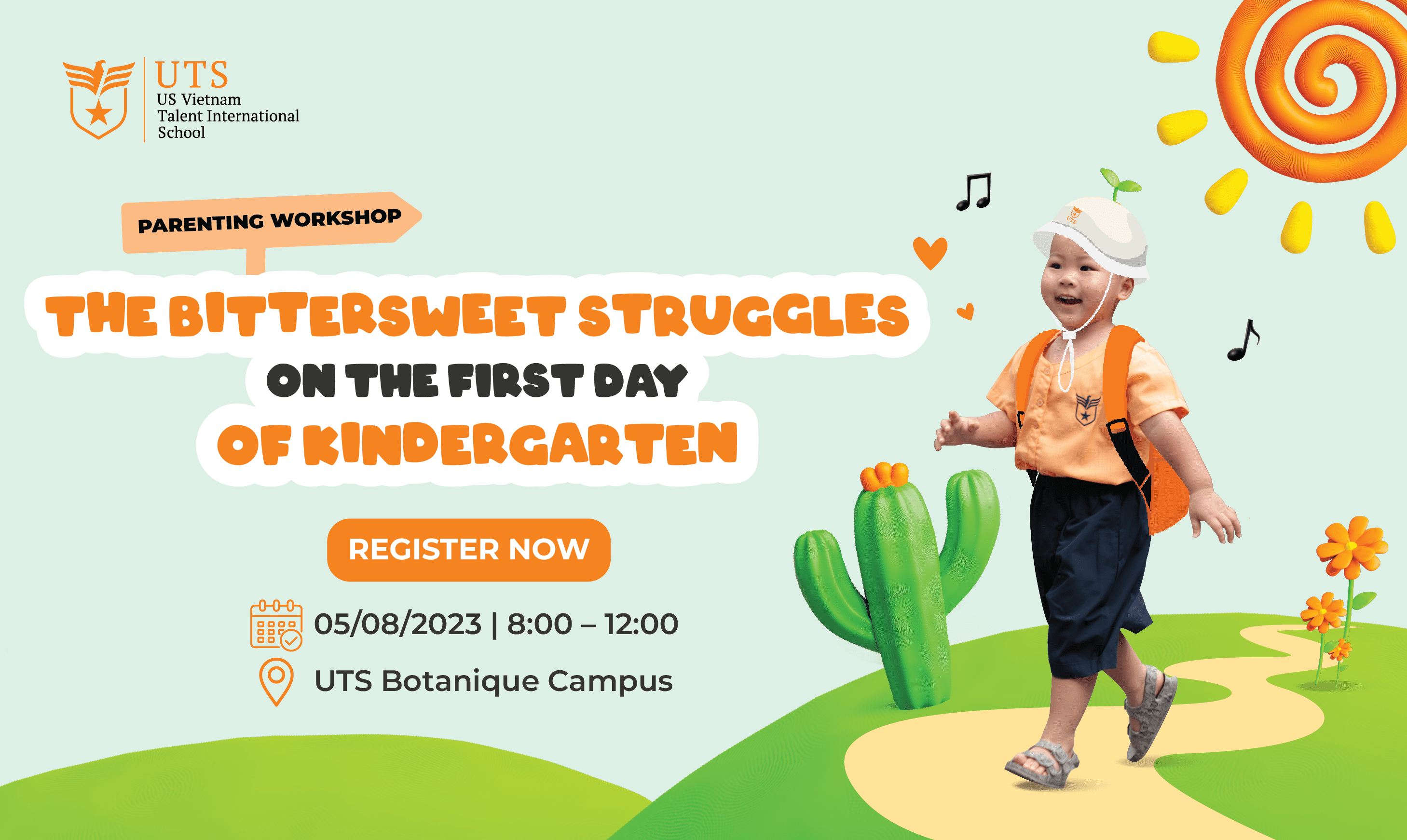
Parenting Workshop: The Bittersweet Struggles On The...
News
13/07/2023
UTS cordially invites parents to participate in the Parenting Workshop: The Bittersweet Struggles on the First Day of Kindergarten.
Do you know? How Does A Sentimental...
News
29/06/2023
%%sitename%% - According to parents’ perspective, what is the root cause of making such a generation gap? Let's explore!
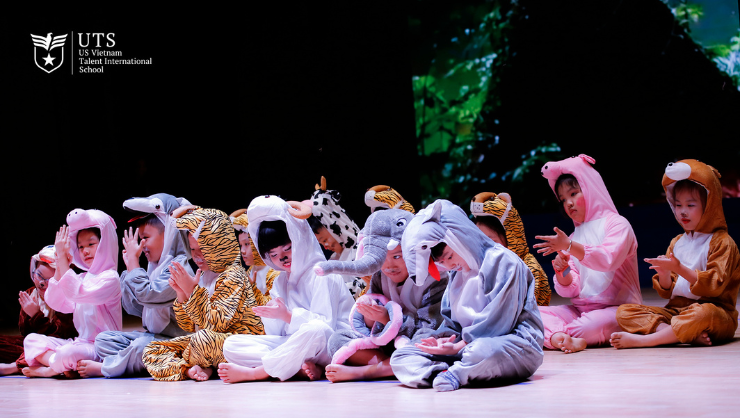
UTS’s Got Talent 2023 | Talented Performances...
News
01/06/2023
Enjoy the 27 finest performances and unexpected moments on the main stage in the final round of UTS's Got Talent 2023!
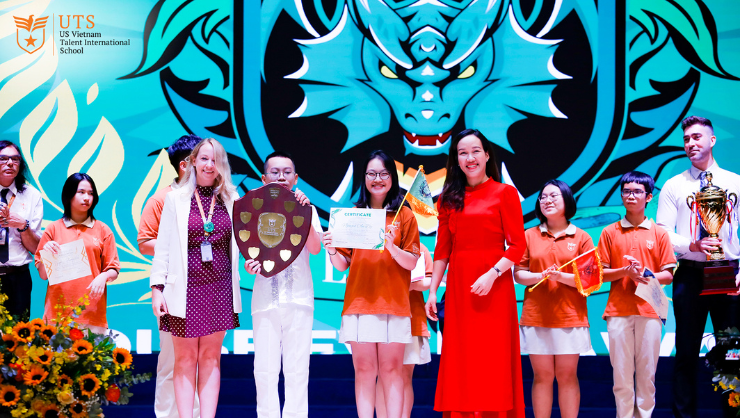
School Year 2022 – 2023 Closing Ceremony...
News
30/05/2023
The journey to discover the joy of learning for the 2022 - 2023 school year has officially come to an end through the Closing Ceremony. See more here.
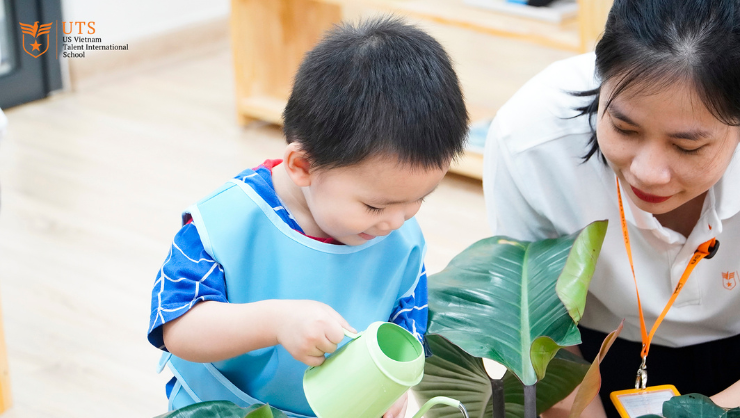
Rage Is Just A Simple Emotion!
News
20/05/2023
Learn more about the rage of children and how to react throughout the Parenting Workshop: "How to be friend with your child's rage" at UTS Botanique Campus.
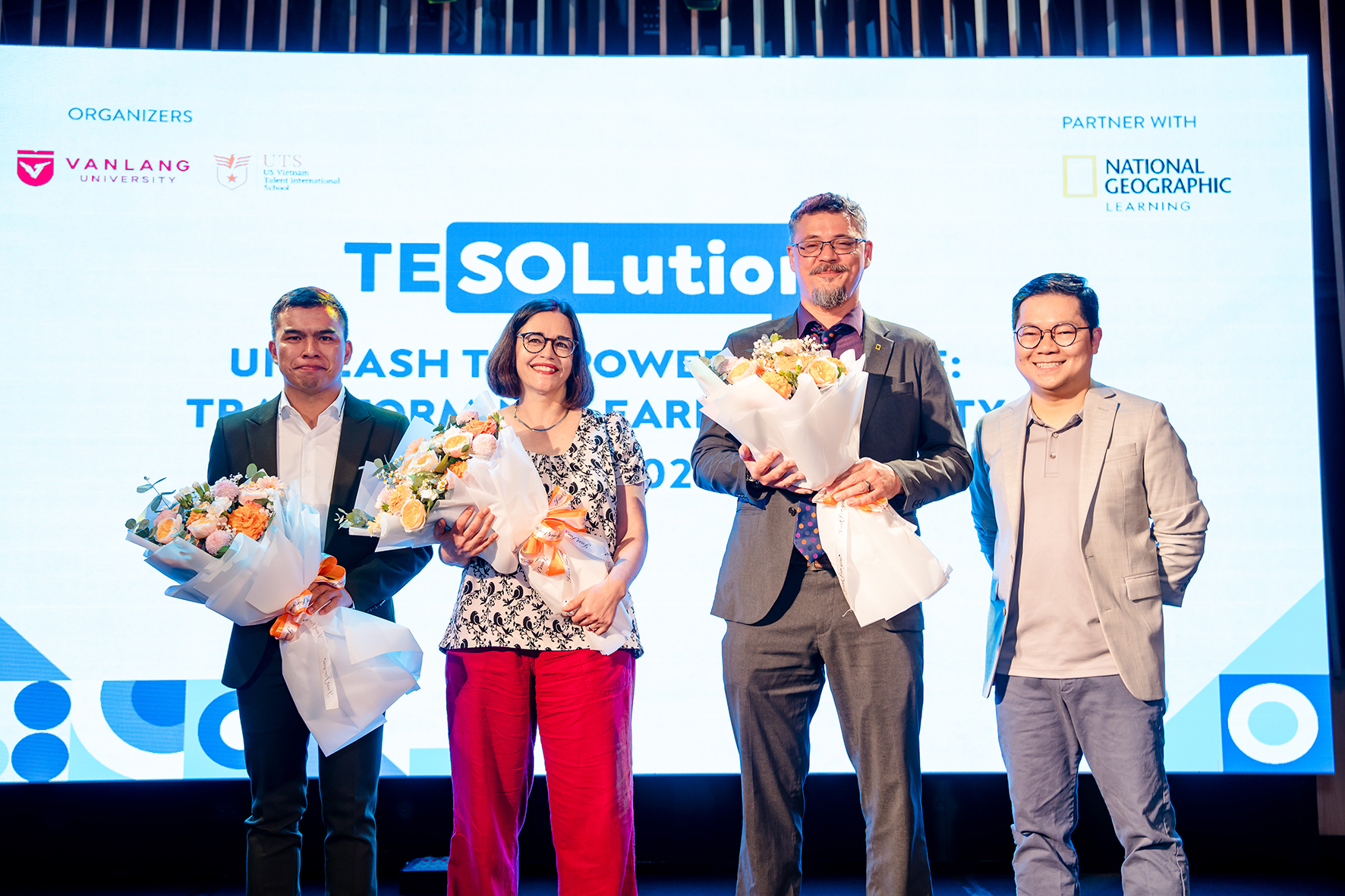
TESOLution 2023: When Teaching English Doesn’t Just...
News
24/05/2023
TESOLution 2023 at UTS redefines English teaching by nurturing learner identity and voice. Let's explore this meaningful educational journey.
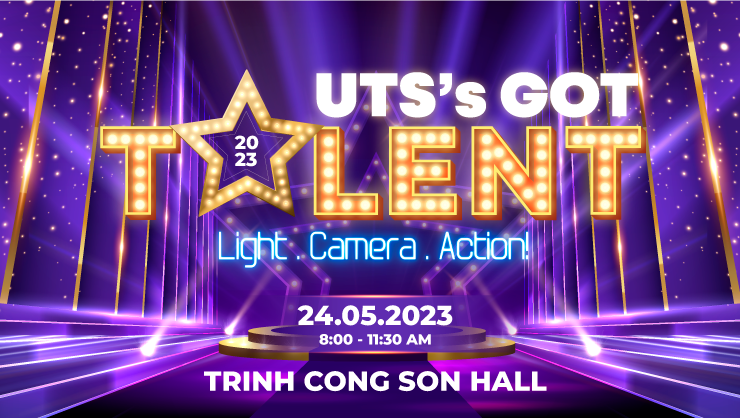
UTS’S GOT TALENT 2023
Events
24/05/2023
UTS'S Got Talent is not only a competition to explore the hidden talent, but also an opportunity, empowers you to express your talents.
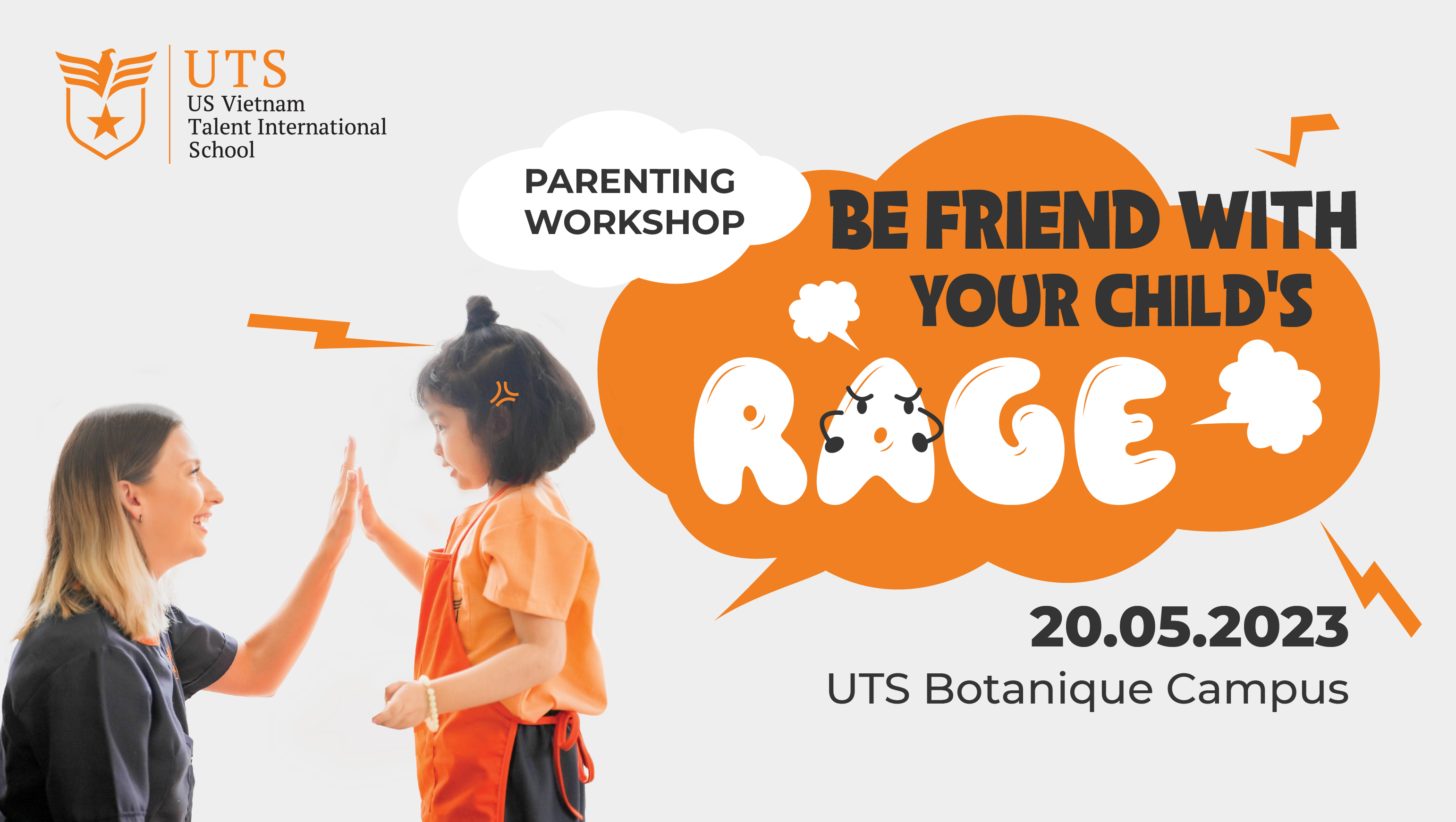
Parenting workshop: How to be friend with...
Events
20/05/2023
Discover how to understand and guide your child’s anger through the UTS Parenting Workshop on emotional development for ages 2 to 5.
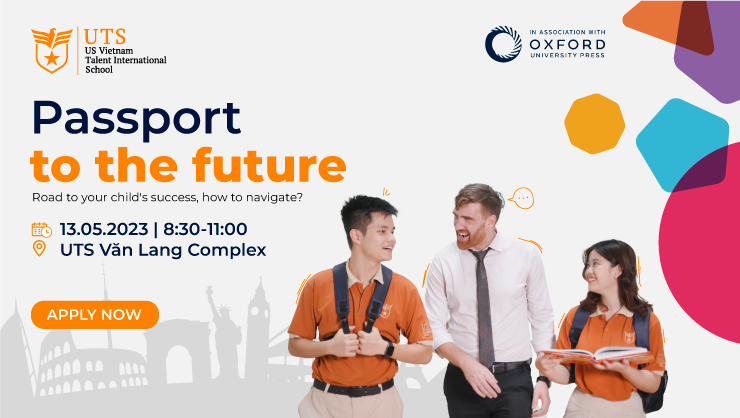
Passport To The Future
Events
13/05/2023
See how the Oxford International Curriculum fosters Health, Happiness, and Humanity in children at UTS's Passport to the Future seminar.
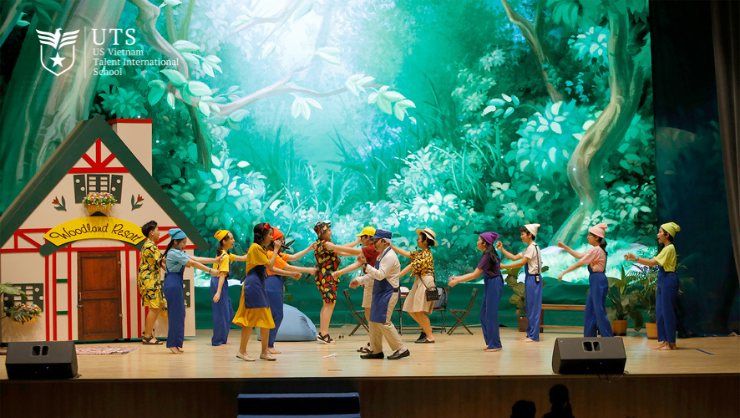
The First English Play At UTS –...
News
15/04/2023
At UTS, students get the chance to showcase their love for art, develop language skills, and gain valuable performance experience before an audience.
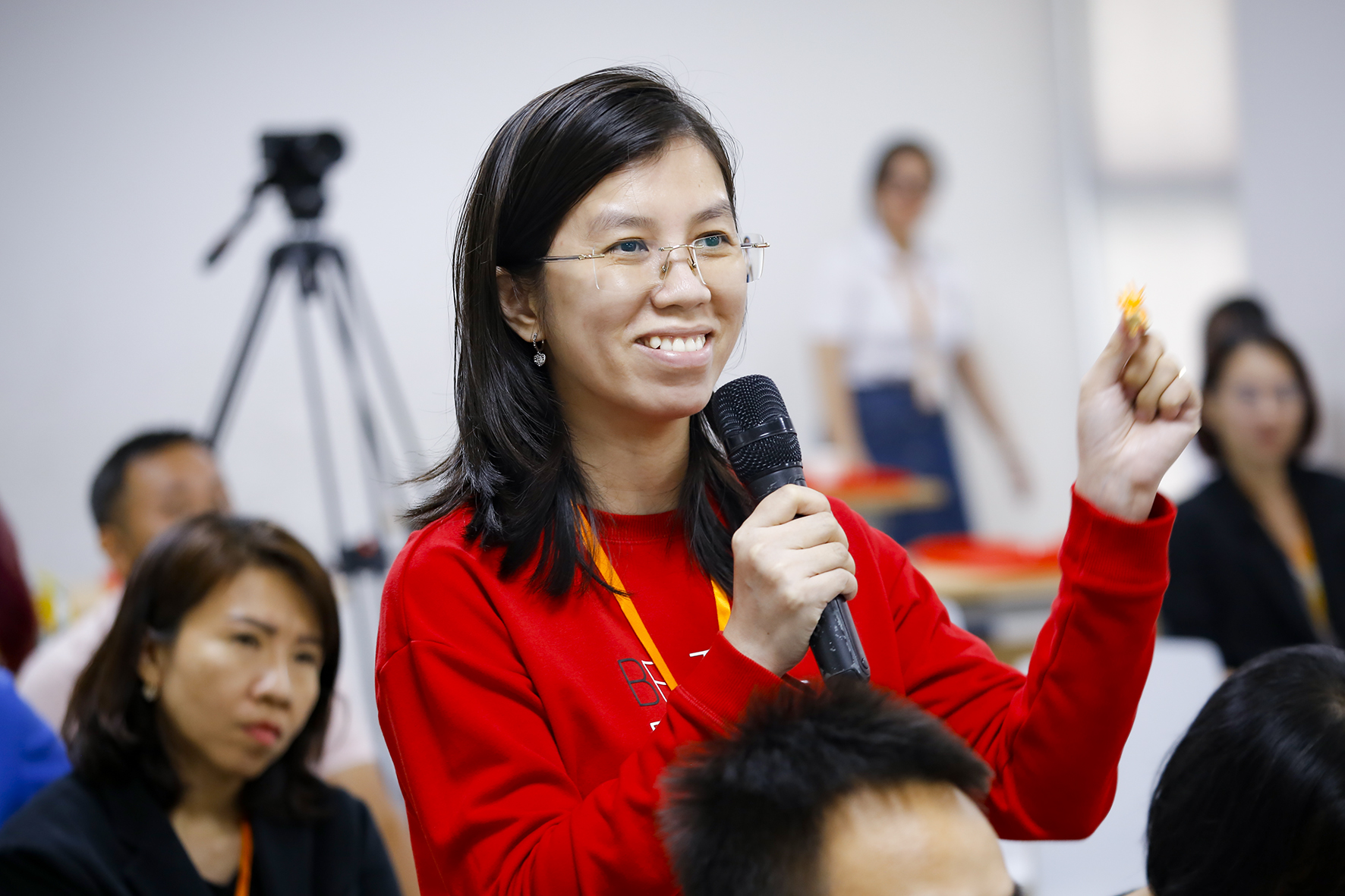
A Day Becoming An OIC Student, What...
News
27/03/2023
Know more about OIC program and the joy of learning in UTS throughout the seminar "Raising Kids: Balancing Love and Expectations".
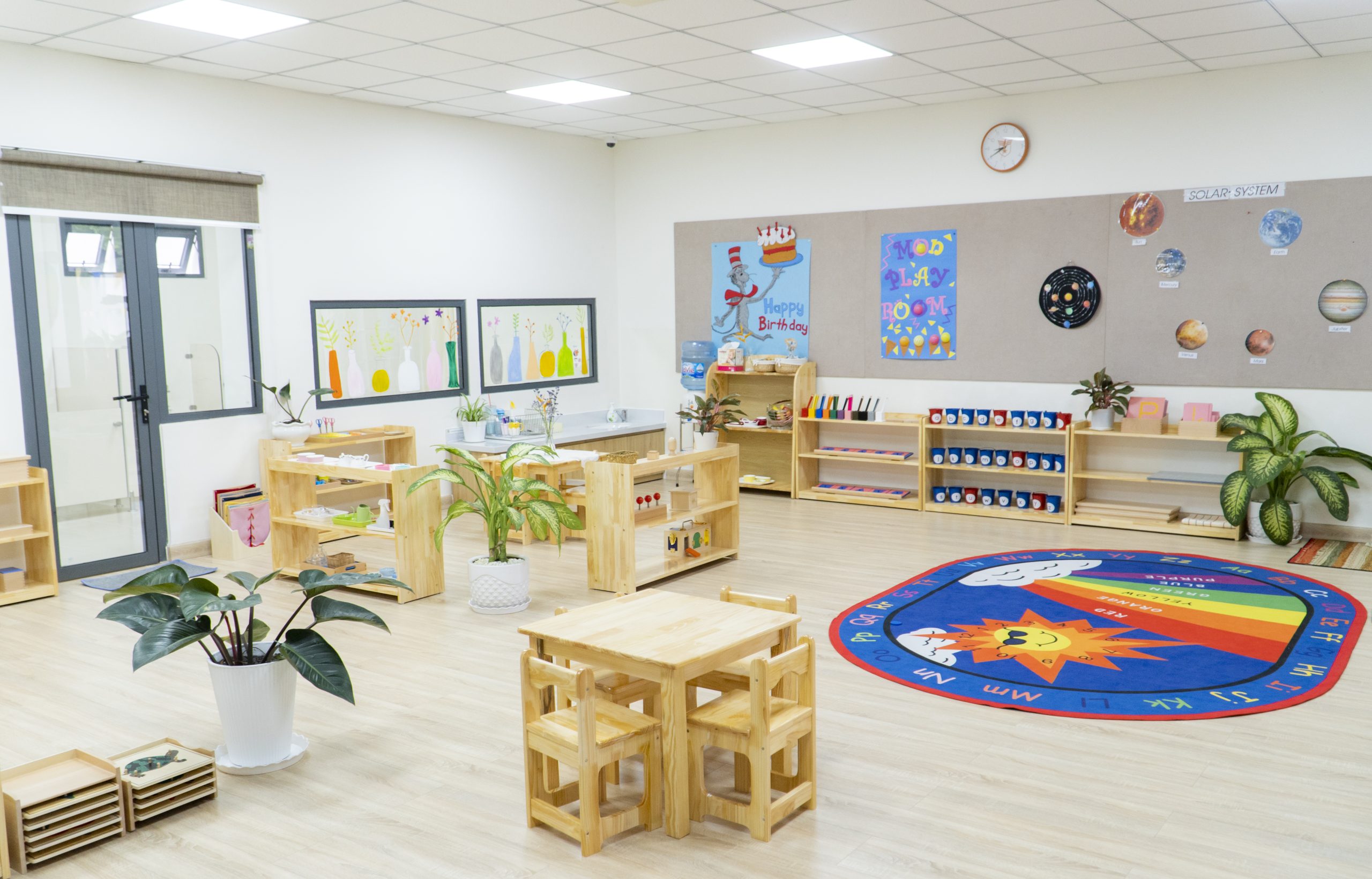
Magic In The Montessori Classrooom At UTS...
News
08/04/2023
Magic in the Montessori classroom at UTS Botanique Campus unfolds through hands-on experiences and joyful learning every day.
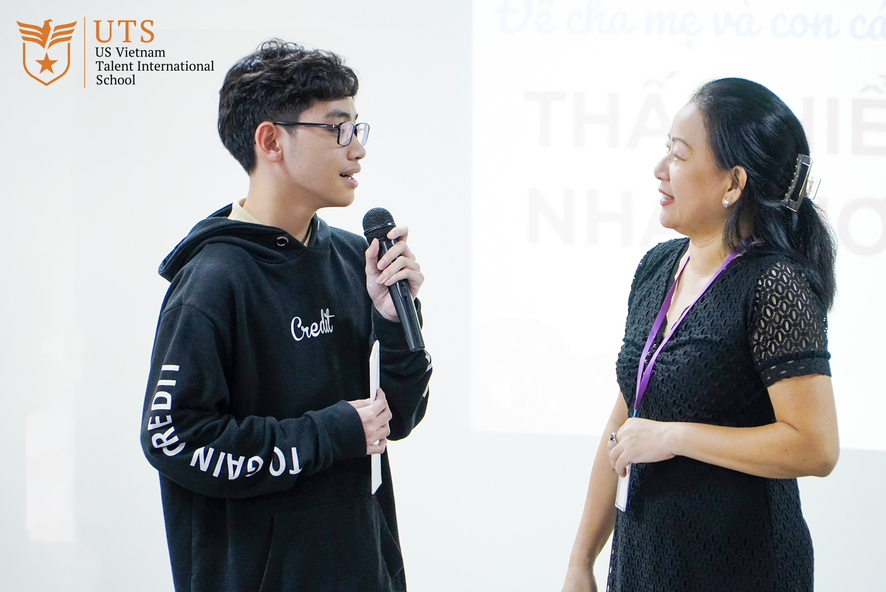
UTS Parents Talk | The Key To...
News
07/04/2023
UTS Parents Talk series, which is held by UTS, will be a bridge between parents and children to strengthen their relationships.
UTS GENIUS OLYMPIAD 2023: Gathering The Future...
News
04/04/2023
UTS Genius Olympiad 2023 brought together future scientists, where UTS-ers shined in Science, Public Speaking, and Debate categories.
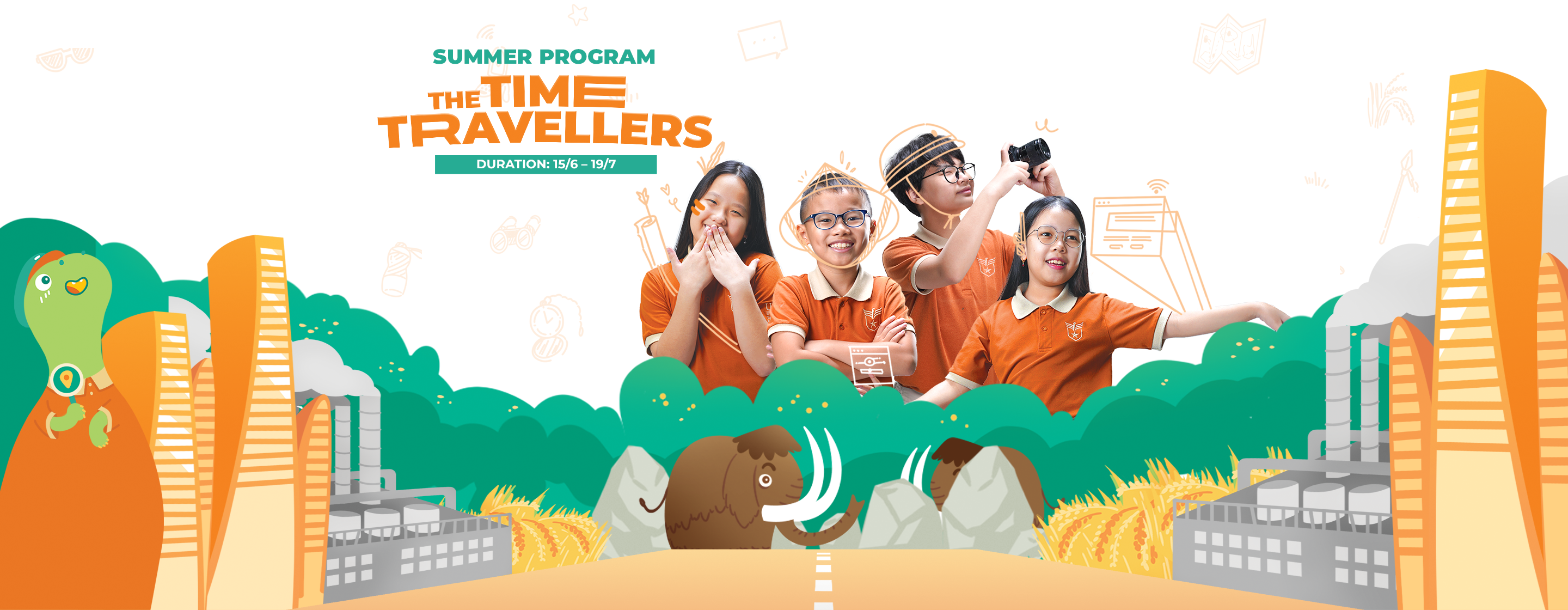
The “Transceding Time” Journey At UTS Summer...
News
15/06/2023
UTS Summer Program 2023 embarks students on a wonderful journey, blending cultural discovery, historical exploration, and global mindset.
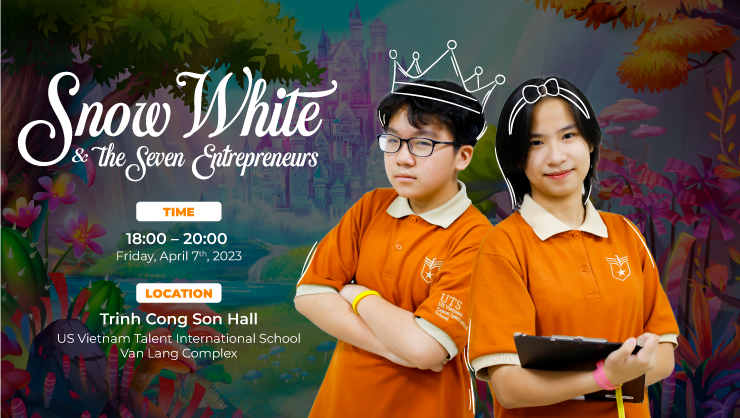
School Play’s Premier “Snow White And The...
Events
07/04/2023
The play is set in a progressive forest, the plot is transformed around the question “Who has the most business?” instead of “Who has the most beauty of them all?”.
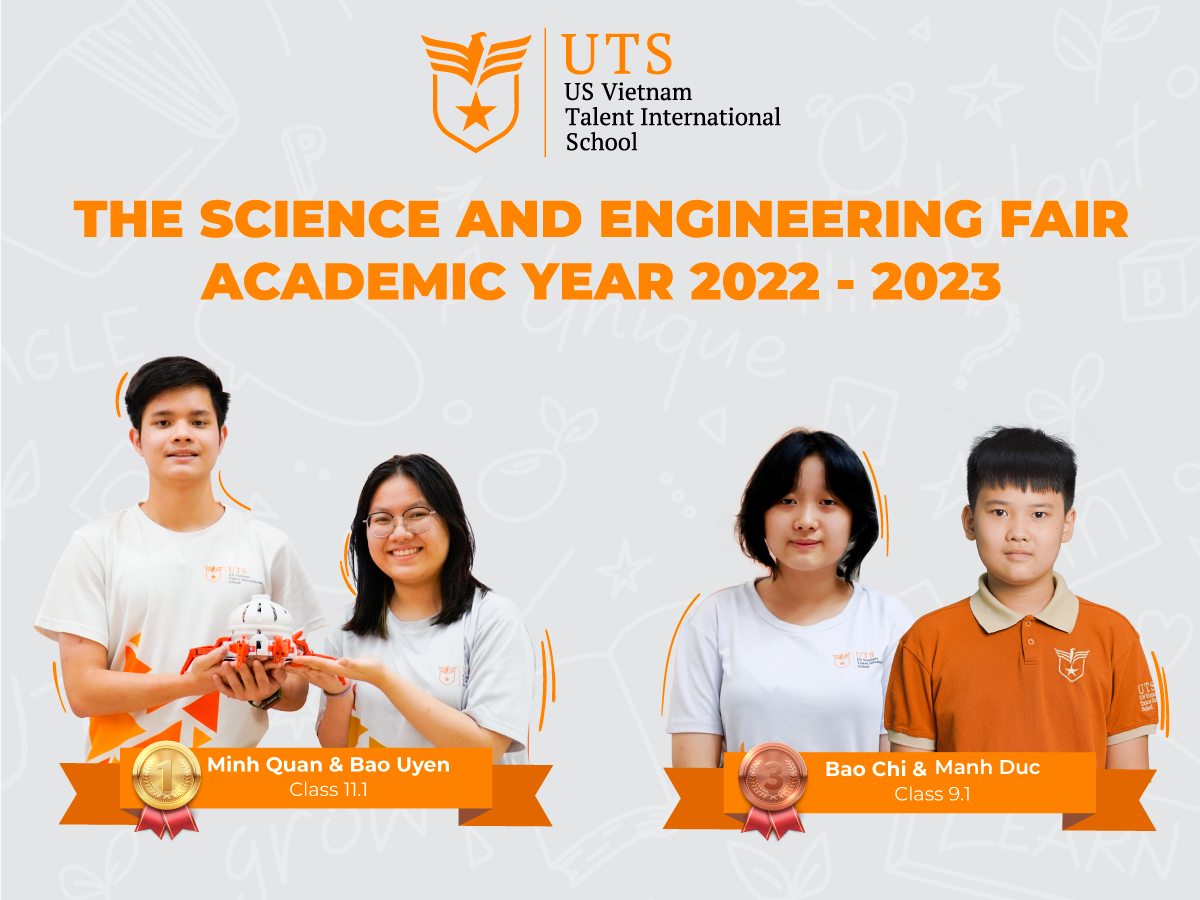
Congratulations UTS Eagles On Entering The Final...
News
15/03/2023
Học sinh UTS giữ vững tinh thần học tập mùa dịch, sẵn sàng trở lại trường từ 01/03/2021 với các biện pháp an toàn và năng lượng tích cực.
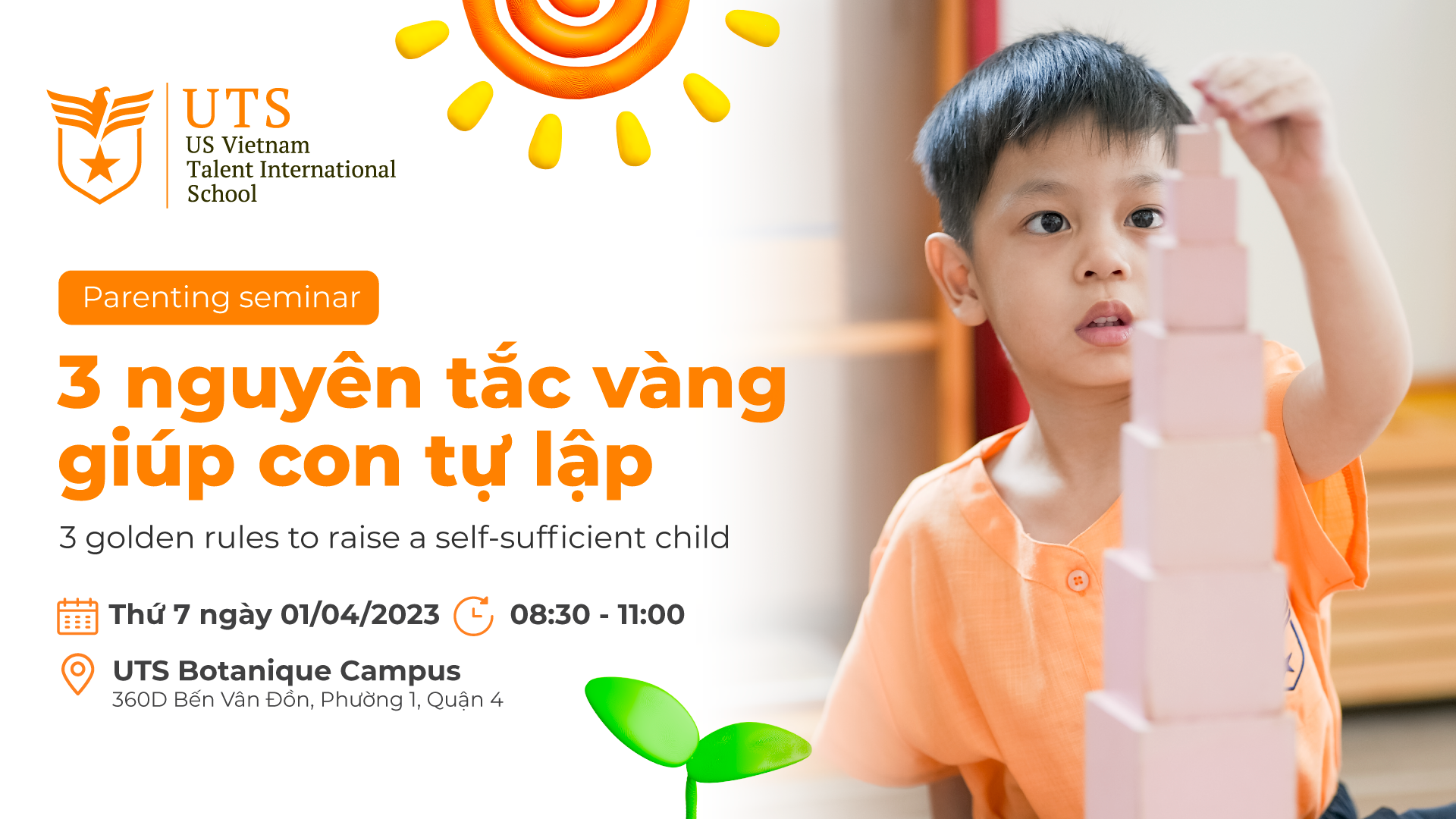
OPEN HOUSE: 3 GOLDEN RULES FOR RAISING...
Events
01/04/2023
UTS Botanique Campus – a green school in the city center where children grow healthy, independent, and ready to explore the world.
Do you know? Be positive with your...
News
11/02/2023
Parents, let's find out how UTS maintains a positive learning environment so that students can fully experience joy in their studies and become future talents.
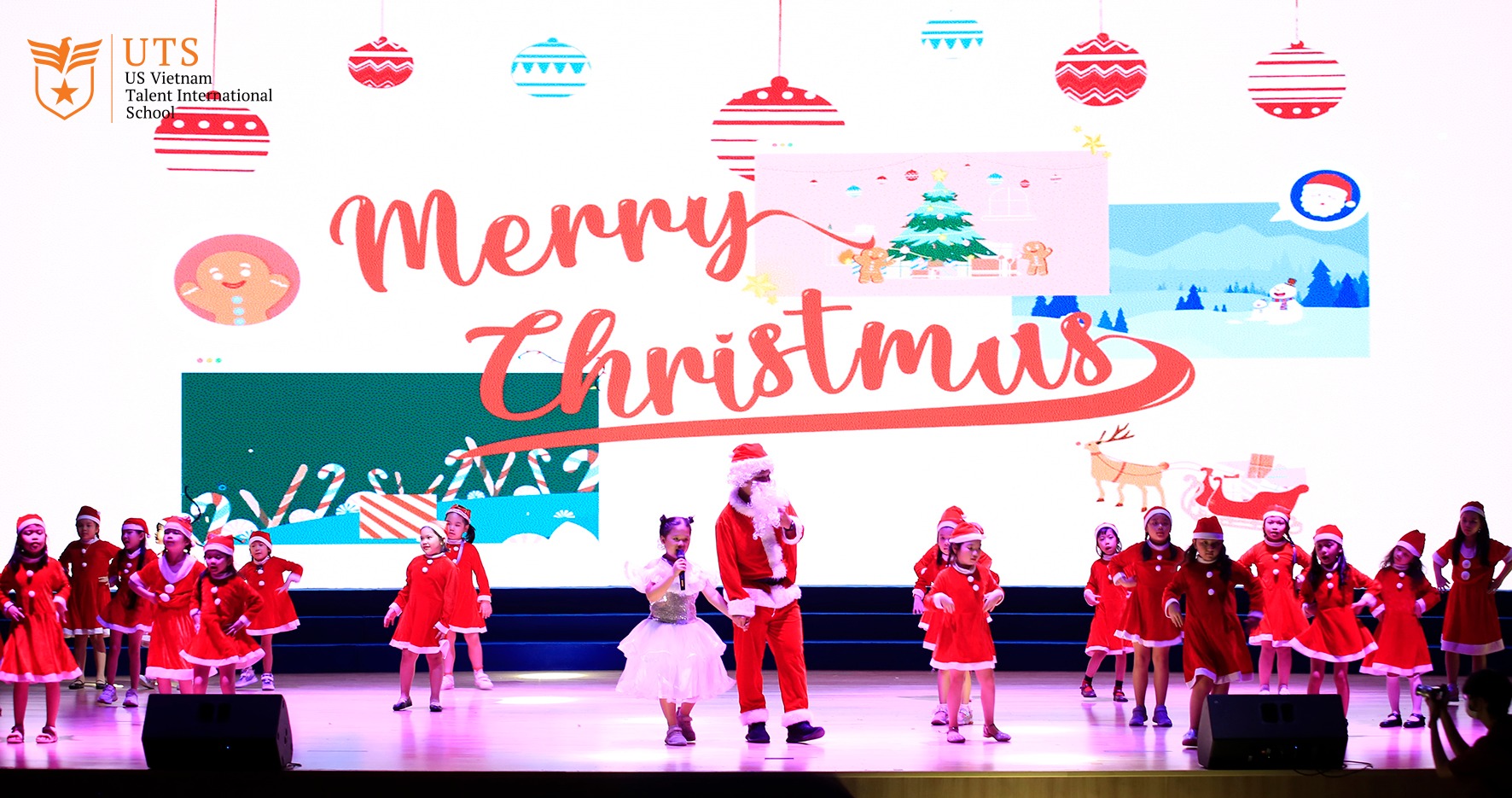
Fulfill The “Season Of Giving” With A...
News
24/12/2022
Let's see how the Christmas atmosphere at UTS has been mellowed by sequences of activities to spread out the love
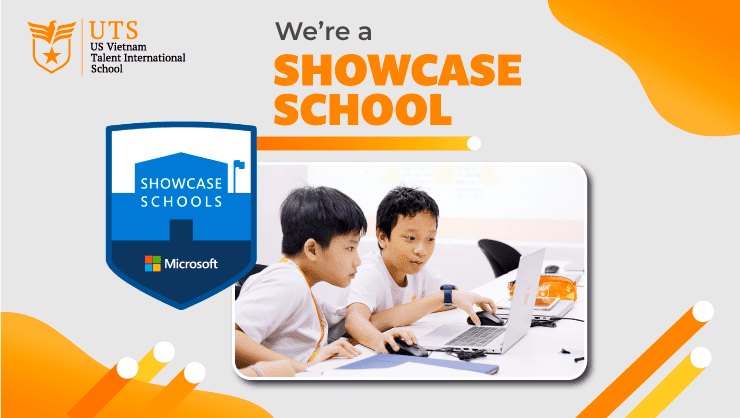
US Vietnam Talent International School becomes a...
News
27/09/2022
"US Vietnam Talent International School is proud to be officially recognized as a Microsoft Showcase School, exemplifying our dedication to educational excellence"
School Year 2022-2023 Opening Ceremony | The...
News
08/09/2022
"Happiness is not the destination, It’s the whole learning journey at UTS" - Ms. Nguyen Thi Ngoc Lan, Principal of UTS, shared at the opening ceremony.
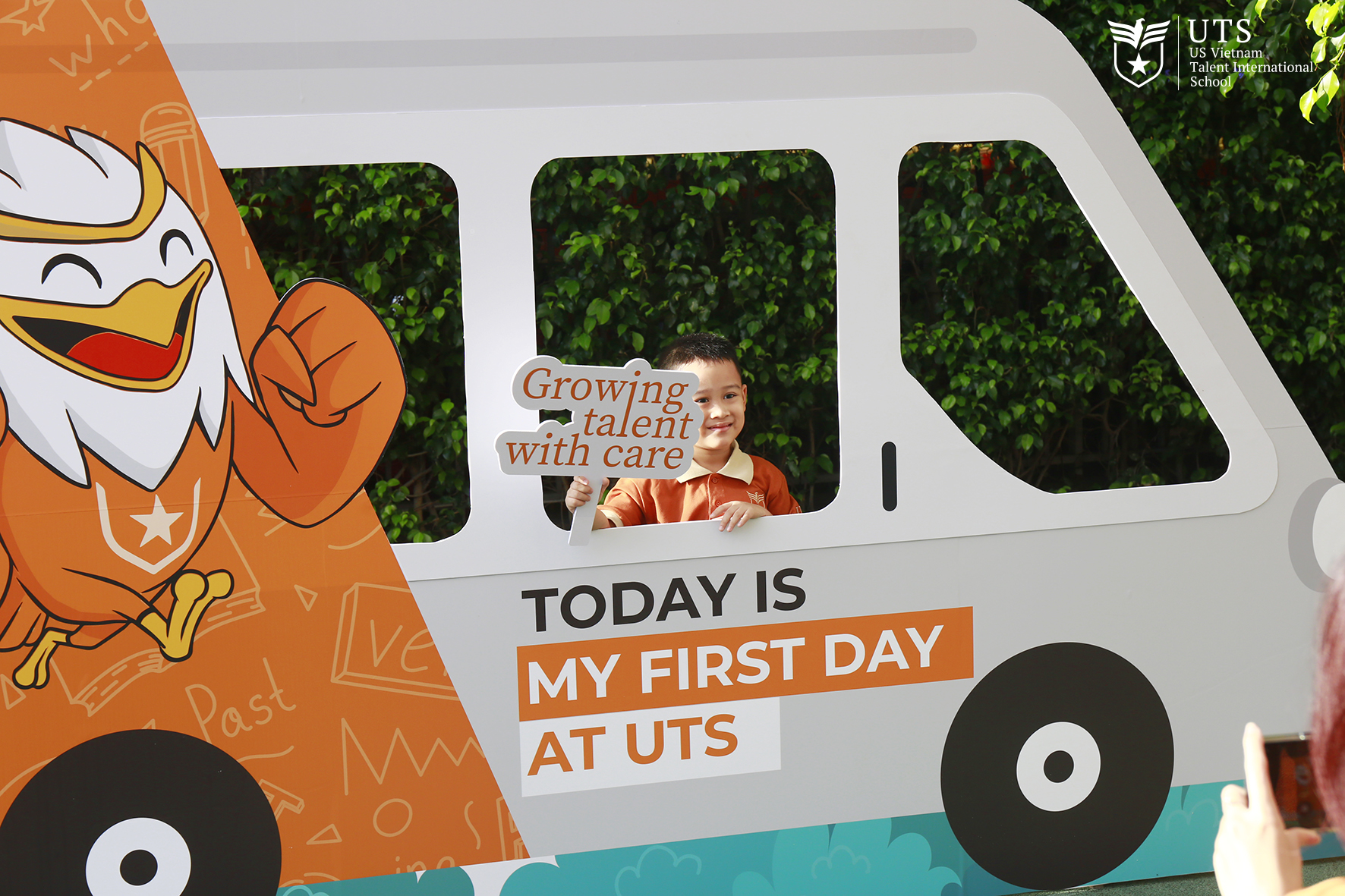
Welcome to the new school year! Welcome...
News
22/08/2022
Welcome back to school as UTS joyfully greets its little kids for a new school year full of growth, friendship, and discovery.
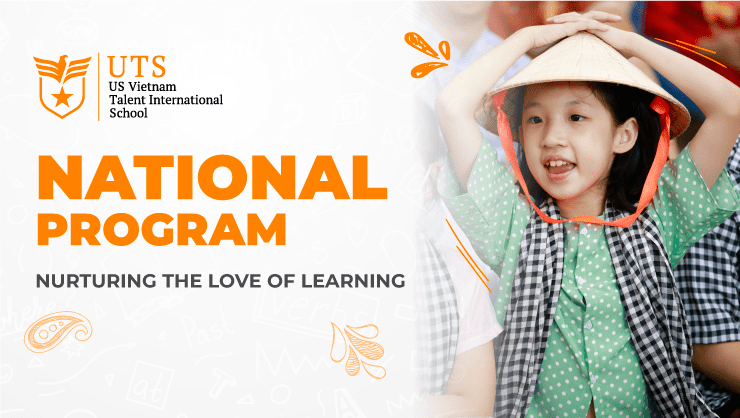
Nurturing a love of Learning with the...
News
15/08/2022
The National Program is a standard program under the new curriculum framework of the Ministry of Education and Training for all levels of education
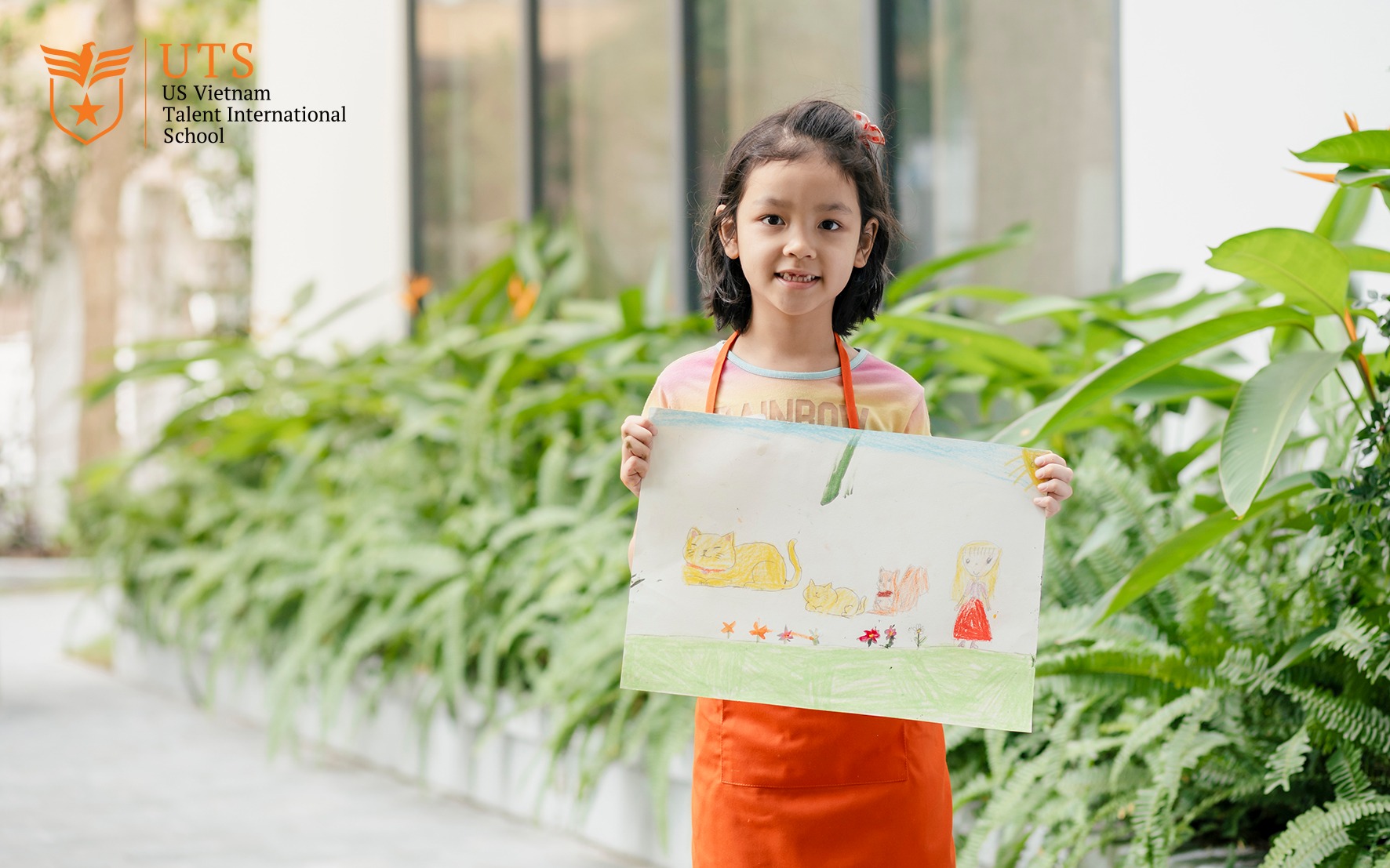
The Journey To Children’s Inner Garden Through...
News
07/01/2023
Children play the role of "little artists" and have interesting experiences at "Wellbeing Day: Your happy languages" at UTS Botanique Campus.
UTS Officially Becomes A Member Of The...
News
10/08/2022
US Vietnam Talent International School is delighted and proud to be recognized as an official member of CIS.
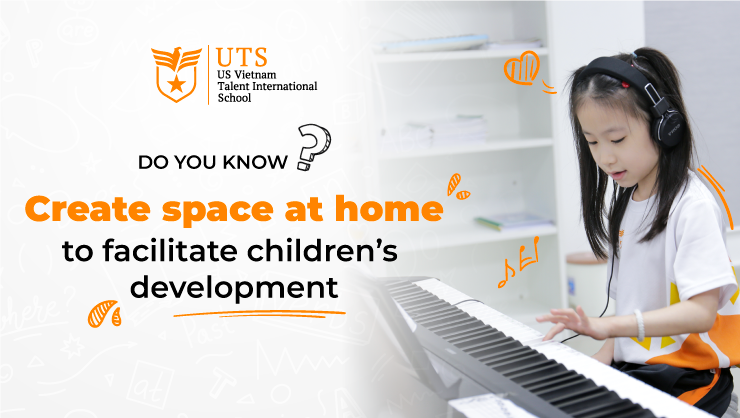
Do Parents Know? – Create Home Space...
News
16/07/2022
Let's discover with UTS how creating a comfortable and loving space can help your child realize the right values and develop comprehensively.
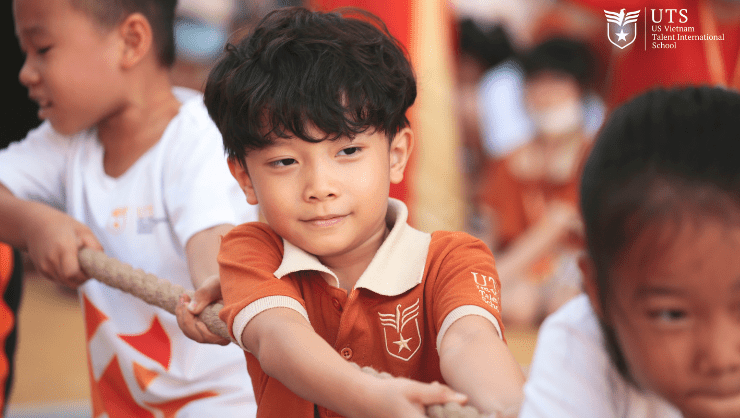
UTS-ers Are Full Of Energy With UTS...
News
08/03/2022
Parents are invited to take a look at the opening ceremony of UTS Sports Day 2022 - the most anticipated sports event of the year.
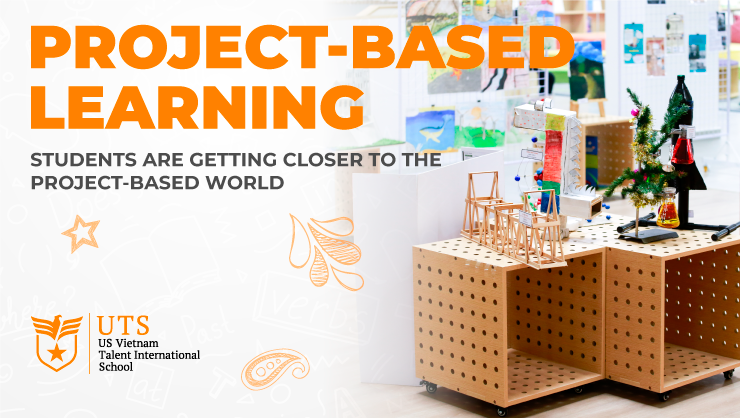
Project-Based Learning (PBL): Students Are Getting Closer...
News
04/07/2022
Project-based learning is an instructional give students the opportunity to develop knowledge and skills through engaging projects

Congratulations to Grade 5, 9 and 12...
News
02/06/2022
At UTS, students in grades 5, 9, and 12 are maturing and ready to explore new things, with grade 12 students nearing their meaningful graduation day.
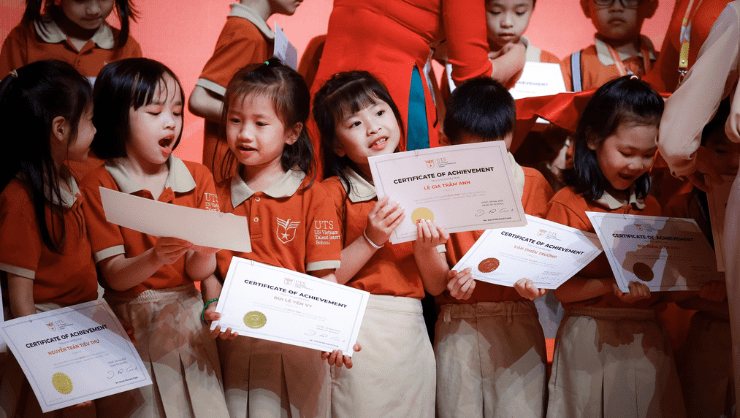
Closing Ceremony Of The School Year 2021...
News
02/06/2022
The Academic year 2021-2022 Closing Ceremony for Primary Students of UTS took place with many memorable moments. Find out more details here.
Closing Ceremony Secondary Academic Year 2021-2022: The...
News
27/05/2022
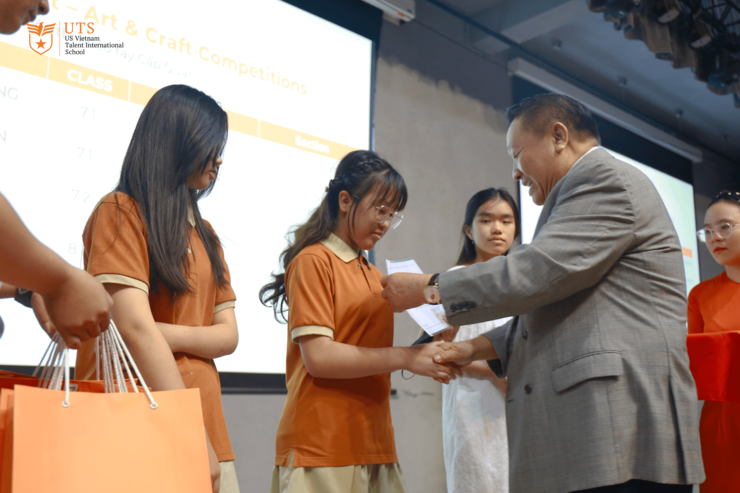
UTS Secondary Closing Ceremony 2021–2022 marked a year of resilience, growth, and academic success despite challenges from the pandemic.
UTS-ers Are Full Of Energy With UTS...
News
09/05/2022
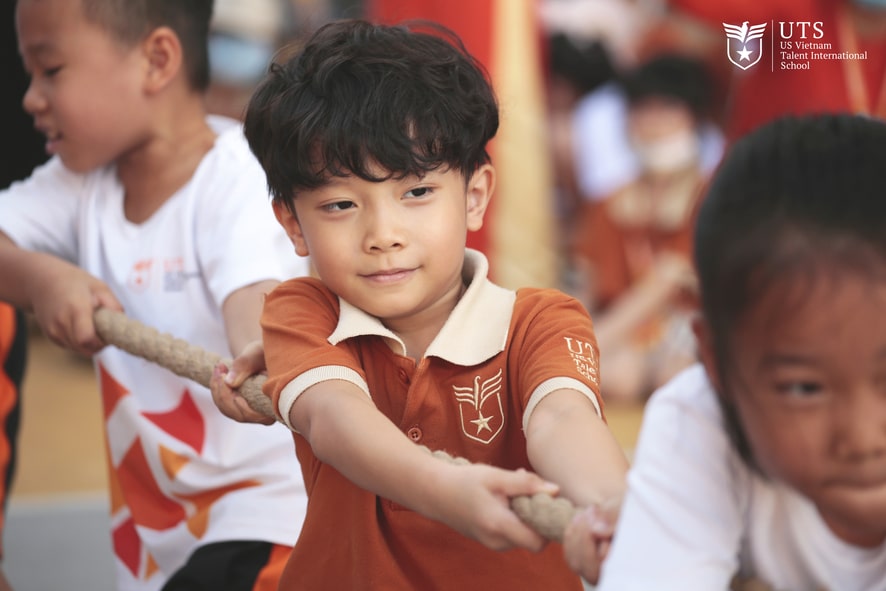
UTS Sports Day 2022 ignites energy and team spirit, where UTS-ers shine through exciting challenges and vibrant athletic activities.
Conquering Natural Science Knowledge With The Nobel...
News
05/04/2022
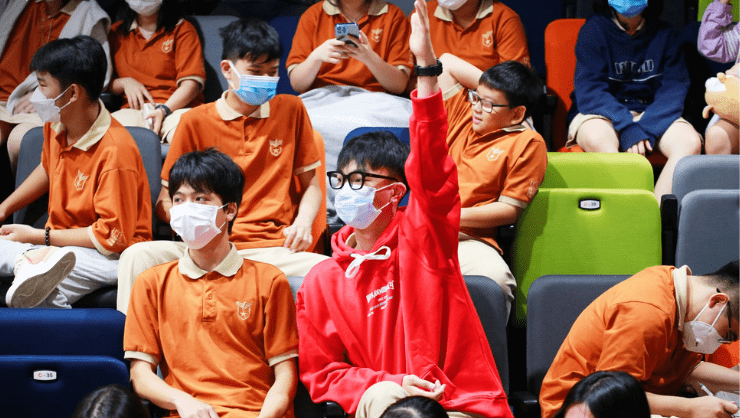
Learn more about Nobel Challenge academic contest for Secondary and high school students at UTS - where natural passion is highlighted!
Experiential Learning: When learning is not only...
News
23/06/2022
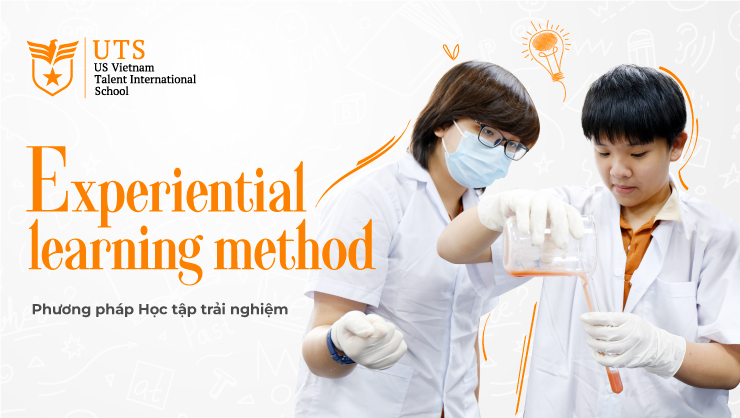
Find out how UTS applies the "Experiential Learning" (EL) method in its curriculum, offering an alternative learning approach to traditional teaching models.
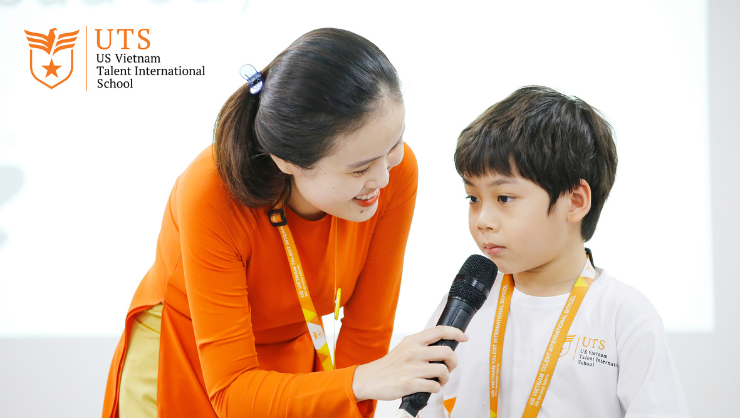
Dành cho các bậc phụ huynh: Bé...
News
03/04/2021
Bé vào lớp 1 cần chuẩn bị gì? Phụ huynh đừng bỏ lỡ những gợi ý hữu ích về tâm lý, kỹ năng và đồ dùng học tập để đồng hành cùng con nhé!
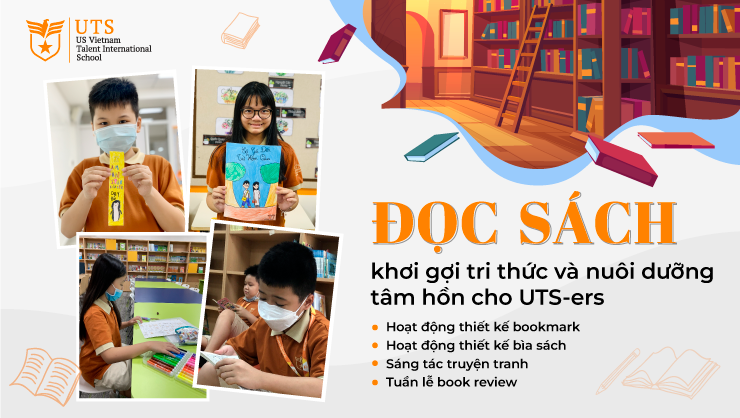
Reading – Awaking knowledge and nurturing children’s...
News
17/05/2022
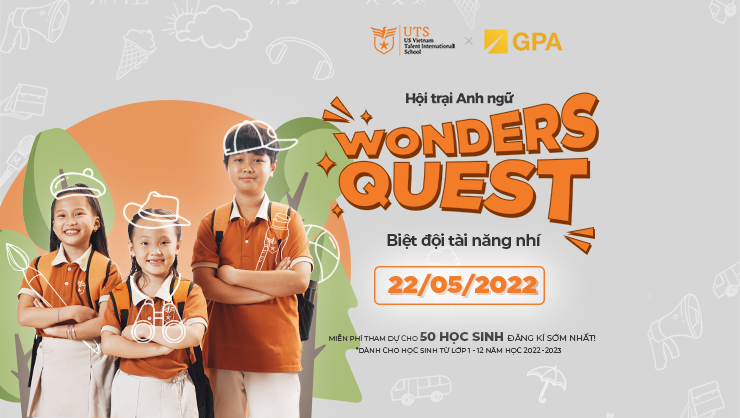
Wonders Quest English Camp: Super Talent Squad
Events
22/05/2022
Wonders Quest English Camp unleashes the talents of UTS-ers through dynamic activities that boost confidence and English communication.
Wonders Quest English Camp: Super Talent Squad
Events
22/05/2022
An experiential day at Wonders Quest is a day to have fun, participate in the race to explore the “wonders” at UTS and conquer many exciting challenges.
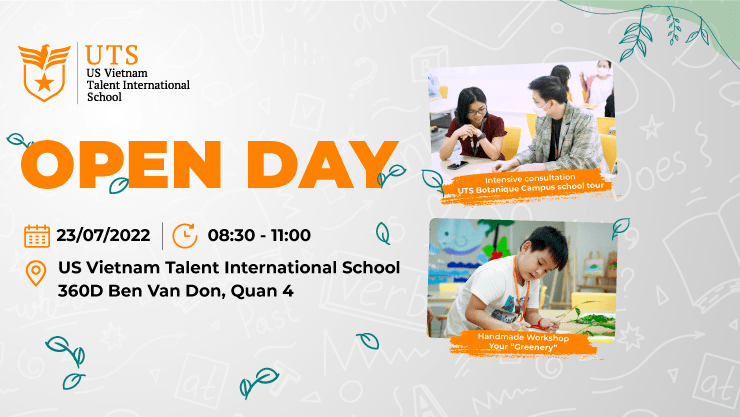
Open Day – UTS Botanique Campus
Events
06/08/2022
Coming to the Open Day at UTS Botanique Campus, the entire family will participate in creative activities to know more about UTS and the school curriculum.
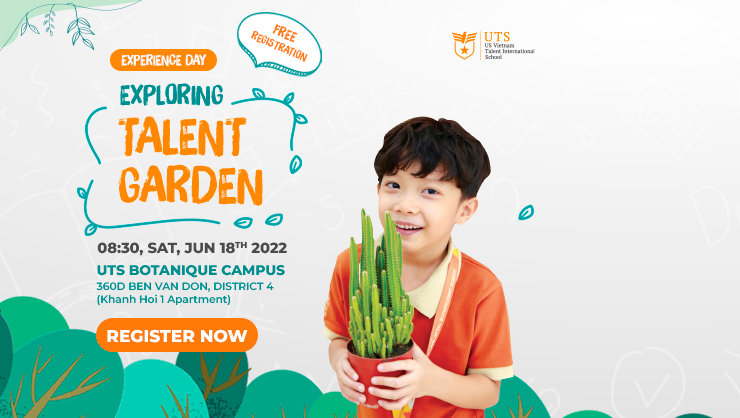
Experience Day: Exploring Talent Garden – UTS...
Events
18/06/2022
Parents can join the exploring talent garden experience day at UTS Botanique Campus here, this event offers exciting activities while addressing parents' inquiries.
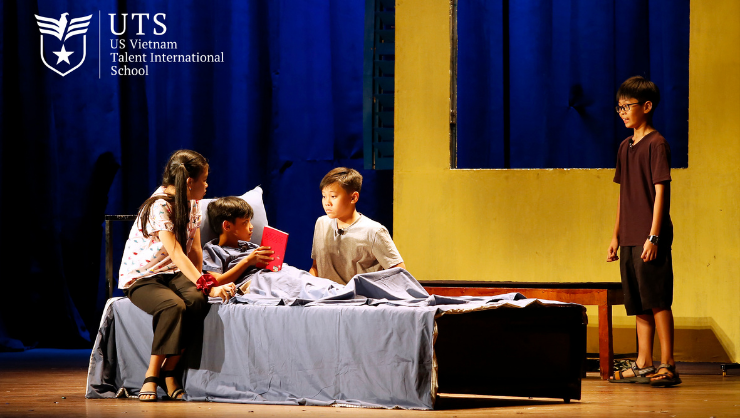
Bravery and excellence of UTS’ little actors...
News
09/01/2021
Parents are invited to see the play "Make friends with the sky" which originated from a pilot educational program at UTS and evolved into a truly professional play.
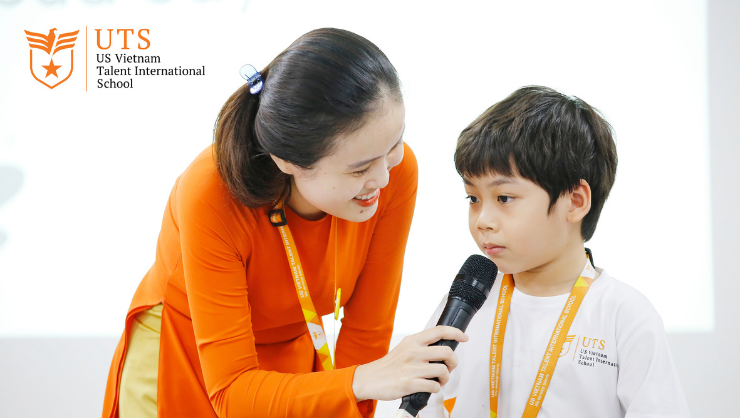
Cross-curricular project “Green trees around us”: For...
News
15/01/2021
Explore the necessity of educating UTS students about the vital role of green trees in promoting a greener future
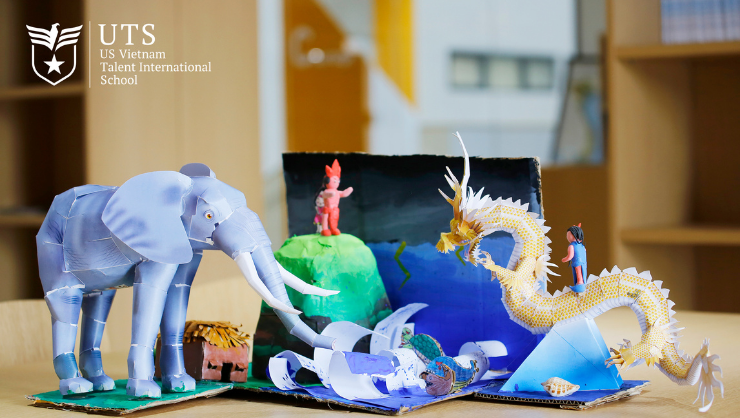
When Literature is not simply letters through...
News
14/01/2021
In the Literature project, UTS students made models of folk tale to make them more lively! Let's see what they have done.
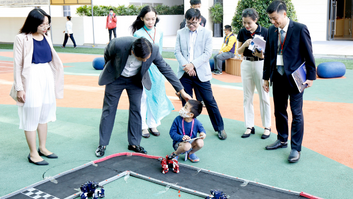
Math Open Day 2021 at UTS: Fantastic...
News
17/01/2021
Explore the interesting Mathematics – Science space made by UTS students and join the talkshow “What do we learn Mathematics for?” at Math Open Day 2021.
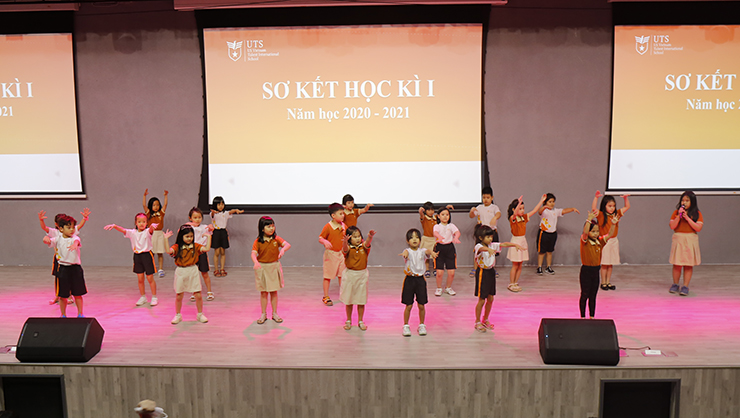
A wonderful and meaningful semester has passed...
News
20/01/2021
In the first semester of the 2020-2021 school year, UTS-ers successfully maintained effective learning and comprehensive personal development.
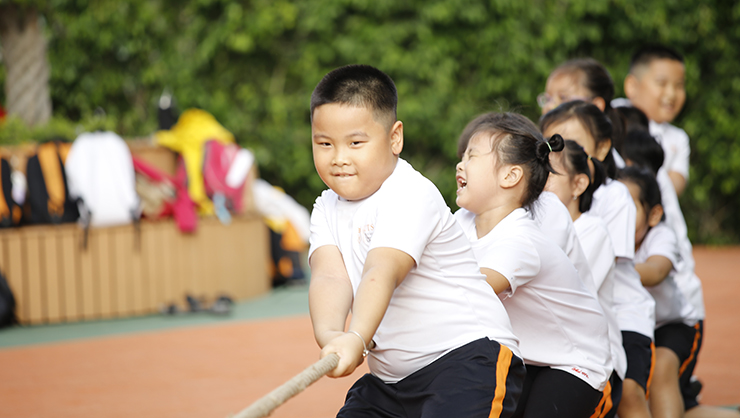
Explosion of team spirit with tug of...
News
21/01/2021
UTS Sport Games 2021 ignited team spirit through thrilling subjects, fostering unity and a strong will to conquer among UTS-ers.
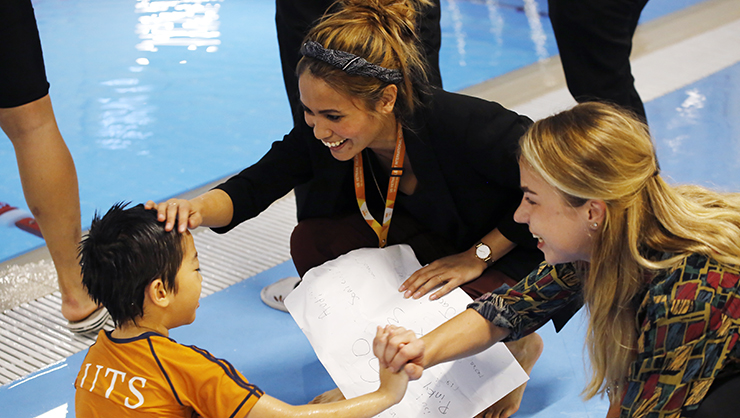
“Little swimmers” of UTS with Admirable Effort
News
23/01/2021
Meet the little swimmers at “UTS Sport Games 2021”. All of them tried their best to conquer the swimming lane!
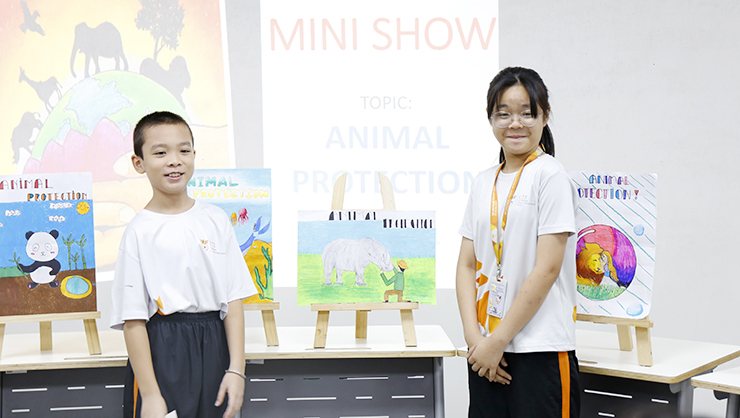
Learning about animal protection with glowing colors
News
25/01/2021
Join UTS in an English mini show “Raising an awareness of animal protection” with colorful paintings and enhance loving spirit of animals!
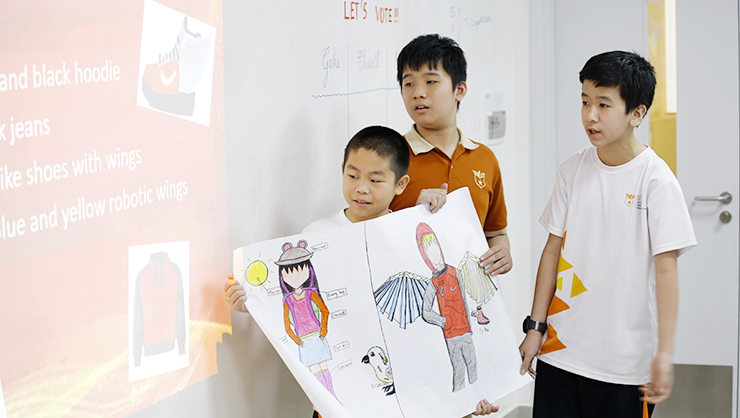
UTS-ers and their “fashion companies”
News
26/01/2021
Learn more about The "startup" story of the fashion brand which was approached by UTS-ers in an engaging and innovative way during an English class

National pride with the shadow puppetry of...
News
27/01/2021
Grade 10 and 11 students at UTS study History through an innovative method in the project "Shadow Puppetry of History".
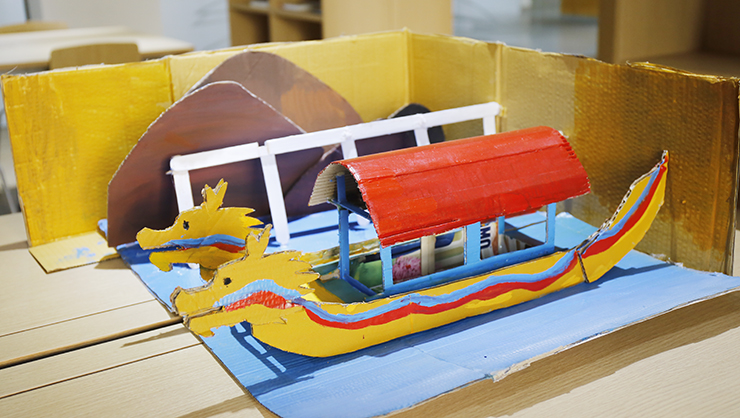
Making famous literary works come alive by...
News
01/02/2021
Admire the models created by 7th graders of UTS based on Literature program such as Uncle Ho’s simplicity, Non-interference, ...
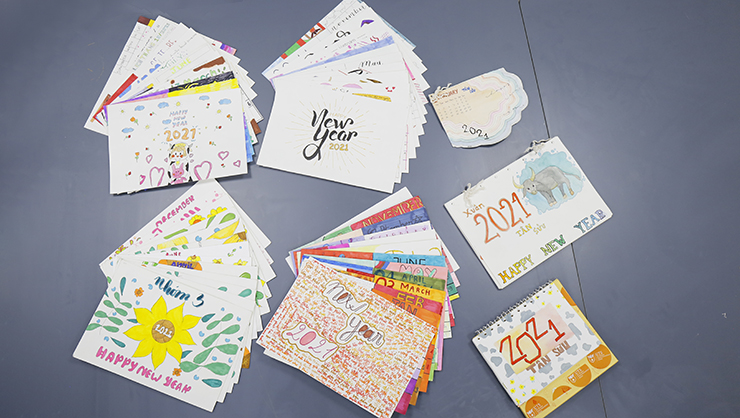
UTS-ers showing their whorls with unique handmade...
News
03/02/2021
UTS-ers showcase creativity with handmade table calendars, turning each product into a unique expression of personal style.
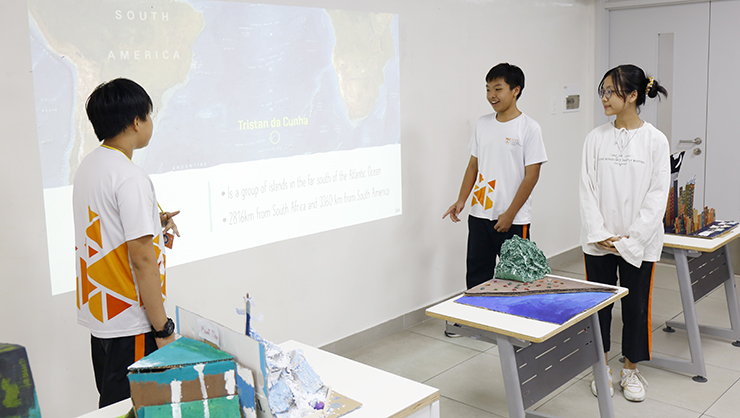
UTS-ers and the “adventure” to most extreme...
News
23/02/2021
Admire students from Class 7.1 and gain more Geography and Science knowlegdes throughout their illustrated models made by environmentally-friendly materials!
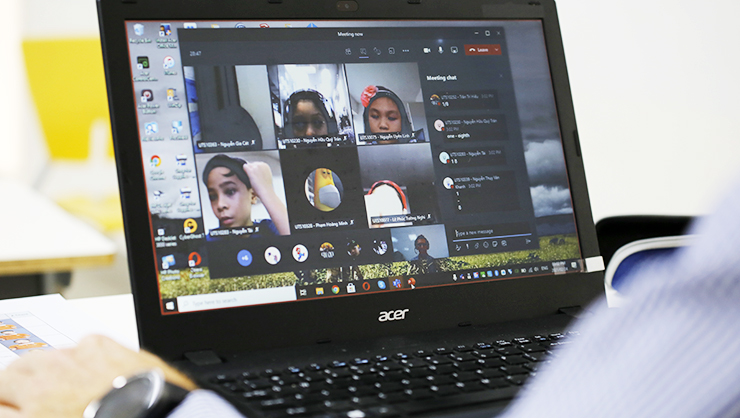
Learning enthusiastically, fighting the COVID off!
News
25/02/2021
The UTS community remains dedicated to learning during the pandemic, with students actively engaging in online classes and completing their exercises and assignments.
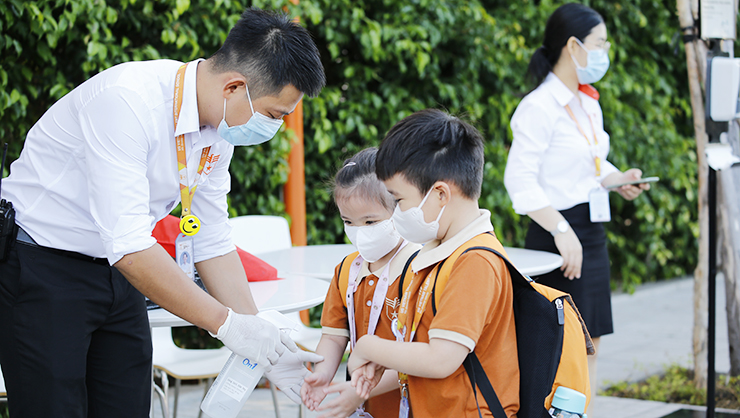
UTS community safely return to school together
News
01/03/2021
After a month being apart from each other with the Tet holiday and effects of the COVID-19 pandemic, UTS community officially return to school’s campus.
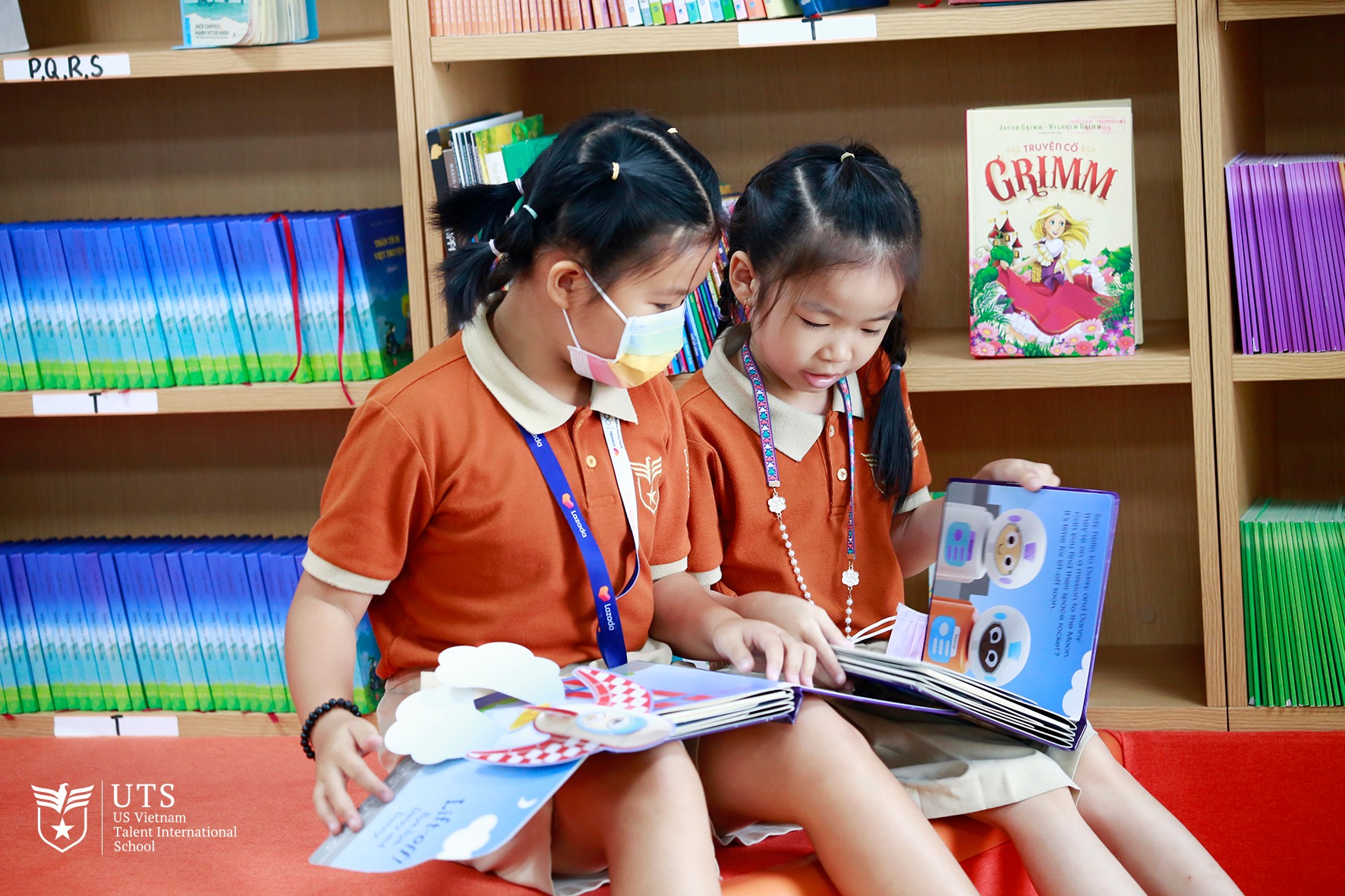
Why should we read books?
News
04/03/2021
In order to nurture love with books in each student, the “Learn to Read” program is integrated in the educational program of all grades at UTS.
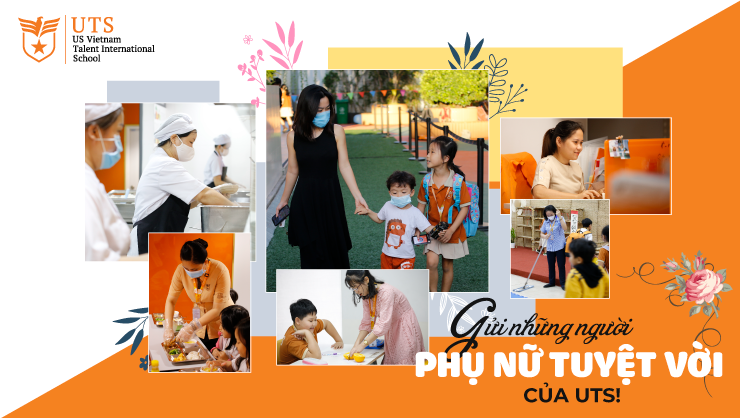
Dear our beloved women!
News
05/03/2021
UTS would like to give our honest thank to UTS’ women for their dedication in the nurturing and growing journey of future talents
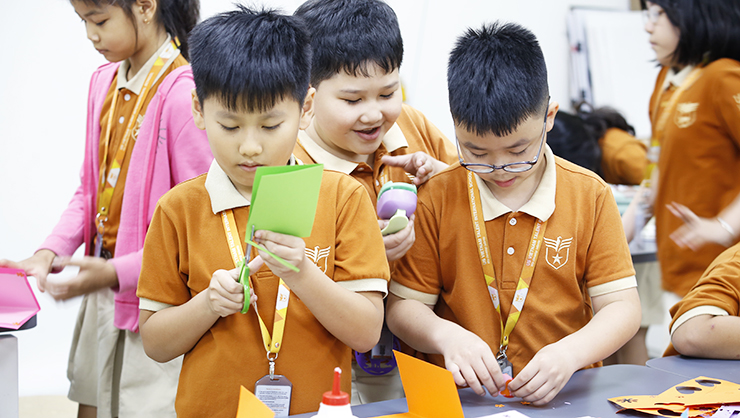
Be handy with lovely cards of UTS-ers
News
06/03/2021
Join UTS-ers to make lovely cards to give to our beloved woman as best wishes on the International Women’s Day!

Chemistry Club: Learn how to make perfume...
News
10/03/2021
With knowledge about fragrance notes, students create fragrant perfume from alcohol and essential oil and give them to their Mom on the International Women’s Day!
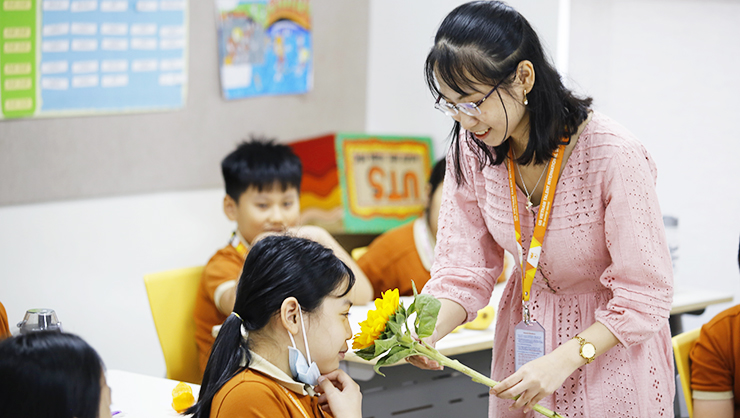
How to learn descriptive writing effectively?
News
11/03/2021
At UTS, descriptive writing is not just thinking and imagining. Join the Writing lesson of class 4.1 to promote this spirit in a creative and realistic way.
World Water Day 2021: Let’s appreciate our...
News
22/03/2021
Let's join UTS-ers to learn about World Water Day on March 22nd and discover the importance of water in our daily lives
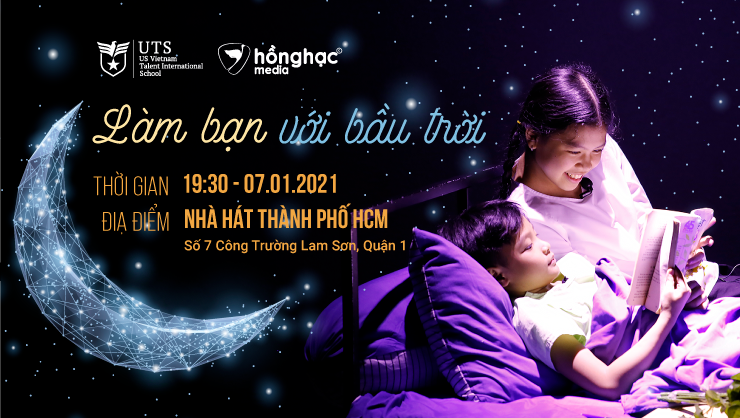
Drama “Make friends with the sky” of...
News
23/03/2021
Drama by UTS students takes the stage at HCMC Youth Cultural House, delivering a meaningful message through youthful performance.
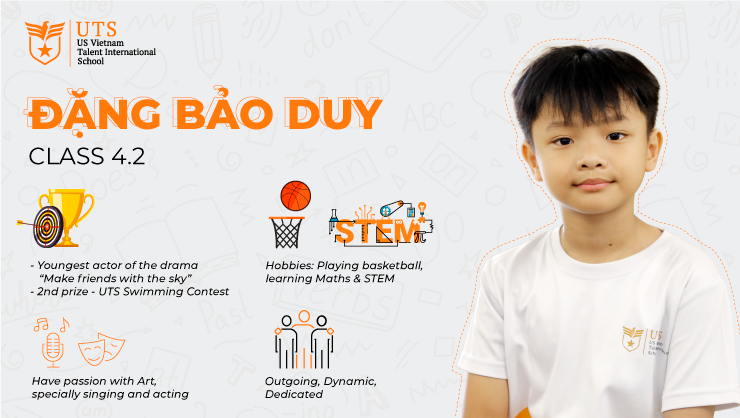
[Human of UTS] – Dang Bao Duy:...
News
25/03/2021
Discover how Bao Duy, a dynamic student and standout actor from UTS in 'Making friend the Sky', manages to balance his academic and personal passions
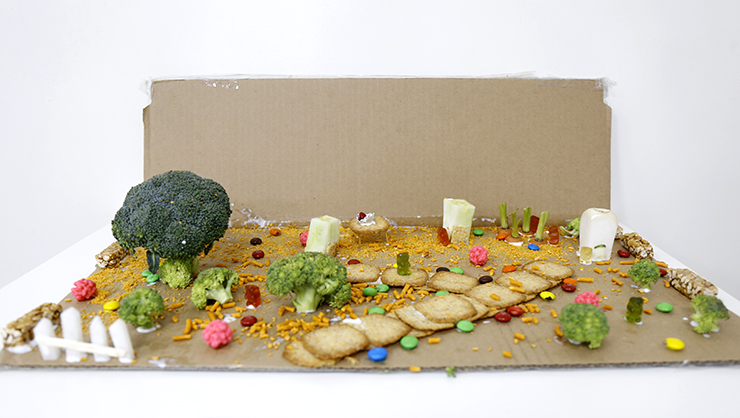
Learning English with foodscapes!
News
31/03/2021
Join class 6.1 to learn about “foodscape” - thereby developing our creative thinking! This is the first step for UTS-ers to form their various thinking and creativity.
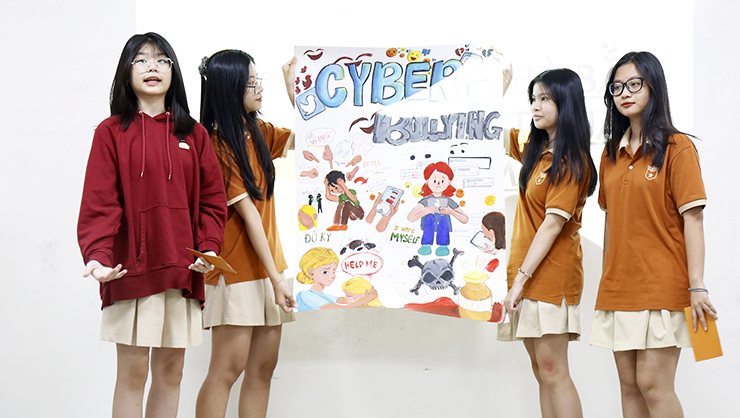
Raising UTS-ers’ awareness about cyber-bullying
News
29/04/2021
UTS Class 9.1 students use the Life Skills subject to express their thoughts and opinions on various forms of cyber-bullying.
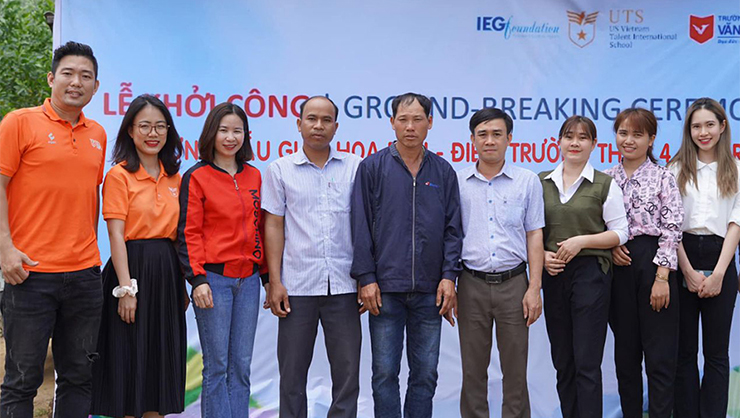
M’Drak Kindergarten: The beginning of dreams
News
27/03/2021
Join Van Lang Education Group and US Vietnam Talent International School’s kindergarten project in M'Drak, dedicated to inspiring dreams for over 50 children
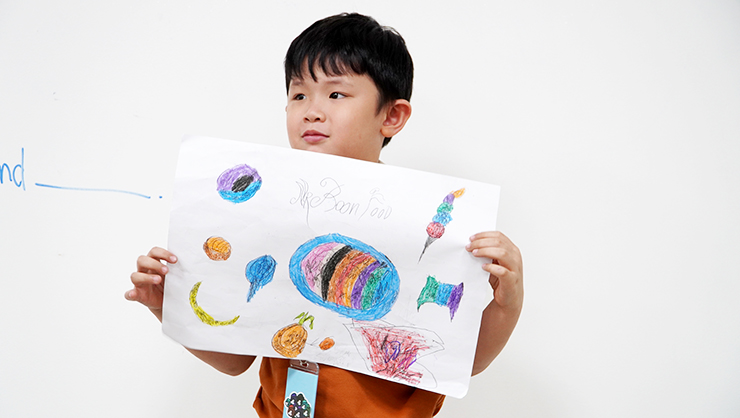
Let’s revise English vocabulary of the theme...
News
09/04/2021
Join students of Class 1.1 of UTS to learn and apply new vocabulary of the theme "Food & Drinks" to describe daily meals and express favorite dishes.
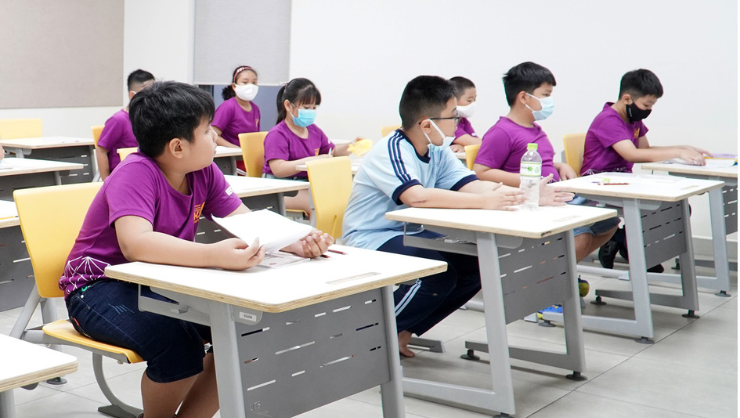
The International Kangaroo Math Contest 2021 at...
News
12/04/2021
Discover the highlights of the International Kangaroo Math Contest 2021 at UTS, where students tackled creative Math challenges with global orientation.
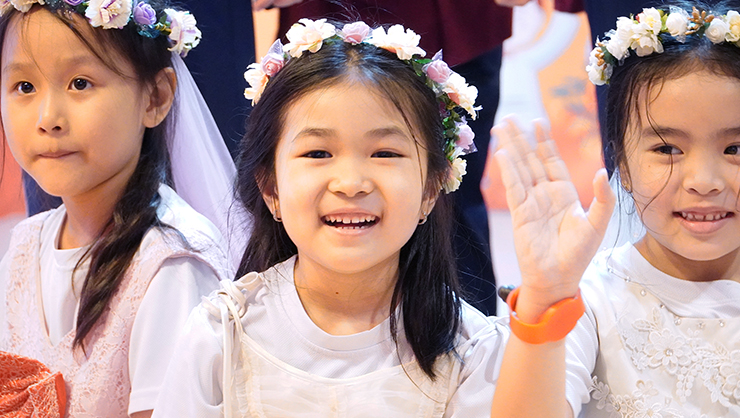
UTS-ers experience dream jobs in the happy...
News
15/04/2021
UTS-ers experience dream jobs through real-world role-play in the Happy City project, nurturing career awareness from an early age at UTS.
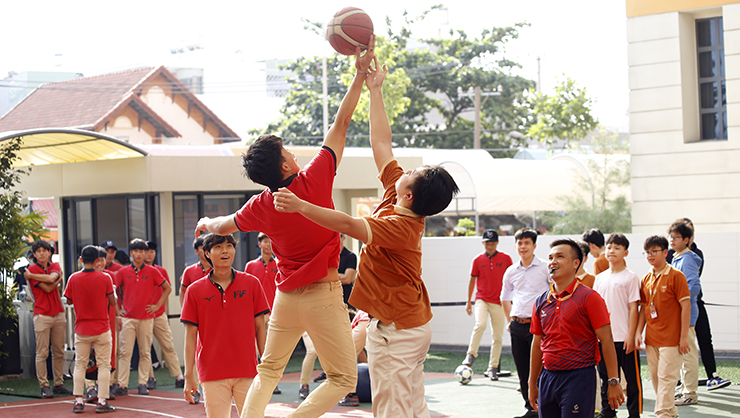
UTS-ers meet the champion of the U19...
News
16/04/2021
Reflect on the visit by the PVF Football Academy U19 Team, champions of the U19 National Football Championship 2021, to UTS.
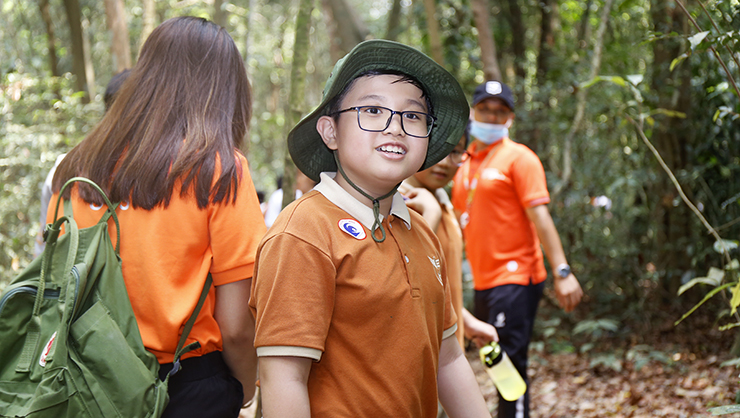
Growing up in the experiential learning trip...
News
17/04/2021
Follow the journey of 5th and 12th graders of UTS in Cu Chi - Ben Duoc tunnels and Hi-Tech Agricultural Zone – WonderPark to gain more interesting knowledge!
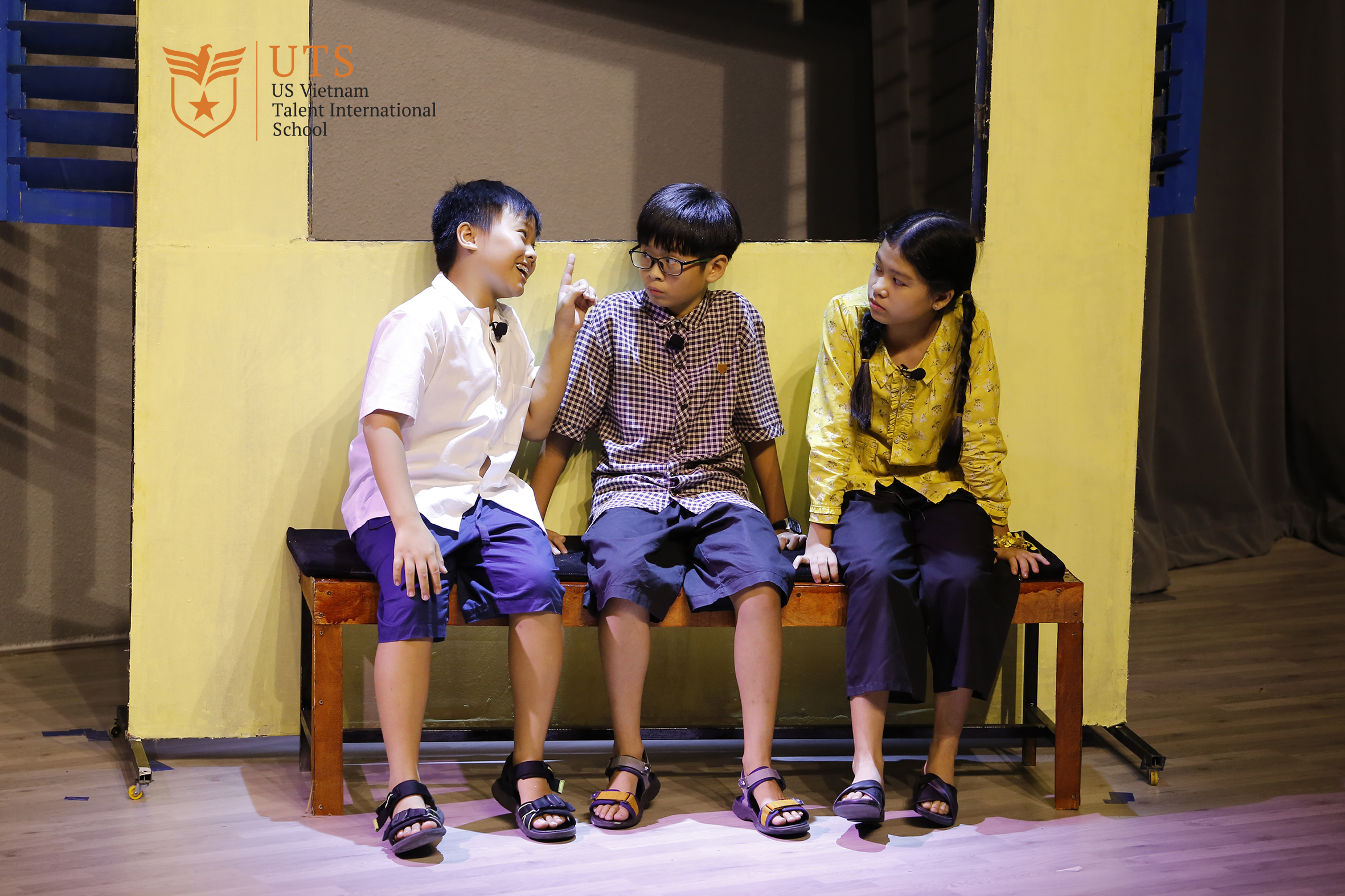
Teo is coming back!
News
19/04/2021
Make friends with the sky returns with UTS-ers on the professional stage, bringing heartwarming stories this April.
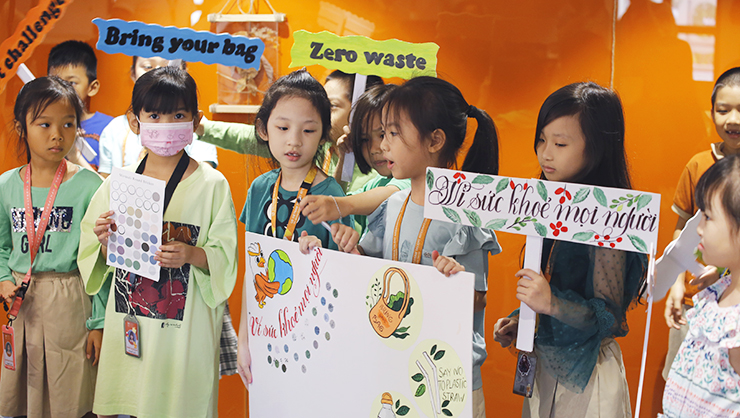
Wear green to school – Let’s celebrate...
News
21/04/2021
On International Mother Earth Day, all UTS community members wore green outfits to school to foster "protecting environment" spiri
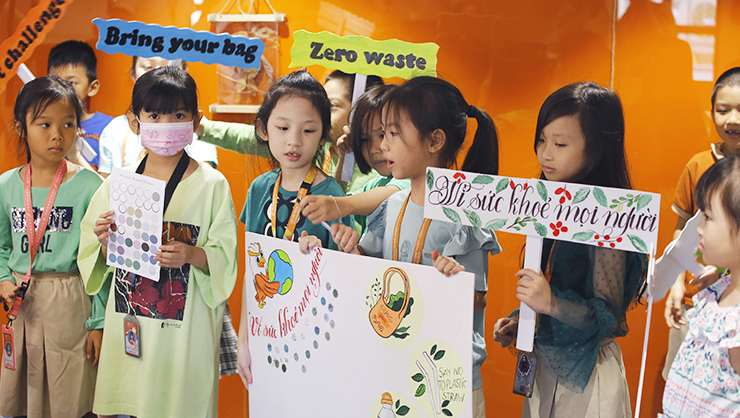
UTS is full of green on the...
News
22/04/2021
UTS-ers shared about the values of environment and encourage to limit using single-used plastic to protect our ecosystem throughout the project “For everyone’s health”.

UTS-ers “recycling” project: Reduce waste to help...
News
23/04/2022
Let's find out how the students in grade 5.1 of UTS practice the 3R method through the project “Recycling” in English subject.
“Humans of UTS” Rewind: A love story...
News
24/04/2021
Discover “Humans of UTS” - a special project for members of UTS community, bringing lovely stories about the nurturing and developing journey of future talents.
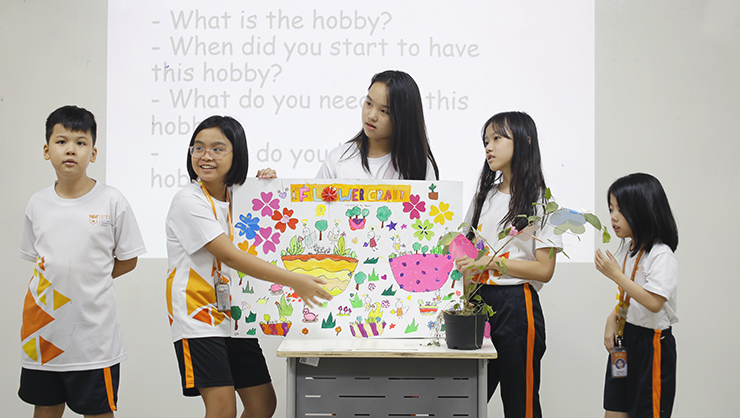
Turning Hobbies Into Passions with UTS-ers
News
03/05/2021
Follow along with the project that UTS Grade 7 and 11 students participated in together during the English project wrap-up session titled "UTS DIARY"
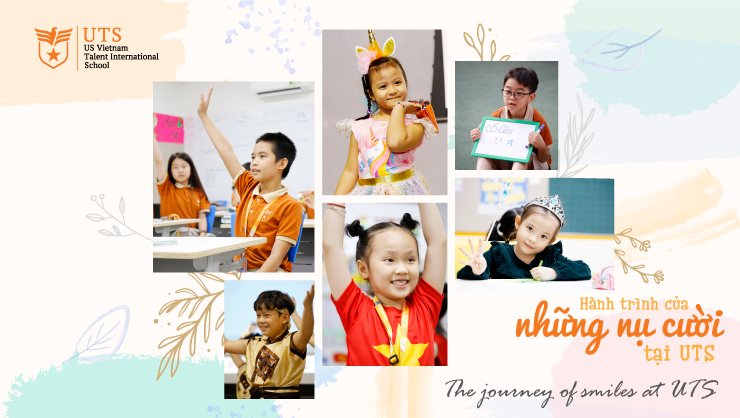
The journey of smiles at UTS
News
27/04/2021
Let’s look back on the journey of smiles at UTS over the year 2021 and together get strength to successfully complete all the challenges ahead!
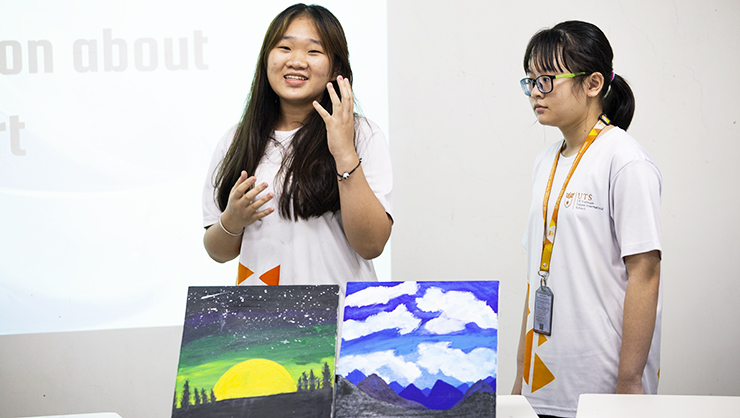
Which color in the UTS-ers’ world?
News
26/04/2021
Learn more about how the students in grade 8.2 of UTS can grow this special type of intelligence through the lesson “The World in our Eyes”
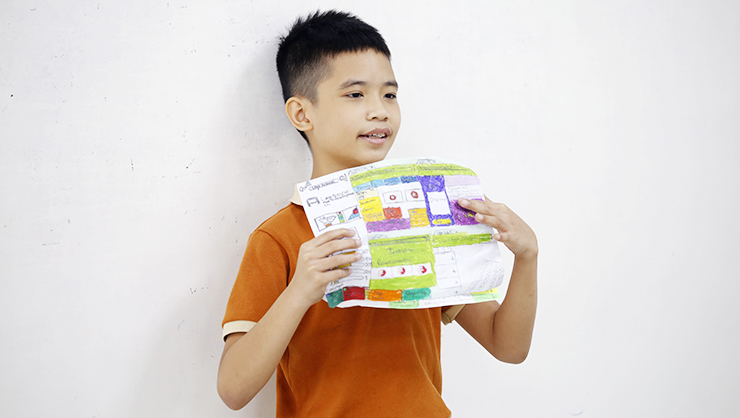
Unique applications of “little programmers” at UTS
News
04/05/2021
Unique applications by little programmers at UTS showcase creativity, real-world problem solving, and the power of coding skills nurtured.
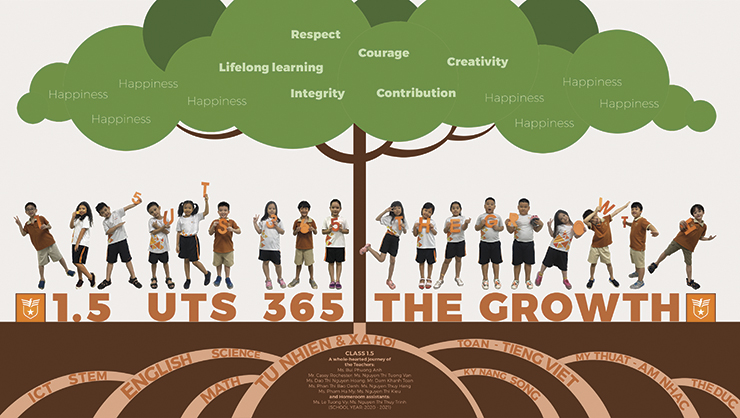
“UTS – 365 The Growth” voting round...
News
08/05/2021
The voting phase for 'UTS – 365 THE GROWTH' has officially started! A big thank you to everyone for your daily efforts to grow and succeed during the last school year.
UTS: Keep the spirit – Together we...
News
10/05/2021
Learn more about how UTS students maintain an optimistic spirit and readiness to adapt to the ever-changing world. Discover their approaches and strategies!
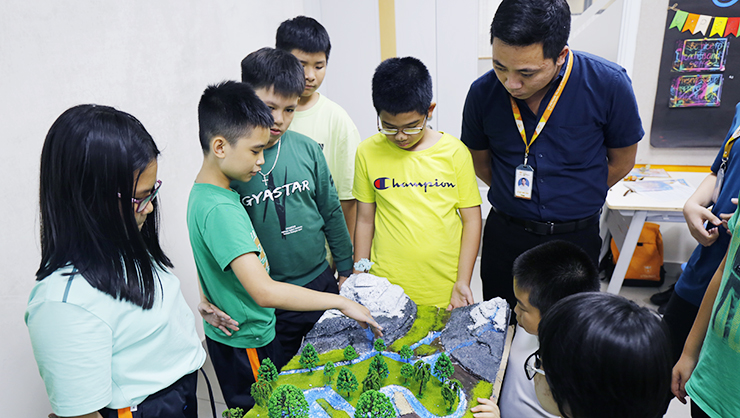
UTS-ers “created” Amazing River & Lake System
News
11/05/2021
Parents are invited to Grade 6.3, where the students at UTS create magnificent river and lake models with their own hands during their Geography class.
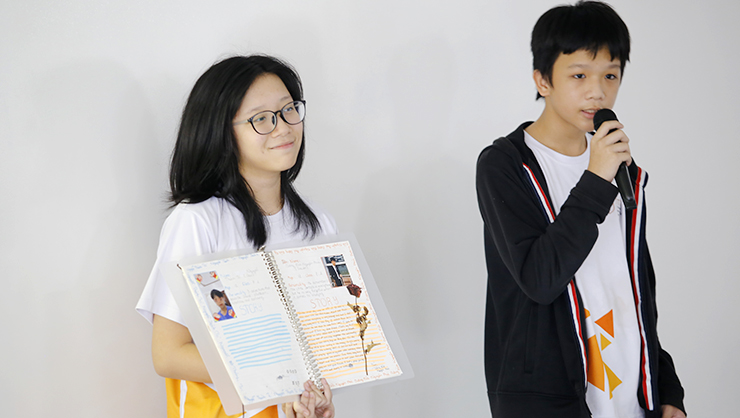
Sharing Emotions and Memories with the “UTS...
News
12/05/2021
UTS students showcased creativity and English skills in the UTS Diary project before switching to distance learning due to the epidemic.
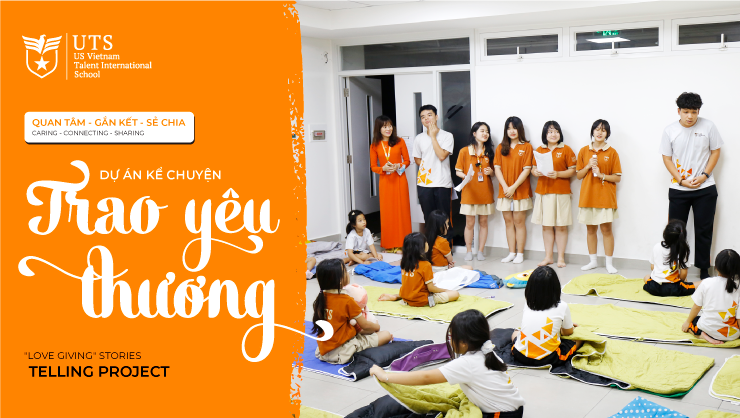
“Love Giving” Stories-telling Project
News
15/05/2021
At UTS, we are family. Join us in the “Love Giving” stories-telling project, which helps strengthen the connection among students at UTS
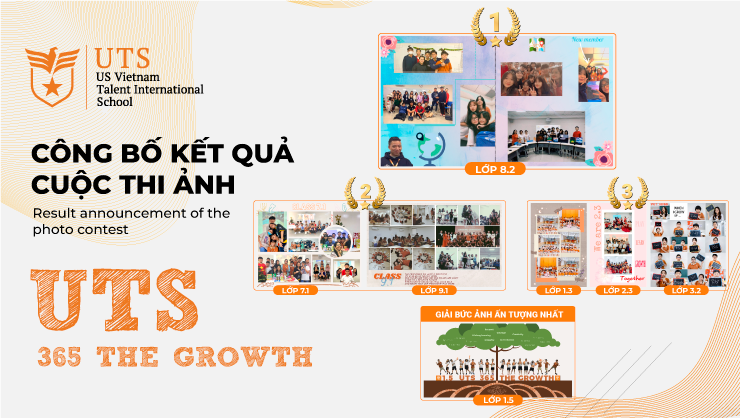
Result annoucement of the “UTS – 365...
News
21/05/2021
The “UTS – 365 THE GROWTH” photo contest has officially ended with prizes for classes which have the highest voting results.
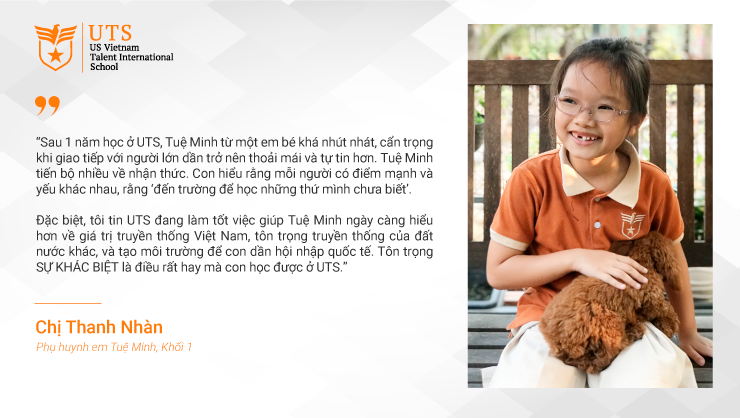
“She has completed the 1st Grade at...
News
24/05/2021
Ms. Thanh Nhan, parent of Tue Minh - a 1st grade student shared about her daughter's change after 1 year of studying at UTS.
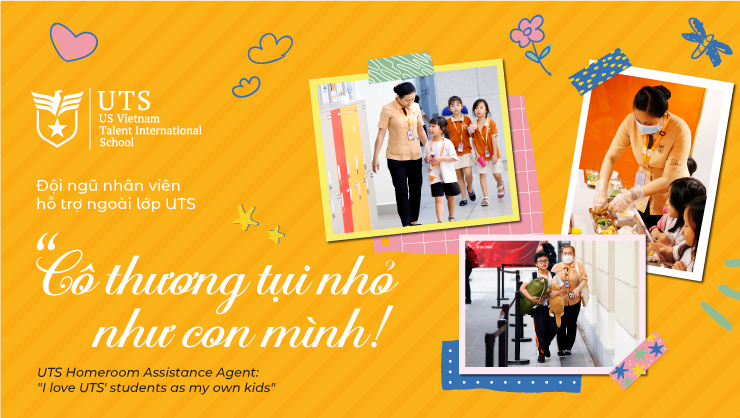
[Humans of UTS] – UTS Homeroom Assistance...
News
25/05/2021
"We love UTS’ students as our own kids. Therefore, we always strive to make them feel happy at school." - shared Mrs. Quyen - Homeroom Assistance staff.
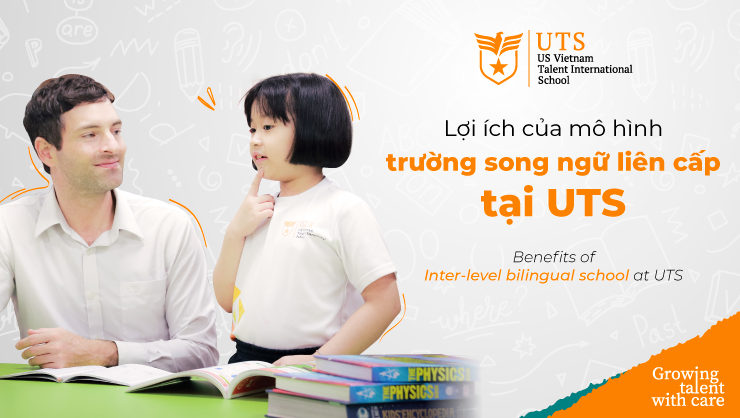
Benefits of inter-level bilingual school at UTS
News
18/04/2022
Explore how UTS's education programs from Primary to High School support the growth and development of our little ‘talents’
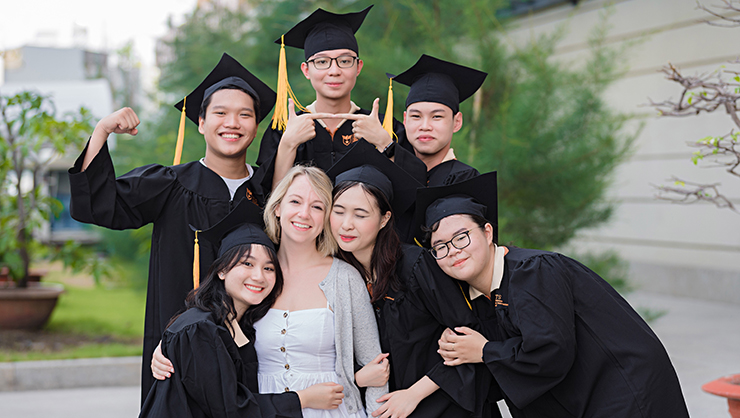
Saving sweet memories with UTS-ers
News
18/04/2022
The 2020-2021 school year is an important milestone for UTS students in grades 5, 9, and 12 as they complete their respective levels of education.
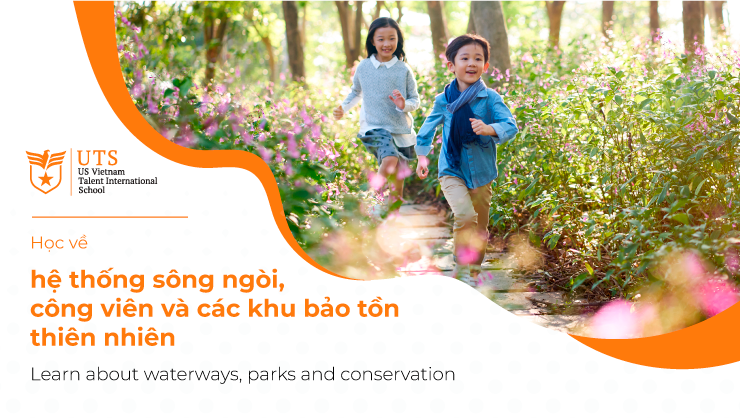
Accompanying children in the environmental protection journey
News
18/04/2022
Environmental protection journey with UTS inspires children to love nature and take action, more sustainable future from early childhood.
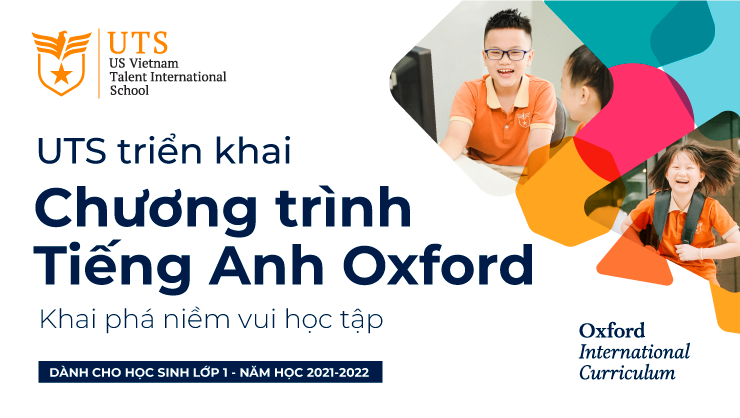
Oxford International Curriculum
News
18/04/2022
Becoming Oxford University educational partner, UTS officially implements the Oxfoxd International Curriculum form School Year 2021-2022.
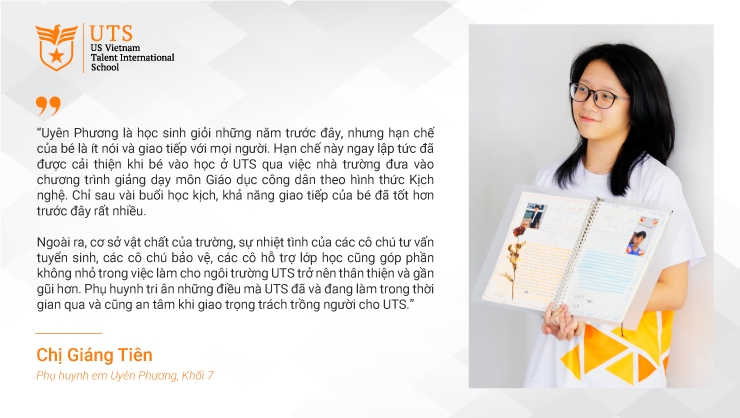
“I feel sastified when trusting UTS to...
News
18/04/2022
A UTS parent shares her joy as her daughter grows in confidence and learning through a holistic and creative education.
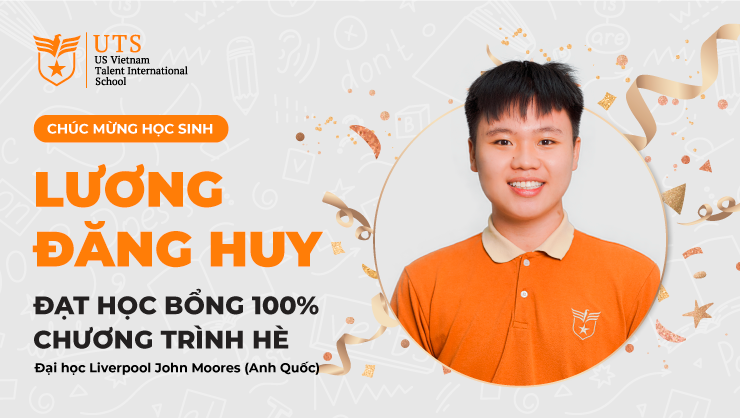
Congratulations Luong Dang Huy (Grade 11) on...
News
08/06/2021
Luong Dang Huy, Grade 11 UTS earns a 100% scholarship for a prestigious summer program at Liverpool John Moores University.
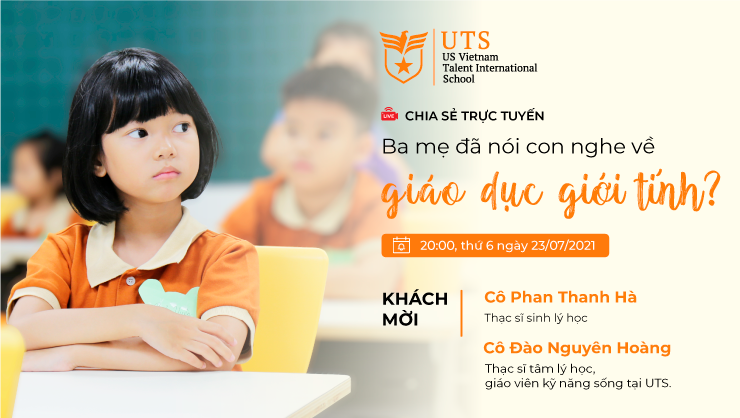
Have parents talked to children about Gender...
Events
23/07/2021
Parents, let's explore how at UTS, children receive comprehensive sex education from grades 1 through 12, with age-appropriate approaches for each stage.
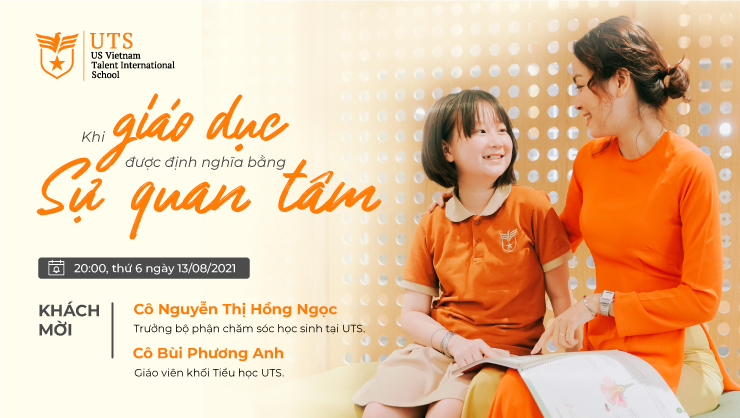
Online talkshow: When education is defined by...
Events
13/08/2021
Cùng tìm hiểu sự quan tâm được thực hiện ở UTS như thế nào thông qua chương trình trực tuyến: “Khi Giáo dục được định nghĩa bằng sự quan tâm”
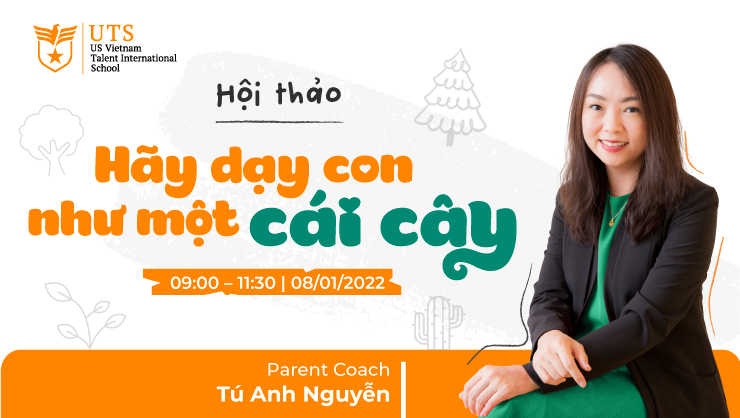
Talkshow: raising the child like a tree
Events
08/01/2022
Parenting like a gardener or a carpenter? Sharing session at UTS helps parents shape their parenting style according to each personality.
Do Parents Know? Don’t Turn Disagreements Into...
News
25/02/2022
Learn how to turn parent-child conflicts into opportunities for understanding, not distance and tips to strengthen emotional connection.
LIFELONG LEARNING HUB | HOW DO GRADE...
News
12/02/2022
UTS is confident that teachers' attention, love, and patience will guide Grade 1 students on their educational journey with strong steps.
Do Parents Know? Guiding Your Children Effective...
News
10/02/2022
Explore how UTS helps students form an understanding of money, develop thoughtful values, and establish financial awareness.
“Hands-on” methodology – Excite creativity and help...
News
17/01/2022
Find out how UTS has applied the method “Hands-on” at the high school level to help students be independent, creative take initatives and solve problems
Space repetition method – Best “tips” for...
News
07/01/2022
Learn more about spaced repetition method - the "key" to help students overcome memorizing difficulties while reviewing and also while sitting the exam.
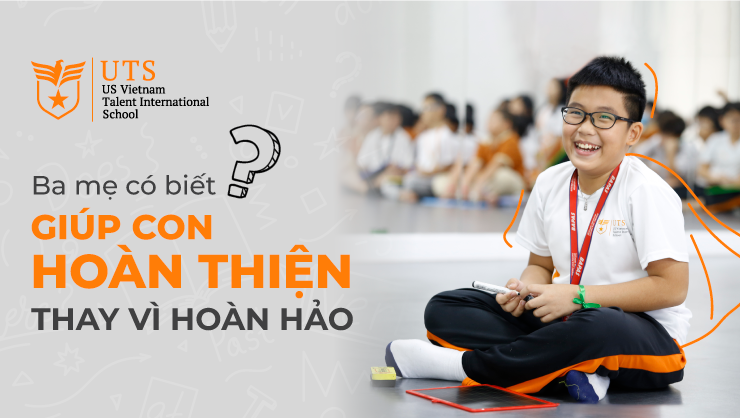
DO PARENTS KNOW? | HELP CHILDREN PLAN...
News
03/12/2021
UTS believe that children not only need to be educated with academic knowledge but also need to have skills in self-development and unleashing their potential.
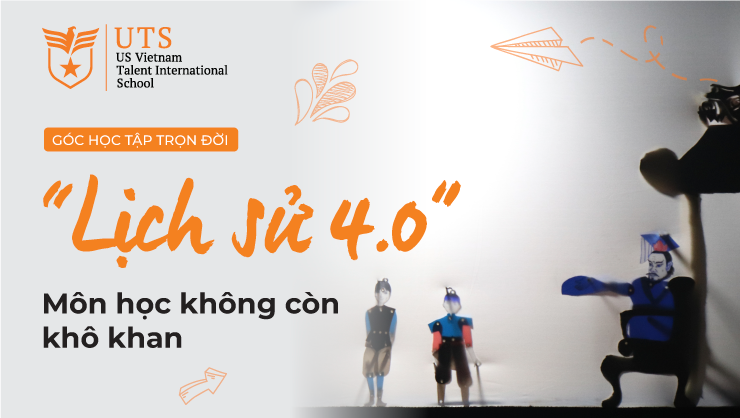
HISTORY 4.0 – THE SEEMINGLY BORING SUBJECT...
News
30/11/2021
UTS is the first international school in Ho Chi Minh City to pioneer the introduction of shadow play into teaching history and initially achieve encouraging results.