
HISTORY 4.0 – THE SEEMINGLY BORING SUBJECT BECOMES MORE INTERESTING THAN EVER!


Research of Master Tran Vu Linh
US Vietnam Talent International School Teacher

The subject History was often considered quite boring, “difficult” for many students because the amount of knowledge to remember is quite “massive” as well as the characteristics of the subject is difficult to associate with modern reality. Therefore, the teachers of History are constantly exploring and improving new and interesting teaching methods to help students acquire knowledge more effectively. And at UTS, the History teacher has implemented a very unique method: “Applying the art of shadow play in teaching History”.

The application of shadow play to teaching, especially the teaching of History in high schools is very new. US Vietnam Talent International School is the first international school in Ho Chi Minh City to pioneer the introduction of shadow play into teaching history and initially achieve encouraging results.

The project “Applying the art of shadow play in history teaching” was implemented for the first time in the 2020-2021 school year with the participation of 34 students in grades 10 and 11. After 2 months of implementation, the students completed four works with the content of two themes: “Resistance against foreign invaders from the 10th-15th century” and “World War”. These are the first works, which uts teachers and students devote a lot of enthusiasm and investment both in form and content. Although the knowledge and experience of shadow play is still limited, the products the students create are still extremely impressive and convey the story and historical context as the theme.


The goal of the learning project is to both stick to the standard of knowledge, while aiming to build an exciting training space for History and learn the specific skills of shadow play. Therefore, while writing the shadow play script, the students need to ensure the following 3 factors:

• Ensure historicity: ensure accuracy in terms of time, events, characters.

• Building images for characters (especially the main character), making it easy for viewers to identify and encourage the creation of the visual part, building the character’s personality and actions.

• Detailed outline of the image, sound, actions of each character. Because the puppet is a “static” character and it only really “lives” when it knows a flexible combination of sound and action.

At this project, the puppets are designed from materials that are easy to find or reuse such as hard plastic cover, cardboard, bamboo chopsticks, zinc, parachute cords, studs … The upper parts of the puppet’s body are linked together by studs or parachute cords, ensuring the joints in the hands, legs, head compared to the torso must be “dynamic joints”.

Through the project “Applying the art of shadow play in teaching history”, UTS has succeeded in:

• Create an interesting learning space, contributing to help students love history.

• Innovation of teaching methods, new subject approaches.

• Contribute to the preservation of shadow play, a national art form that needs to be preserved and promoted extensively.

• Stimulate the creativity of students throughout the entire process of participating in the project.

In conclusion, the application of ball puppetry in History really brings more space to explore for students. Proud to be one of the first schools in Ho Chi Minh City to apply this 4.0 teaching method, UTS has given students a new perspective on history as well as traditional folk art. UTS-ers not only hones its skills in this unique folk art, but also stimulates creativity – one of UTS’s six core values.
 

Other news
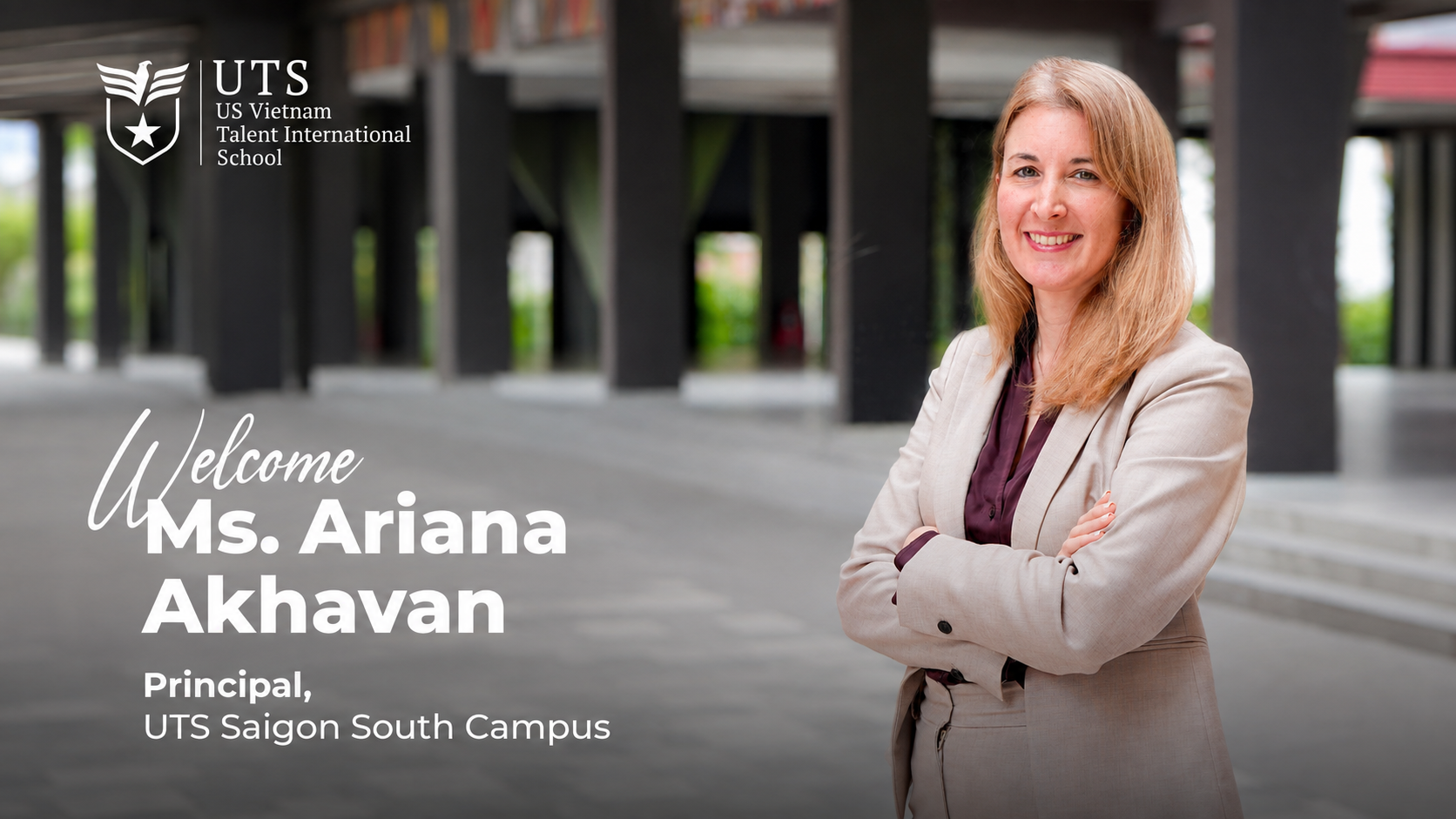
Welcoming Ms. Ariana Akhavan – Principal of UTS Saigon South Campus
News

Welcoming Ms. Ariana Akhavan – Principal of UTS Saigon South Campus

As UTS enters the 2026–2027 academic year, US Vietnam Talent International School officially welcomes Ms. Ariana Akhavan as Principal of UTS Saigon South Campus. With nearly 20 years of experience in education, including 10 years in senior leadership roles across national and international schools, she will work alongside the UTS community to create an environment where every student is empowered to fulfil their potential and become future-ready. Nearly 20 years in international education Born and raised in London in a multicultural family, Ms. Ariana was exposed from an early age to diverse traditions, languages, and perspectives. These experiences shaped her appreciation for differences and her belief in the value of diverse and inclusive communities. It was also in London that her passion for education began, taking her from the classroom as a teacher to becoming an educational leader with experience across both national and international settings. Ms. Ariana holds a BA (Hons) in History from Royal Holloway, University of London; a Postgraduate Certificate in Education (PGCE) in History from the University of Roehampton; a Master’s degree in Education from St Mary’s University, London; and the National Professional Qualification for Headship (NPQH) from Best Practice Network. Over nearly 20 years in education, including 10 years in senior leadership roles at national and international schools in the United Kingdom and Malaysia, Ms. Ariana has led and contributed to initiatives in curriculum innovation, school improvement, inclusive and multilingual education, professional development, staff health and wellbeing, safeguarding, and the enhancement of teaching and learning. “I believe that, first and foremost, an educator must also be a lifelong learner.” Ms. Ariana Akhavan brings nearly 20 years of experience in education, including 10 years in senior leadership roles across national and international schools Every student has their own unique talents Throughout her journey in education, Ms.
Professional Development Weeks 2026: Ready for a year of quality and growth
News

Professional Development Weeks 2026: Ready for a year of quality and growth

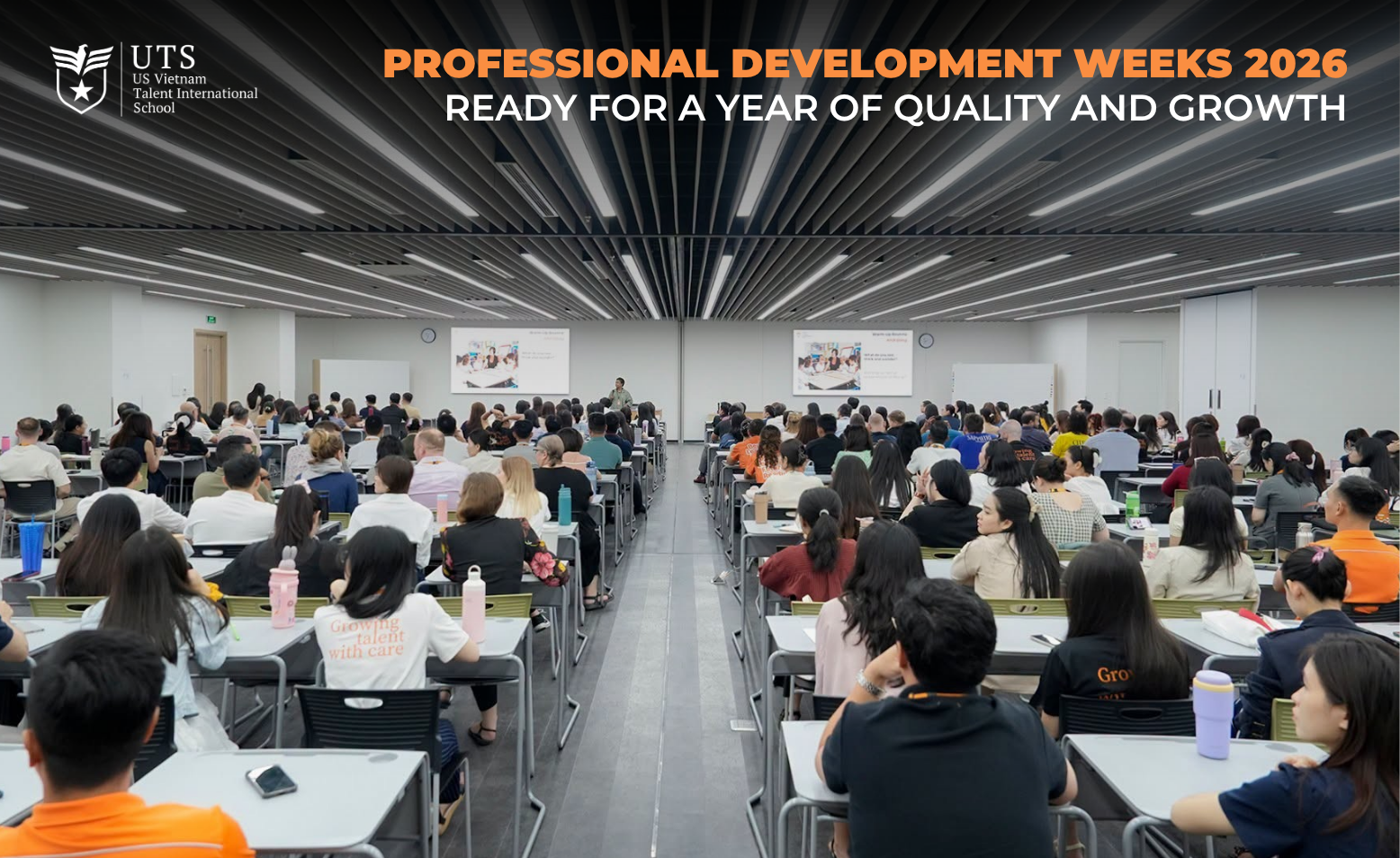
Before the 2026–2027 academic year officially began, UTS teachers and staff came together for Professional Development Weeks 2026 – two weeks dedicated to learning, connecting, and preparing for the journey ahead. At UTS, a quality learning experience for students always begins with the continuous growth of the educators who support them. UTS educators come together around a shared educational vision  Professional Development Weeks (PD Weeks) is an annual professional development programme at UTS, providing an opportunity for the entire team to reflect on achievements, update their knowledge, share experiences, and align on key priorities for the educational journey ahead. The programme began with a whole-school gathering that brought together the UTS community. During the event, educators who demonstrated dedication and made meaningful contributions throughout the 2025–2026 academic year were recognised for their efforts and impact in nurturing students’ talents. Addressing all teachers and staff, Ms. Anita Spittle – Head of School at US Vietnam Talent International School – reaffirmed UTS’s educational philosophy, vision, mission, and theme for the academic year, ensuring that every educator shares a common understanding and commitment to the School’s goals. Continuously enhancing the quality of teaching and learning A key focus throughout Professional Development Weeks was strengthening the team’s professional capabilities and further enhancing the quality of educational practice. The training sessions explored practical questions that educators encounter every day in the classroom: How can we establish and maintain positive expectations? How can we design a classroom environment that encourages students to become independent learners? How can we identify students’ different needs and provide the right support for each of them? Nurturing a growth mindset in every educator  If students are encouraged to continuously explore, learn, and grow, the educators who accompany them on that journey must embrace the same mindset. Through sessions on “Growth Mindset”
UTS One – The one parent portal for UTS
News

UTS One – The one parent portal for UTS

UTS One is the official and all-in-one parent portal for the UTS community, designed to provide a seamless, integrated and modern connection between families and the School. Instead of using multiple standalone applications and communication channels such as ManageBac, the student pick-up and drop-off application, school bus app, service registration, club registration or unofficial Zalo groups, parents can simply access UTS One to stay connected with everything that matters in one place. As the School’s official communication platform, UTS One ensures that all interactions between parents and the School are efficient, transparent and consistent. Through UTS One, parents can monitor their child’s learning progress, timetable, attendance, homework, behaviour and achievements, while also managing student and parent profiles, staying updated with school news and events, submitting leave requests, registering for clubs and school services, and communicating directly with the School. By bringing these essential features together on a single platform, UTS One makes it easier for parents to stay informed and actively support their child’s learning journey. Looking ahead, UTS will continue to enhance UTS One by introducing new features, including online tuition and service fee payments, as part of our commitment to building a comprehensive digital ecosystem. This ongoing development aims to provide parents with an even more convenient and connected experience throughout their child’s educational journey at UTS. Click HERE to view the UTS One installation and user guide.
What Is Project-Based Learning? Exploring a Modern Educational Approach at UTS
News

What Is Project-Based Learning? Exploring a Modern Educational Approach at UTS

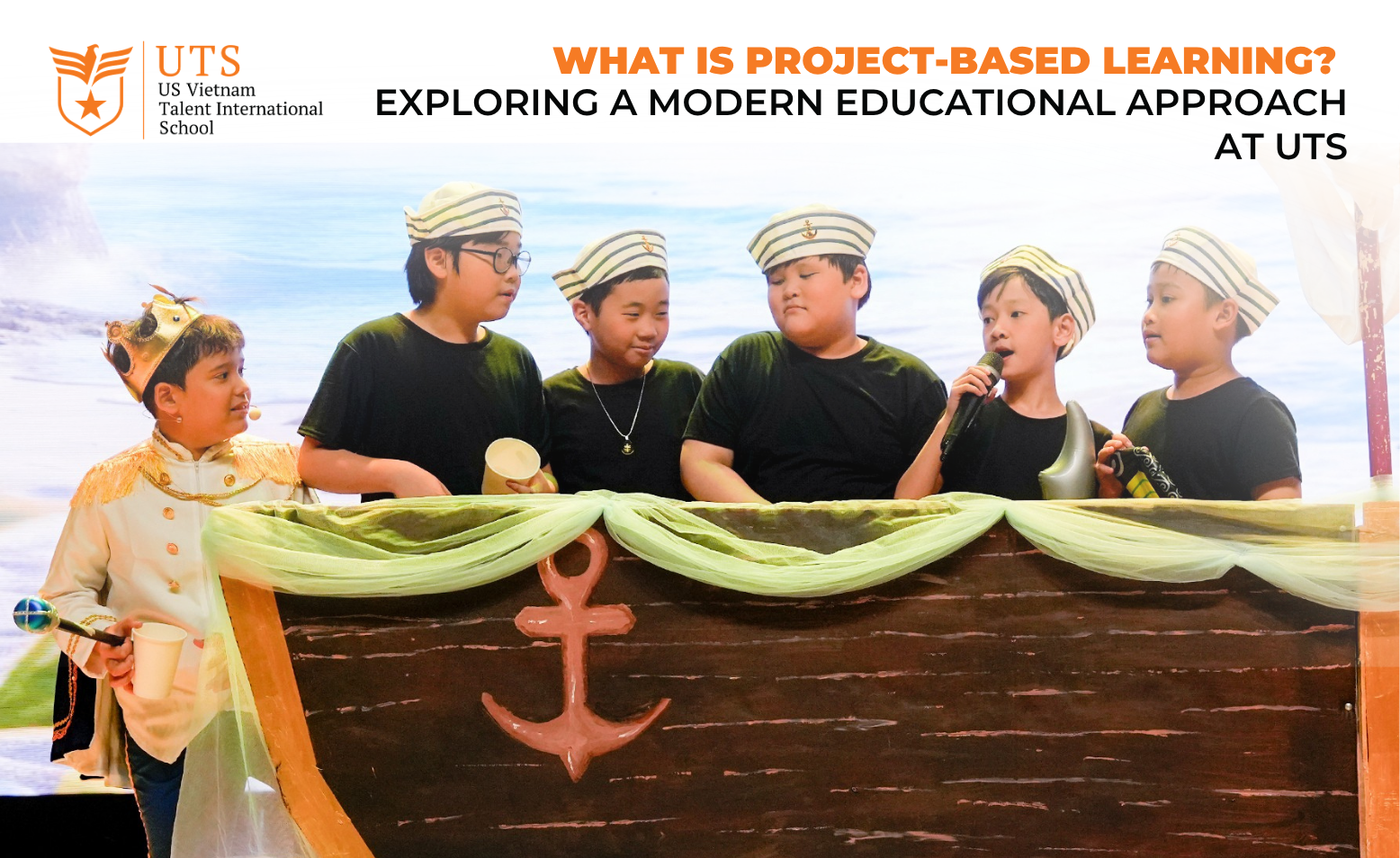
In the context of today’s constantly evolving education landscape, Project-Based Learning (PBL) has become one of the approaches adopted by many international schools to support students’ holistic development. At UTS International School of South America, students do not only acquire knowledge from textbooks, but also take part in real-world projects, actively explore ideas, and create their own learning products. So, what is project-based learning, and how is it applied to optimise students’ learning outcomes? This article will help parents and students better understand this learning model. What Is Project-Based Learning (PBL)? Project-Based Learning (PBL) is a student-centred educational approach in which students actively explore, research, and solve real-world problems through learning projects. Instead of only learning theories, students combine knowledge with practical experiences to develop thinking skills, teamwork, and problem-solving abilities.. Project-Based Learning is becoming increasingly popular in modern education The 5-Step Cycle of a Learning Project (*) A learning project following the Project-Based Learning (PBL) approach is often implemented through a clear process, helping students gradually transform knowledge into practical products. Below are the key steps: Step 1: Identifying Ideas and Driving Questions Students begin with a real-world problem or a guiding question under the teacher’s guidance, then define the goals and scope of the project. Step 2: Planning and In-Depth Research Students divide tasks, search for information, analyse data, and develop a suitable implementation plan. This stage requires students to apply critical thinking, problem-solving, and teamwork skills. Step 3: Implementation, Testing, and Adjustment During the implementation process, students apply what they have learned, test their solutions, and improve their products based on feedback. Step 4: Completing the Practical Product Based on their ideas and research outcomes, students complete products that can be presented, applied, or shared with others. Students create practical models and products in each project Step 5:
UTS – A Leading International Education Environment in Binh Thanh
News

UTS – A Leading International Education Environment in Binh Thanh

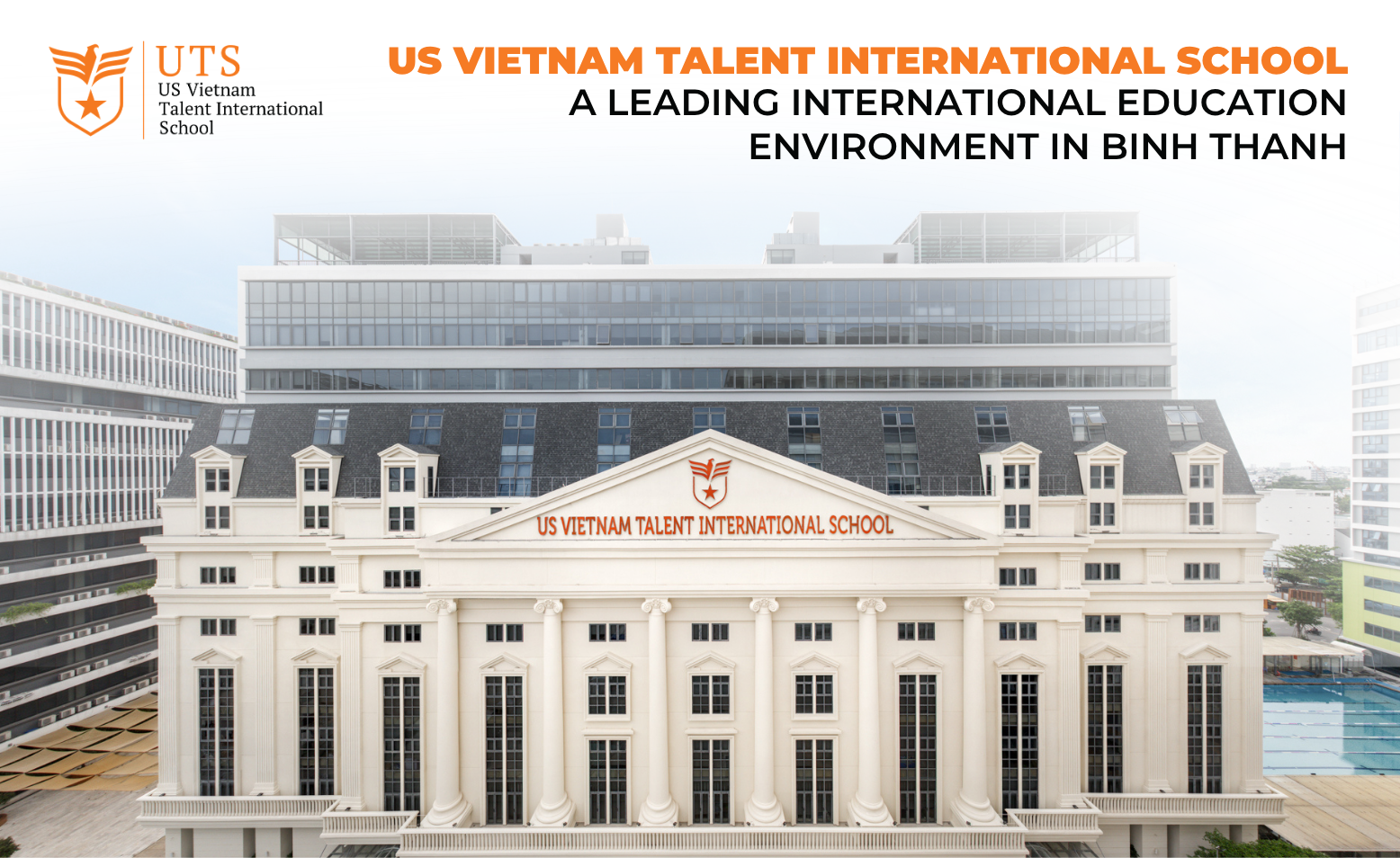
Located in Binh Thanh District — formerly Binh Thanh District and now Binh Loi Trung Ward is a trusted choice for many parents seeking a high-quality international education environment for their children. With a modern bilingual learning pathway, internationally benchmarked facilities, and a holistic development orientation, UTS offers a learning journey that helps students grow academically, develop essential skills, and build the confidence to integrate into the global community. About US Vietnam Talent International School (UTS) UTS is a bilingual international school system under Van Lang Education Group, which has over 30 years of experience in education in Vietnam. Established in 2018, UTS was built with the vision of becoming a modern educational environment where students can develop holistically in academics, skills, and mindset in the context of global integration. UTS is a bilingual international school system under Van Lang Education Group, with more than 30 years of experience in education Key advantages of UTS Van Lang Complex in the Binh Thanh area Convenient location UTS Van Lang Complex is located in Binh Thanh, one of Ho Chi Minh City’s dynamic central areas, with convenient access to nearby districts such as Phu Nhuan, Tan Binh, and District 12. Thanks to its accessible location and safe environment, parents can easily pick up and drop off their children while feeling assured throughout their learning journey. Modern facilities Located within the Van Lang education complex, UTS is equipped with modern facilities that create an inspiring learning environment and support students’ holistic development. From classrooms and libraries to sports and creative spaces, every area is designed to meet students’ learning, experiential, and exploratory needs. The laboratories at UTS are fully equipped with modern learning tools and equipment The music room offers a wide range of instruments and a creative space for students The UTS