
News & Events
News & Events
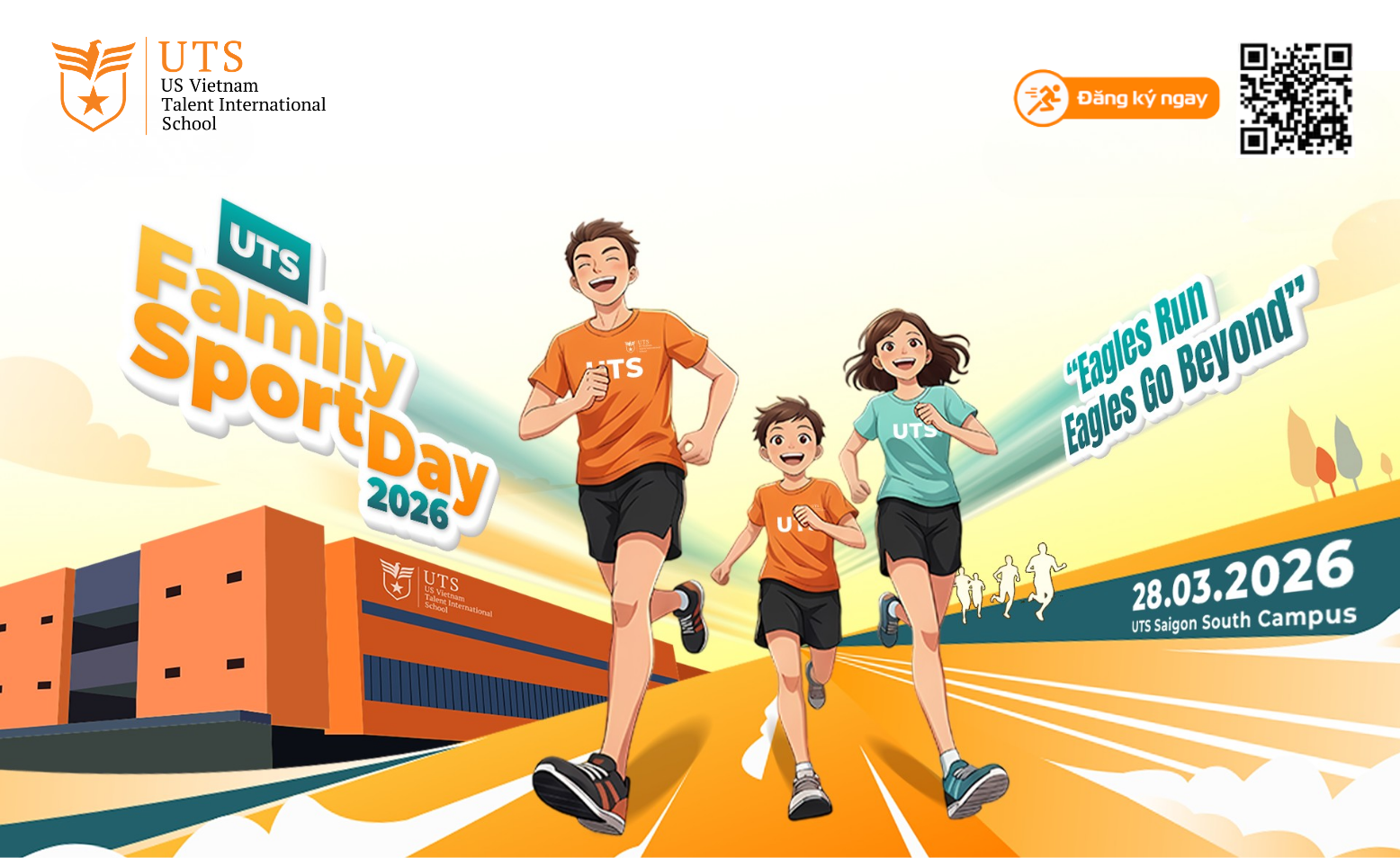
UTS Family Sport Day 2026 “Eagles Run, Eagles Go Beyond” officially returns
The annual UTS Family Sport Day 2026 will bring a vibrant celebration where families can run together and connect with the UTS community.
News & Events
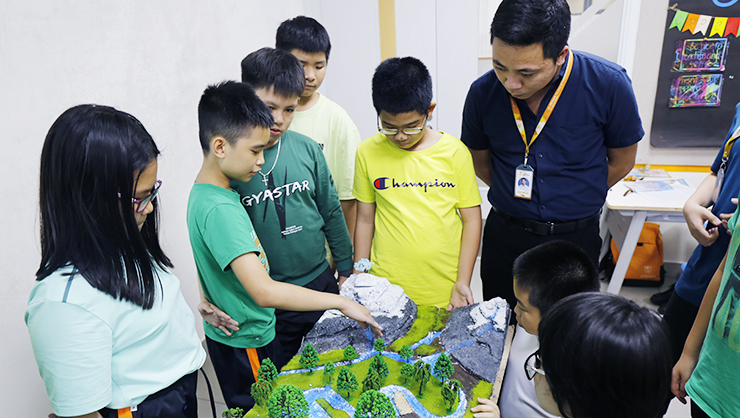
UTS-ers bring an impressive river and lake system to life with their own hands
Water is essential for irrigating crops and supporting our daily lives. But did you know that one of the world’s most important sources of freshwater is its network of rivers and lakes? To better understand the vital role that rivers and lakes play in our lives, the Grade 6.3 students went beyond textbooks by creating their own impressive river and lake models during their Geography lesson. Through research, information gathering, creativity, and hands-on craftsmanship, the students produced highly detailed and accurate models, making the learning process more engaging, active, and meaningful. Knowledge becomes truly valuable when it is applied to real-world situations. Through this lesson, UTS-ers strengthened their spirit of active learning, explored the world around them with curiosity, and gained meaningful knowledge that extends beyond the classroom.
News & Events
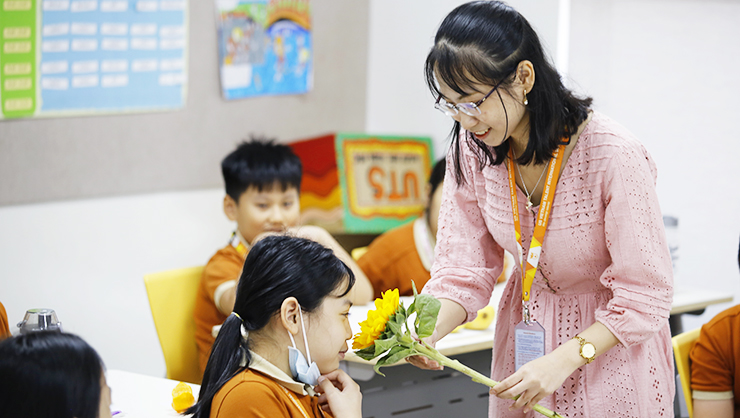
How to learn descriptive writing effectively?
In the 21st century education model, teachers have mission to inspire students with learning and innovative spirit, help students develop base competencies. The Writing lesson of class 4.1 promoted this spirit in a creative and realistic way. Descriptive writing is not just thinking and imagining. At UTS, students brought flowers and fruits to class, feel their own shapes and tastes. By the own feelings, they wrote sincere and lovely descriptive writings. Miss Phuong Linh – Homeroom Teacher of class 4.1 shared: “I want to launch this activity to help UTS-ers understand Writing is not far and high as well, it is linked to the real life. They can make writings which imprint their personality, teacher will be a guidance to help them complete the tasks!”
News & Events
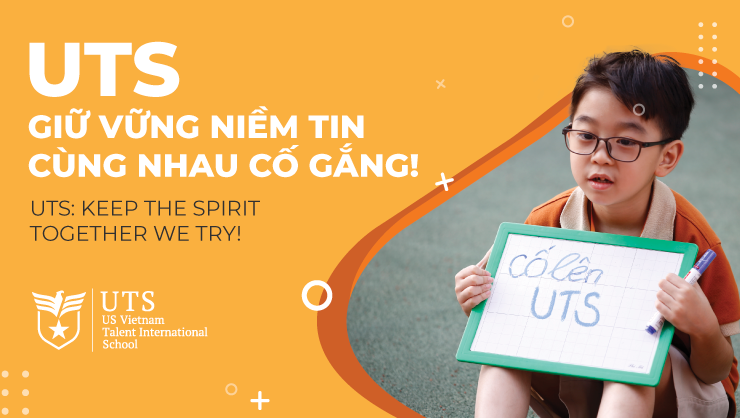
UTS: Keep the spirit – Together we try
How are your first online lessons, UTS-ers? In response to the new fluctuations of the pandemic, we have to stay apart from each other in the very last days of Semester II, School year 2020 – 2021. We are now missing the images of UTS-ers who studied as well as played enthusiastically everyday going to school! Although we are not together, let’s keep in mind that we can overcome these difficulties to meet each other again at UTS campus in the near future. To make this wish come true, please follow these protection measures as follow: 1. Always wear medical mask or textile mask in public and crowded areas, medical center and quarantine zones. 2. Regularly wash hands with soap or hand sanitizer; clean surfaces and contacting objects (door knobs, mobile phones, tablets, tables, and chairs). 3. Keep safe distance with each other. 4. Avoid mass gatherings. 5. Conduct health declaration as required while going outside. The pandemic brings us many challenges, but it is an occasion for us to prove our awareness, positive spirit and readiness for the rapidly changing world. Let’s try together, UTS-ers!
News & Events
Chemistry Club: Learn how to make perfume from natural essential oil
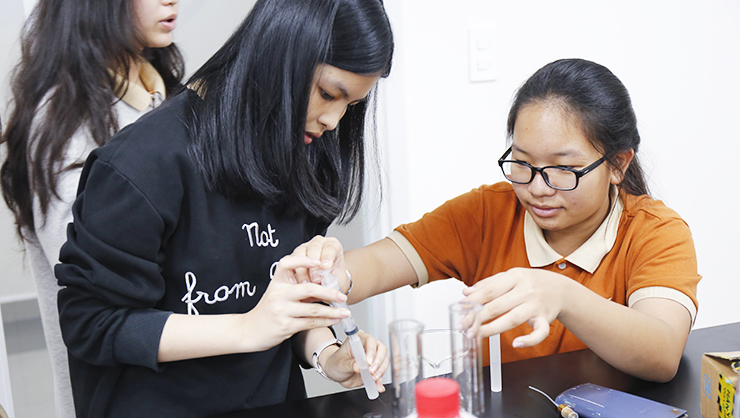
Beyond making simple experiments, Chemistry Club of UTS always orients its activities reflecting appliance of theory to real life. This club used to produce useful items such as dry perfume and aromatic wax. Recently, members of Chemistry Club learnt how to make perfume from natural attar. With knowledge about fragrance notes, they create fragrant perfume from alcohol and essential oil. The final products have been given to their Mom on the International Women’s Day. With more than 25 clubs in 3 groups: Logical, Physical and Artistic, UTS strives for interesting experience of students after school hours. Hope that the Club Classes will bring many happiness and meaningful knowledge to UTS-ers!
News & Events
Let’s revise English vocabulary of the theme “Foods & Drinks”
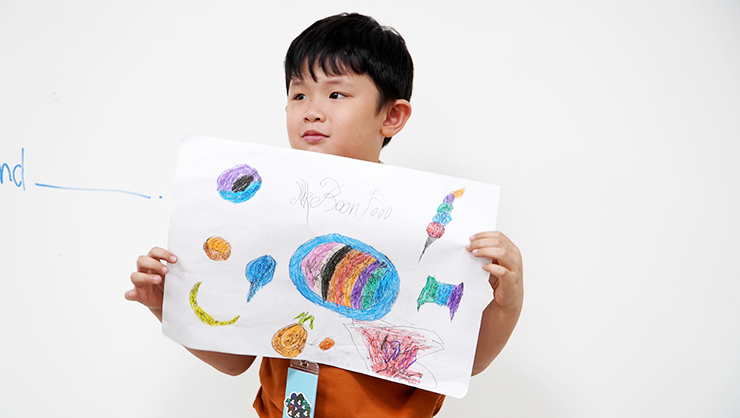
Last week, students of Class 1.1 of UTS learnt about interesting knowledge of the theme “Foods & Drinks”. UTS-ers applied new vocabulary to describe their daily meals and express their favorite foods and drinks. To close a hard week of UTS-ers, let’s revise familiar vocabulary of this theme together: Chicken – /’tʃikin/ Apple – /ˈæpəl/ Lemonade – /,lemə’neid/ Milk – /mɪlk/ Rice – /ˈrɑɪs/ Fish – /ˈfɪʃ/ Cookie – /ˈkʊki/ Salad – /ˈsæ.ləd/ Sandwich – /ˈsæn.wɪtʃ/ Tea – /ˈti/ Have youngest UTS-ers learnt these words by heart yet? There are still lots of English knowledge ahead to be discovered. Therefore, let’s try your best to conquer this language and be stronger while entering the outside world!
News & Events
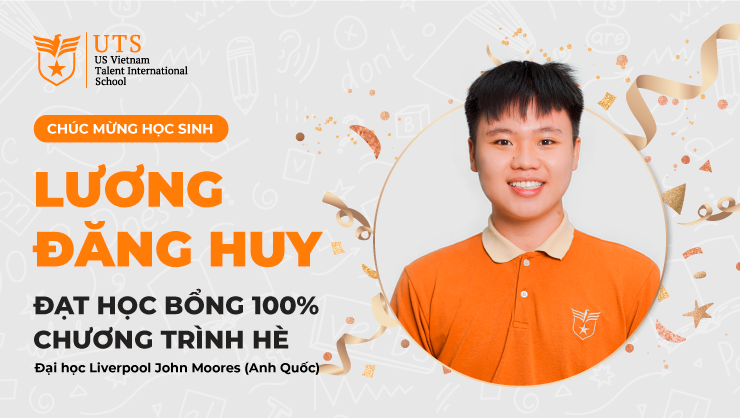
Congratulations Luong Dang Huy (Grade 11) on receiving 100% scholarship for summer program of Liverpool University John Moores (UK)
UTS would like to congratulate Luong Dang Huy (Grade 11) on receiving the 100% Scholarship for Summer Program of Liverpool John Moores University (UK). Liverpool John Moores University is one of the well-established and largest universities in the UK, and is also the official educational partner of Van Lang University. Dang Huy deserves to receive this scholarship since he is a UTS-er who possessed excellent academic results, actively participated in sport and won the “UTS Growing Talent” scholarship for 2 consecutive years. Dang Huy will be equipped with an overview about United Nations (UN) – an organization that aims to maintain international peace and security; the role of women in UN activities; the development and dissemination of stories that influence the community through digital media; personal, ethical, national, and international identity. UTS always strive to give students fascinating learning opportunities so that our talents can freely exploit their potential. Hope that this one-week summer program will aid Dang Huy explore interesting knowledge and enjoy a memorable summer!
News & Events
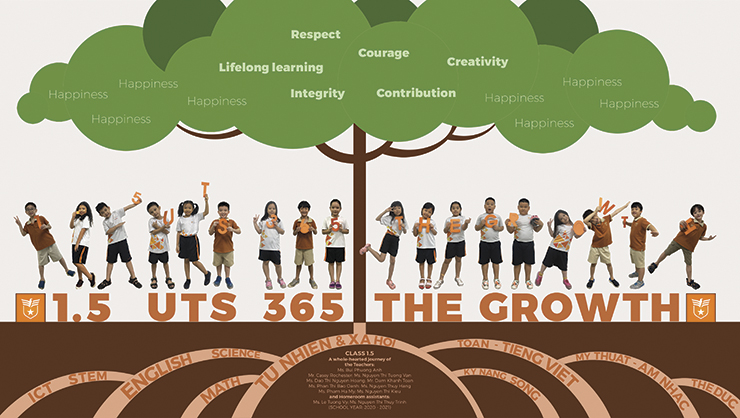
“UTS – 365 The Growth” voting round begins right now!
Finally, the pretty photos which contain beautiful moments of classes of UTS have been released! Thank you all for our effort during the last school year to grow up after each day going to school. And the voting round of “UTS – 365 THE GROWTH” officially begins from today. Please bear in mind some important rules of this round: 1. Voting time: 08/05 – 18/05 2. The voting round only takes place on the “Trường Quốc tế Nam Mỹ UTS” fanpage. 3. Votes are counted only when voters LIKE/FOLLOW the “Trường Quốc tế Nam Mỹ UTS” fanpage. 4. Each account is allowed to vote for more than 1 class. 5. With one photo, each account is allowed to react and share once. 6. The score is based on the amount of like and share of the photo: – Each reaction equals to 2 points; – Each PUBLIC share equals to 5 points; – Comments are not counted; – If there are any cheatings in voting round, then the photo will be eliminated from the contest. Let’s appeal everyone to vote for your classes to share our growing and maturing journey. Wish you the best results with the “UTS – 365 THE GROWTH” photo contest!
News & Events
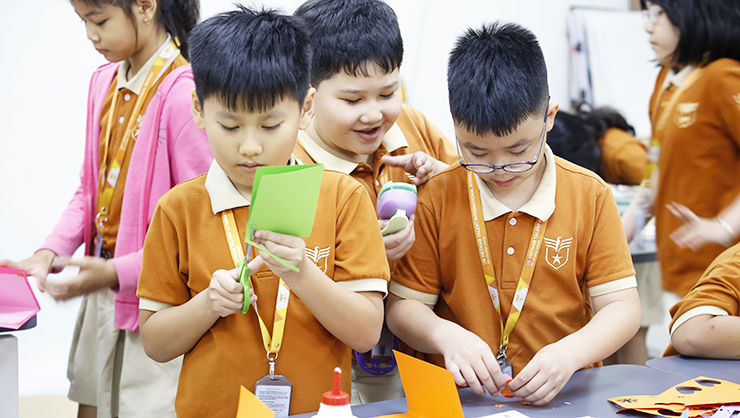
Be handy with lovely cards of UTS-ers
8th of March is an occasion for UTS-ers to send love messages to their Grandma, Mother, Teachers – women who always take care and stand by their sides. Especially, these meaningful messages can be kept in their own hand-made cards. The card-making classes have been organized at UTS in the first days of March. Students have learnt how to design cards and use tools to make decorative elements which help cards more colorful and lovelier. The completed cards will be given to their beloved women as best wishes on the International Women’s Day. It’s so exciting to see lovely cards of our UTS-ers!
News & Events
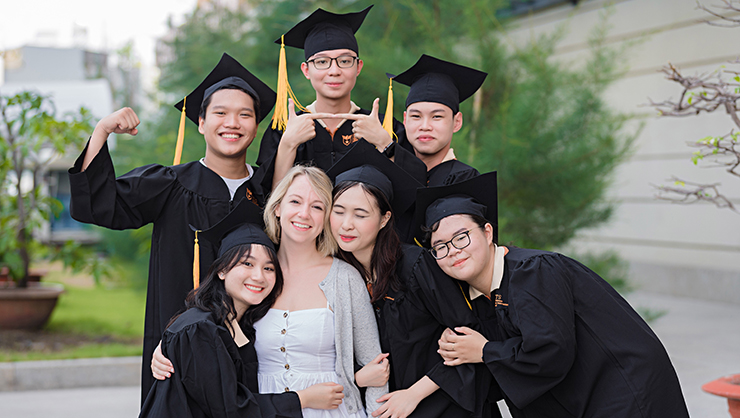
Saving sweet memories with UTS-ers
The 2020-2021 school year marks a milestone for UTS’ Grade 5, 9 & 12 students in completing their education levels. For Grade 5 & 9, there are many interesting knowledge and experience waiting for you at a higher education level at UTS. For Grade 12, now is the time to demonstrate your confidence and bravery when officially going into the big sea and conquer new challenges in lives. Although the journey ahead will bring countless opportunities as well as obstacles, don’t forget that you are all members of UTS family – we are strong, talented and full of enthusiasm. Remember that we are always here, ready to help and welcome you with open arms! * These moments have been saved before the serious situation of the pandemic *