
Reading Culture – The strong foundation of Education
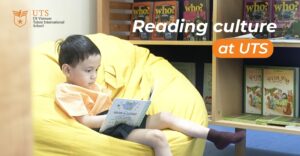
Reading culture is one of the essential factors in building a solid foundation for the development of education, particularly in the country as a whole. At UTS, we encourage our “Seeds” to develop their love of reading through daily habits from their early years. UTS believes that cultivating a reading culture is an important steppingstone for the journey of a global citizen in the 21st century.

What is reading culture? 

Reading culture is a phrase that expresses the reading behavior, reading values, and reading standards of each individual and the whole social community (according to Mr. Nguyen Huu Viem, National Library of Vietnam). In the conference “Books and Revitalising Education” in 2012, participating professors pointed out three factors that makeup reading culture: reading habits, book selection methods, and reading skills. The formation of the above three factors will determine whether the development of reading culture is positive or not.

In the current context of global integration, each individual needs to constantly improve themselves, and forming a positive reading culture is one of the core things for individuals and the community, in general, to develop sustainably.
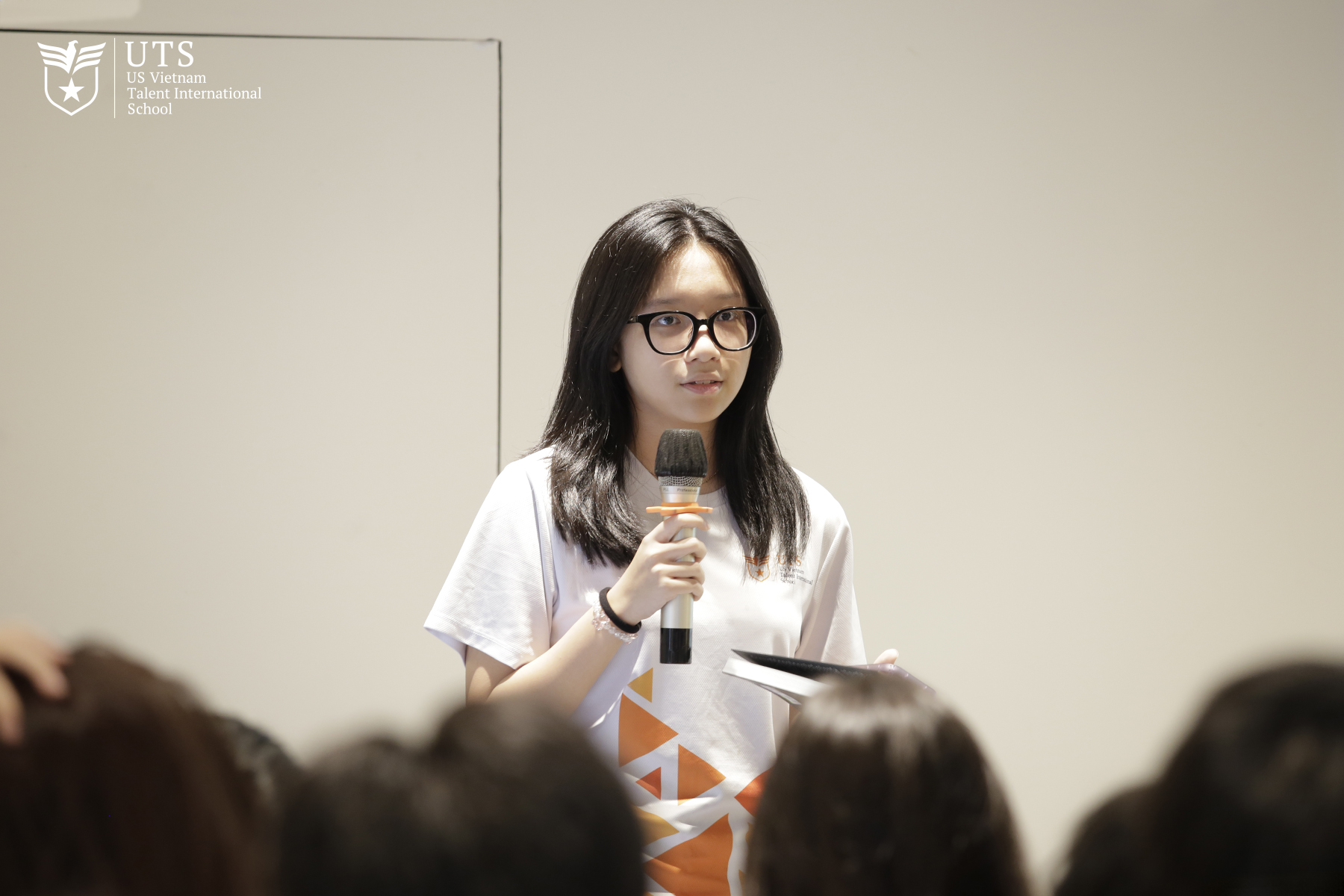
  Học sinh UTS tích cực đọc sách  

The importance of reading culture in personal development 

Reading culture plays a key role in perfecting human skills and personality through the following values:

  • Providing knowledge
  • Developing emotional intelligence quotient (EQ)
  • Improving communication skills
  • Training thinking in everything


The experience and quintessence of our predecessors are often summarised and preserved today in the form of books and documents, so reading culture is a means to help us receive that huge source of knowledge. In addition, reading also helps us absorb many other thoughts, philosophies, and perspectives to have a more comprehensive and objective view of life, and develop emotional intelligence (EQ) when learning to understand many different stories. Reading a lot also helps enrich language skills, creating a premise for improving communication skills. Finally, reading diverse content will lead us into many specific contexts, requiring a prominent level of imagination, thanks to which we can face many problems in life and practice thinking.
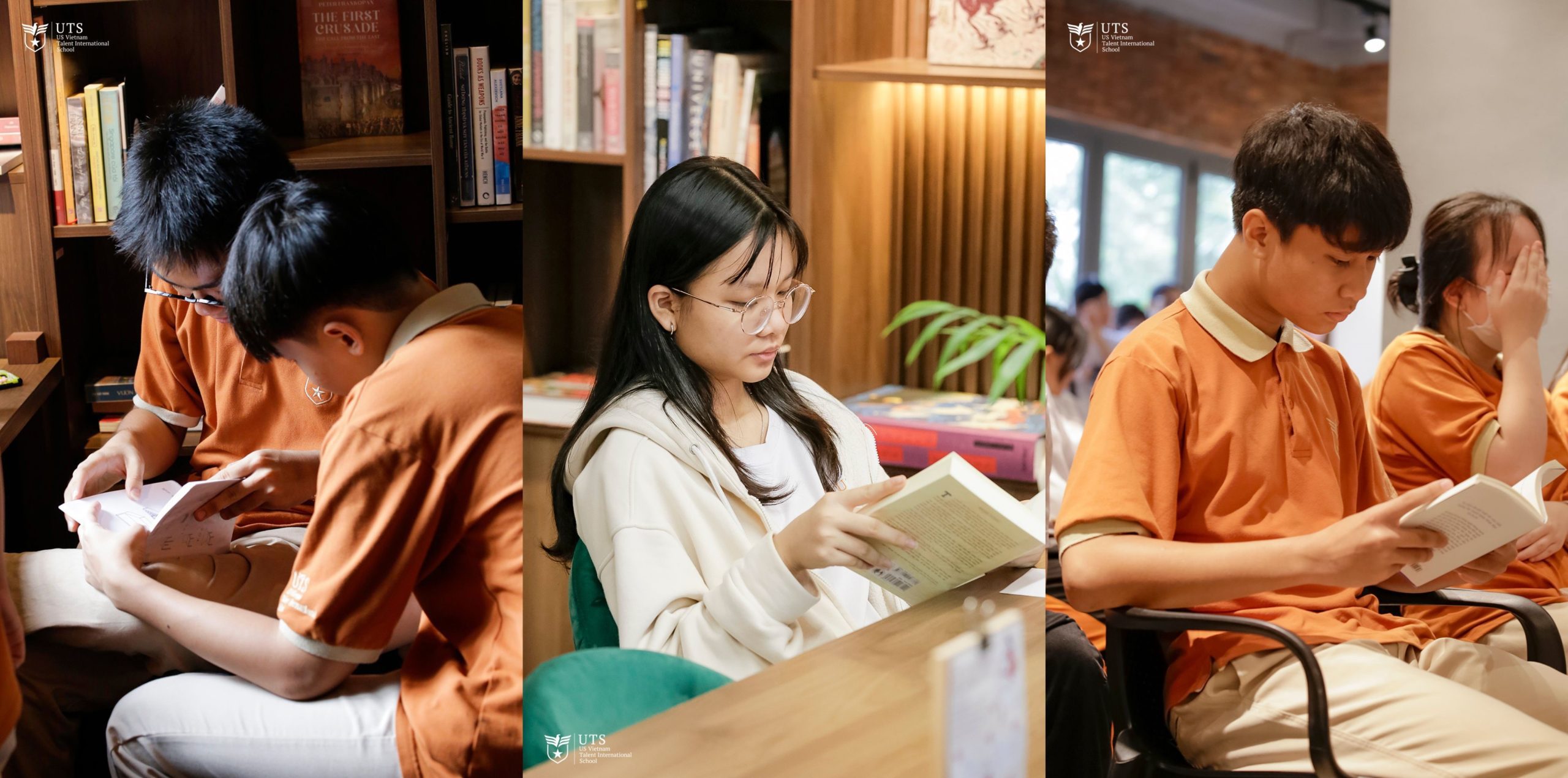
  Học sinh UTS rèn luyện văn hóa đọc tích cực  

The values that cultivate the habit of reading books and documents, in general, support the learning and development process of everyone. For that reason, schools or educational centers encourage their students to read more and especially encourage the formation of a reading culture for children from an early age.

A child’s experiences in the first years of life greatly influence their habits and behavior in the future. In a study on reading culture by Professor Vu Thi Thu Ha, she also made recommendations for the right direction in reading methods and reading skills at an early age for children.

Cultivating reading culture for students from an early age at UTS  

Understanding the importance of cultivating reading habits for children from an early age will affect the development of their reading culture in the future. US Vietnam Talent International School – UTS has helped children become familiar with books through picture books and teacher interpretation right from pre-school to high school.
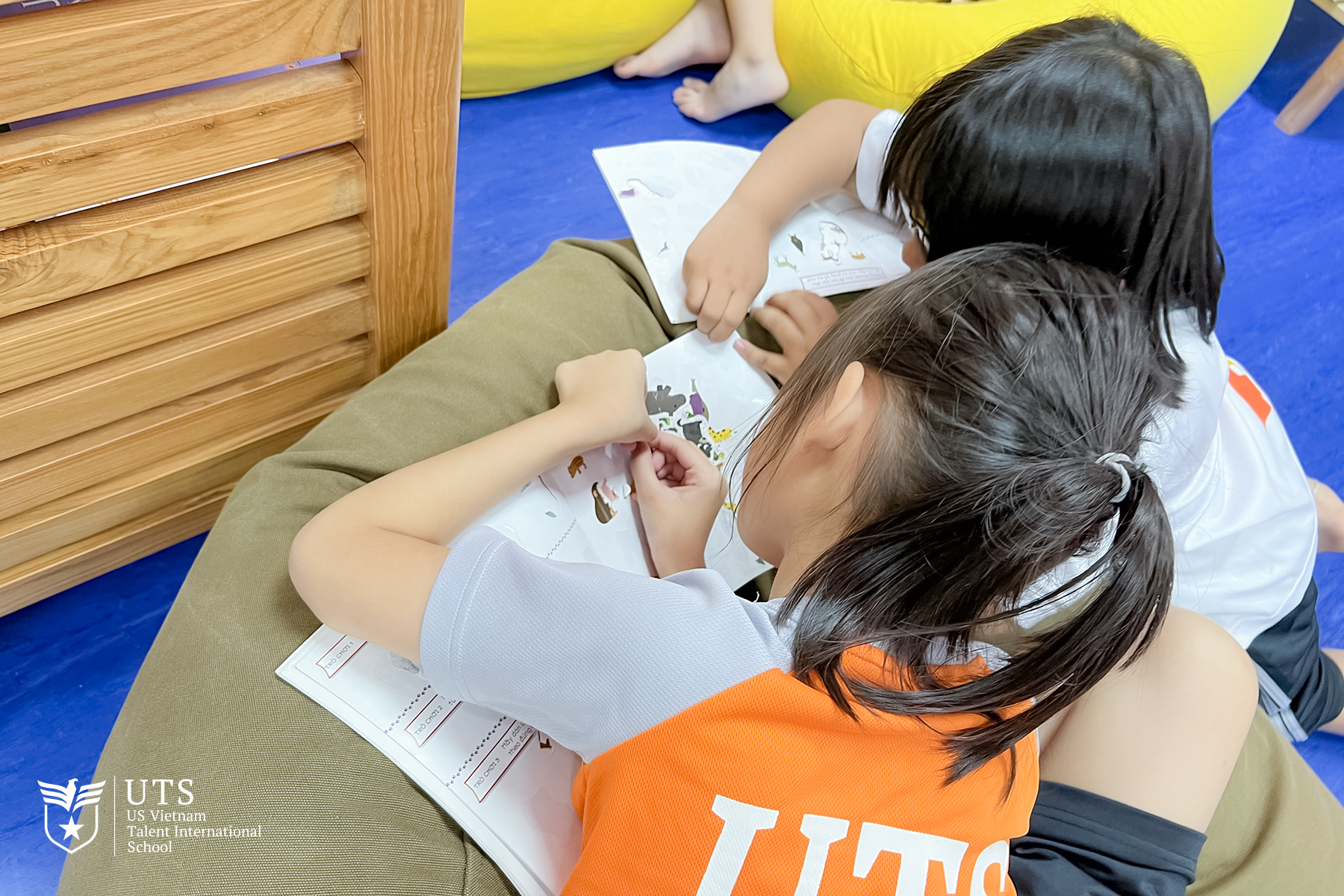
  Học sinh tiểu học đọc sách tại thư viện UTS  

Regarding the curriculum, UTS fosters a reading culture through the extensive reading program and the Bookworm program, which provides students with reading sessions at the library with multi-genre books in English and Vietnamese. With young “Seeds,” UTS encourages children to get used to “seeing” books to “reading” books, through Show&Tell storytelling sessions, from which children can maintain their habits and love of reading books in the next years of their lives.

Additionally, to encourage and maintain a reading culture, UTS also regularly organizes reading contests and book reviews for classes and all students in the school, such as UTS Voice and Book Review. Students can take advantage of the large library at the school to discover new books. Competitions aimed at developing a reading culture at UTS do not stop at Vietnamese, but extend to English, such as creative writing and story creation competitions offered by the International Programme.
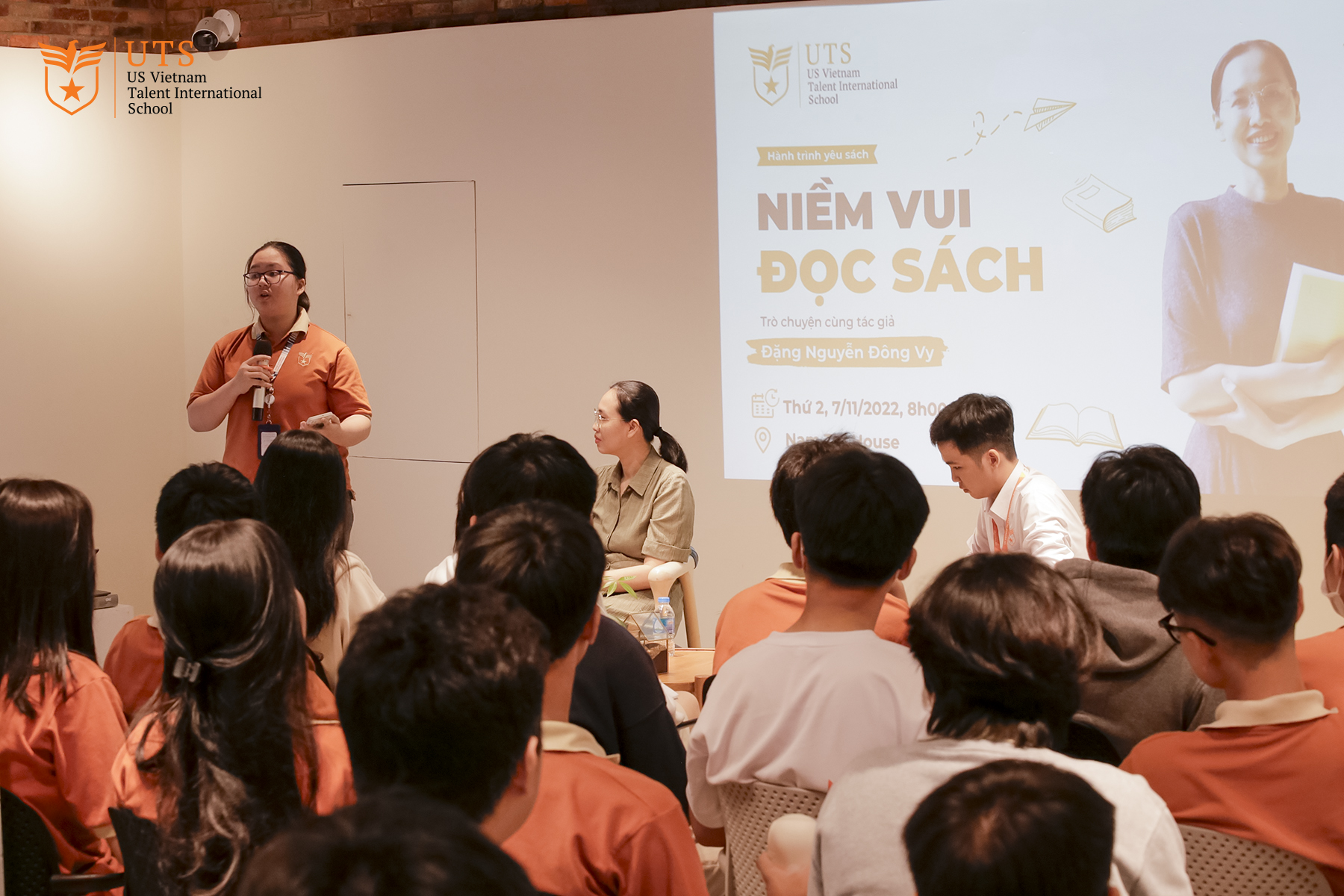
 

niềm vui đọc sách tại UTS


More specifically, the campus and facilities at UTS are also optimized to encourage a reading culture for students in the school. In addition to the library, each classroom is also equipped with a separate bookshelf for students to enjoy stories in the most spontaneous way, creating opportunities for children to develop language skills and love reading anytime, anywhere.
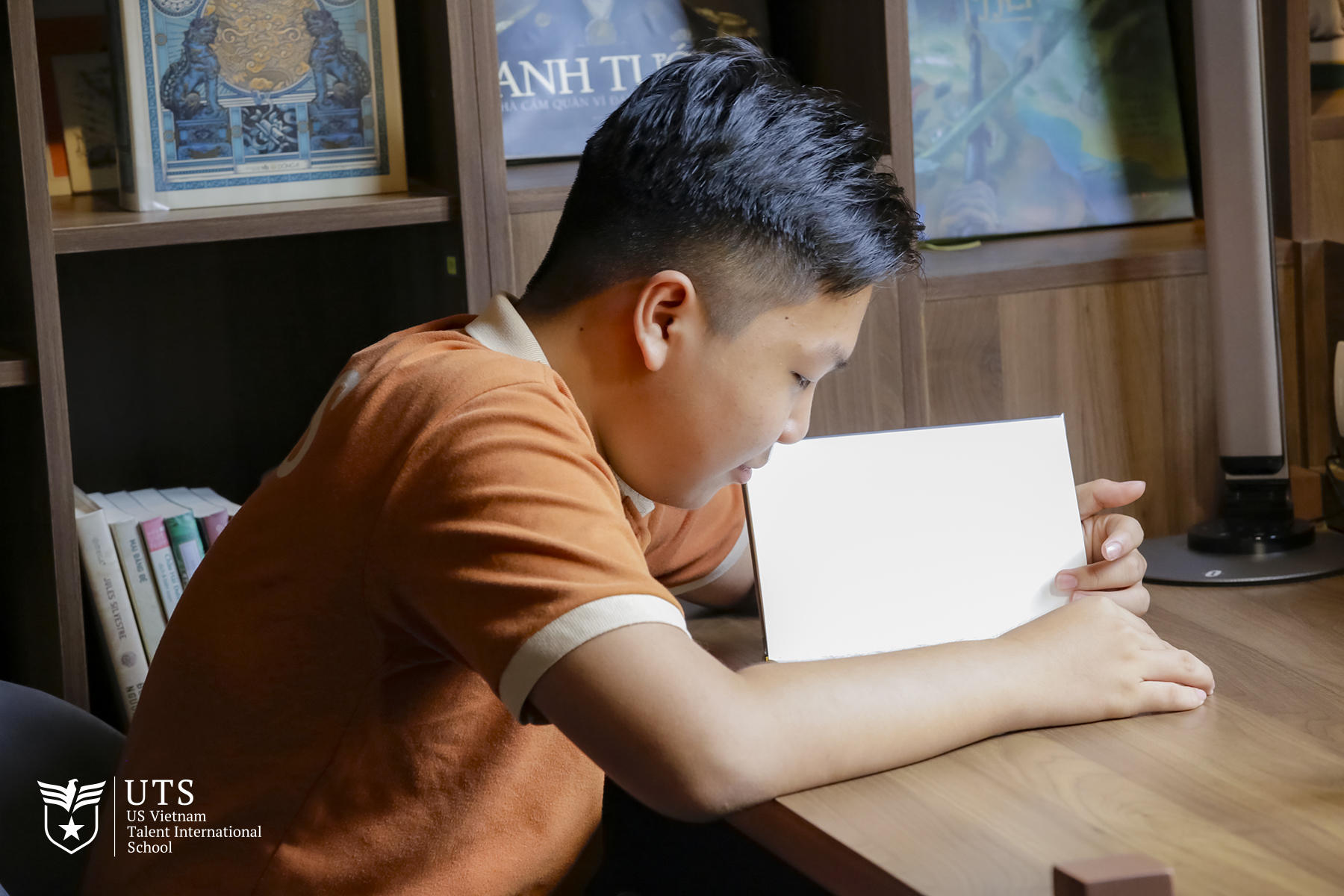
 

Văn hóa đọc của học sinh UTS


Reading culture is an element that needs more attention in the current era of digital technology and fast information. Hopefully, through this article, UTS can help parents and children better understand this phrase as well as consider developing a reading culture for themselves and those around them. Education is the premise for forming a reading culture while reading culture is the steppingstone of education to develop and support the development of comprehensive thinking for readers.

“You don’t have to burn books to destroy a culture. Just get people to stop reading them.”

Mahatma Gandhi
Other news
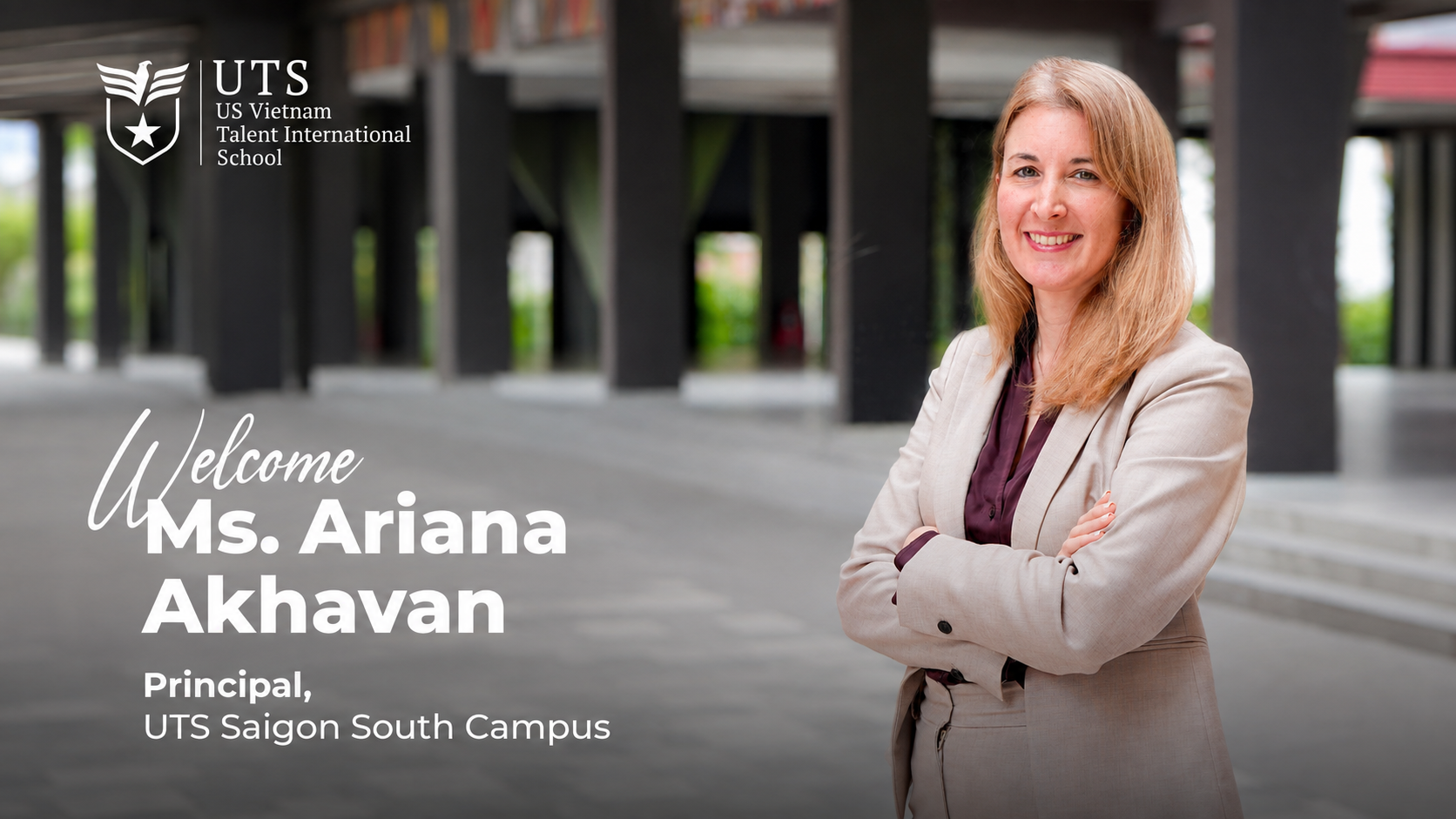
Welcoming Ms. Ariana Akhavan – Principal of UTS Saigon South Campus
News

Welcoming Ms. Ariana Akhavan – Principal of UTS Saigon South Campus

As UTS enters the 2026–2027 academic year, US Vietnam Talent International School officially welcomes Ms. Ariana Akhavan as Principal of UTS Saigon South Campus. With nearly 20 years of experience in education, including 10 years in senior leadership roles across national and international schools, she will work alongside the UTS community to create an environment where every student is empowered to fulfil their potential and become future-ready. Nearly 20 years in international education Born and raised in London in a multicultural family, Ms. Ariana was exposed from an early age to diverse traditions, languages, and perspectives. These experiences shaped her appreciation for differences and her belief in the value of diverse and inclusive communities. It was also in London that her passion for education began, taking her from the classroom as a teacher to becoming an educational leader with experience across both national and international settings. Ms. Ariana holds a BA (Hons) in History from Royal Holloway, University of London; a Postgraduate Certificate in Education (PGCE) in History from the University of Roehampton; a Master’s degree in Education from St Mary’s University, London; and the National Professional Qualification for Headship (NPQH) from Best Practice Network. Over nearly 20 years in education, including 10 years in senior leadership roles at national and international schools in the United Kingdom and Malaysia, Ms. Ariana has led and contributed to initiatives in curriculum innovation, school improvement, inclusive and multilingual education, professional development, staff health and wellbeing, safeguarding, and the enhancement of teaching and learning. “I believe that, first and foremost, an educator must also be a lifelong learner.” Ms. Ariana Akhavan brings nearly 20 years of experience in education, including 10 years in senior leadership roles across national and international schools Every student has their own unique talents Throughout her journey in education, Ms.
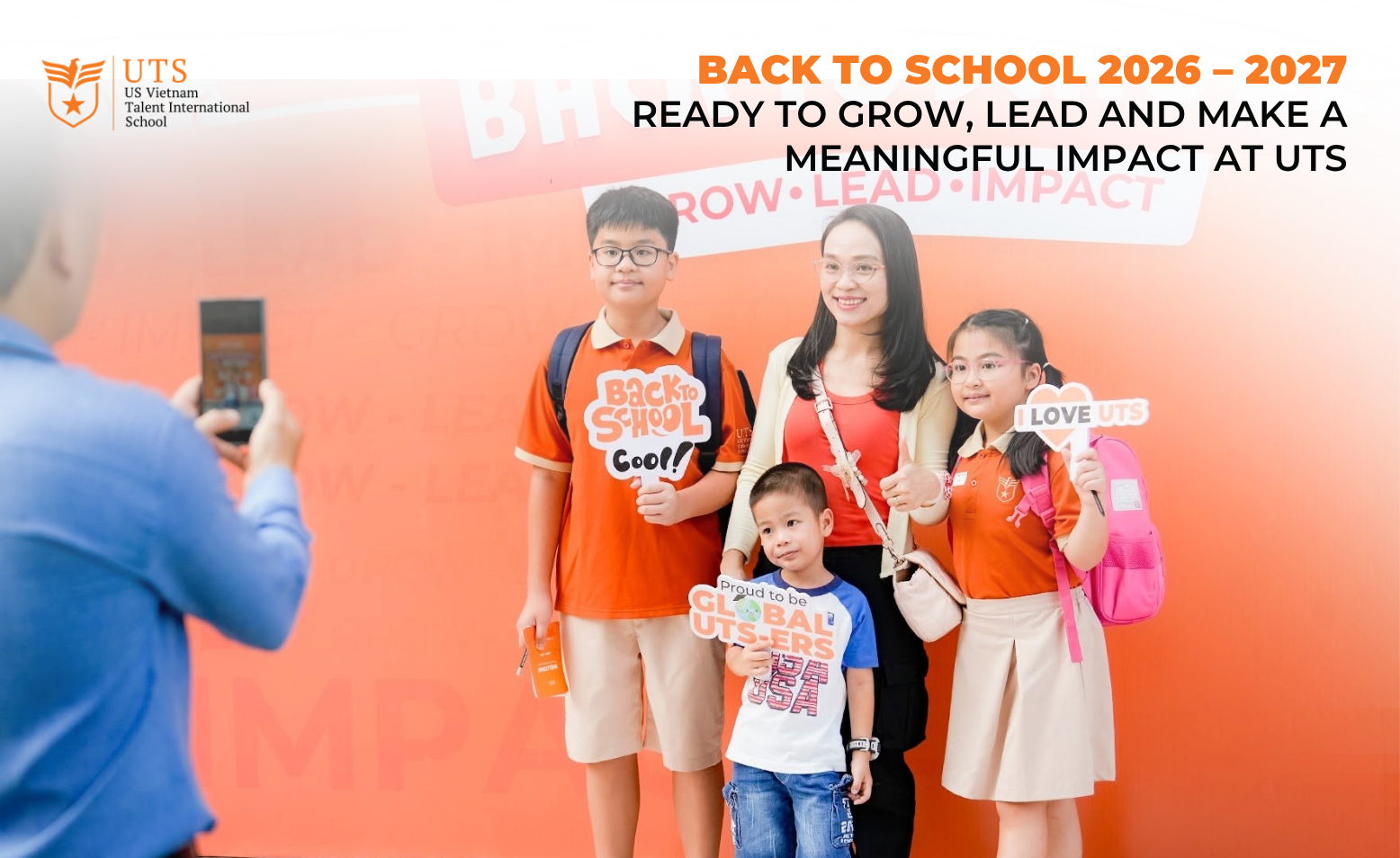
Back to School 2026 – 2027: Ready to Grow, Lead and Make a Meaningful Impact at UTS
News

Back to School 2026 – 2027: Ready to Grow, Lead and Make a Meaningful Impact at UTS

After the summer break, students officially returned to school, bringing with them bright smiles, excitement, and plenty of energy for the new academic year. From reunions with friends and warm welcomes from teachers to their first experiences back in the classroom, a new journey has begun – one where every UTS-er continues to GROW, LEAD and make a meaningful IMPACT. The energy of back to school fills UTS From the very first hours of the day, a lively atmosphere could be felt across UTS campuses. After the summer break, old friends reunited, new students took their first steps into the UTS community, and teachers were ready to welcome everyone back with familiar smiles and warm greetings. UTS-ers excitedly reunite with friends on the first day of the academic year Behind this exciting first day was the thoughtful preparation of the School team – from classrooms and shared spaces to welcoming activities – ensuring that every student returning to UTS could feel safe, positive, and at home, ready for the new experiences ahead. First experiences of a new journey The first day was about more than simply reuniting. Back in their classrooms, UTS-ers began settling into the rhythm of the new academic year, reconnecting with their homeroom teachers and classmates, and learning the essential information they would need for the journey ahead. Each activity also provided an opportunity for students to reconnect with their learning environment – actively participating, asking questions, sharing their thoughts, and working together to build a positive classroom community.  UTS-ers actively connect, share, and participate in activities on their first day back in the classroom. For students joining UTS for the first time, the support of teachers and friends helps them gradually become familiar with their new environment, build confidence in connecting with others, and feel ready
Professional Development Weeks 2026: Ready for a year of quality and growth
News

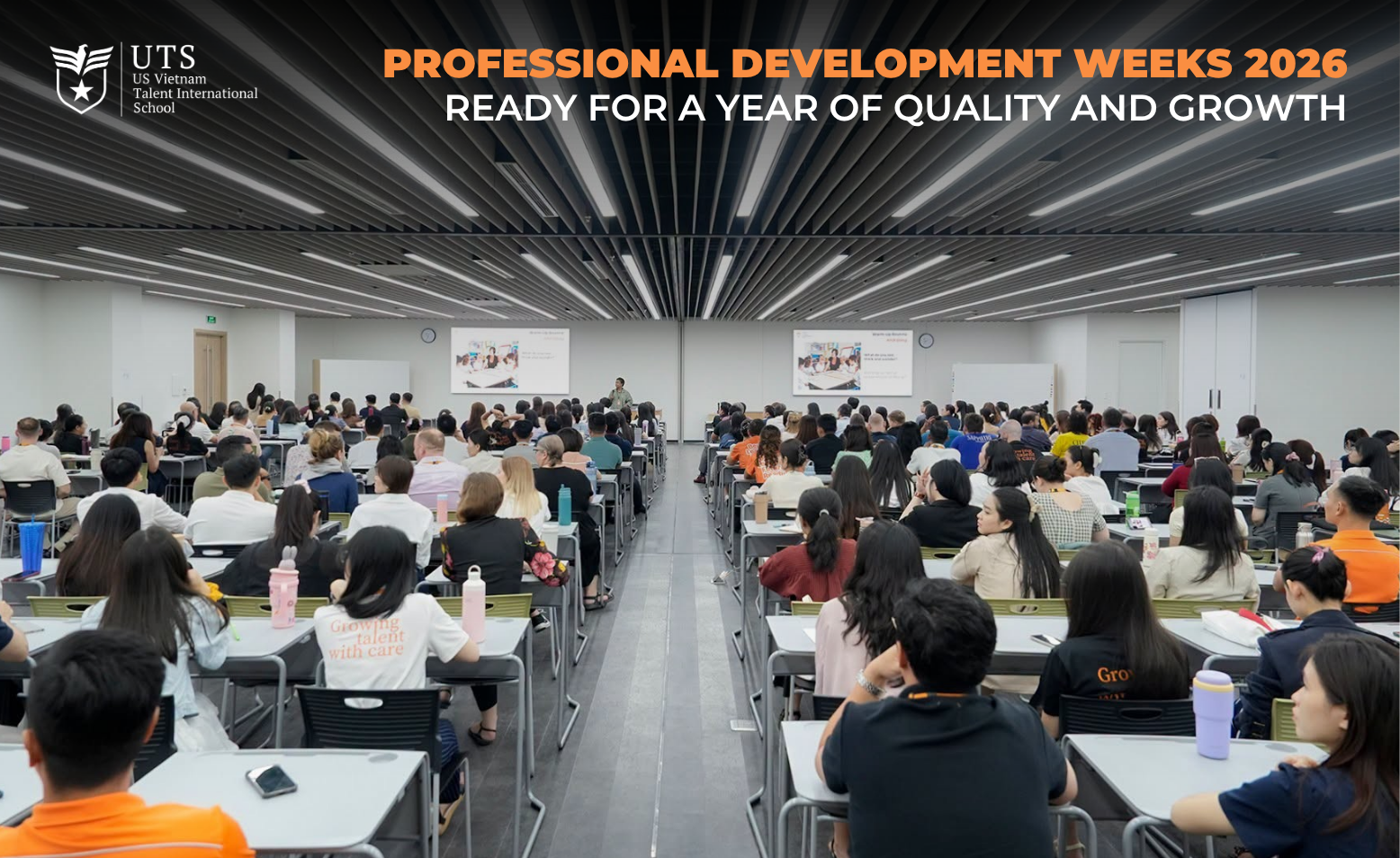
Professional Development Weeks 2026: Ready for a year of quality and growth

Before the 2026–2027 academic year officially began, UTS teachers and staff came together for Professional Development Weeks 2026 – two weeks dedicated to learning, connecting, and preparing for the journey ahead. At UTS, a quality learning experience for students always begins with the continuous growth of the educators who support them. UTS educators come together around a shared educational vision  Professional Development Weeks (PD Weeks) is an annual professional development programme at UTS, providing an opportunity for the entire team to reflect on achievements, update their knowledge, share experiences, and align on key priorities for the educational journey ahead. The programme began with a whole-school gathering that brought together the UTS community. During the event, educators who demonstrated dedication and made meaningful contributions throughout the 2025–2026 academic year were recognised for their efforts and impact in nurturing students’ talents. Addressing all teachers and staff, Ms. Anita Spittle – Head of School at US Vietnam Talent International School – reaffirmed UTS’s educational philosophy, vision, mission, and theme for the academic year, ensuring that every educator shares a common understanding and commitment to the School’s goals. Continuously enhancing the quality of teaching and learning A key focus throughout Professional Development Weeks was strengthening the team’s professional capabilities and further enhancing the quality of educational practice. The training sessions explored practical questions that educators encounter every day in the classroom: How can we establish and maintain positive expectations? How can we design a classroom environment that encourages students to become independent learners? How can we identify students’ different needs and provide the right support for each of them? Nurturing a growth mindset in every educator  If students are encouraged to continuously explore, learn, and grow, the educators who accompany them on that journey must embrace the same mindset. Through sessions on “Growth Mindset”
UTS One – The one parent portal for UTS
News

UTS One – The one parent portal for UTS

UTS One is the official and all-in-one parent portal for the UTS community, designed to provide a seamless, integrated and modern connection between families and the School. Instead of using multiple standalone applications and communication channels such as ManageBac, the student pick-up and drop-off application, school bus app, service registration, club registration or unofficial Zalo groups, parents can simply access UTS One to stay connected with everything that matters in one place. As the School’s official communication platform, UTS One ensures that all interactions between parents and the School are efficient, transparent and consistent. Through UTS One, parents can monitor their child’s learning progress, timetable, attendance, homework, behaviour and achievements, while also managing student and parent profiles, staying updated with school news and events, submitting leave requests, registering for clubs and school services, and communicating directly with the School. By bringing these essential features together on a single platform, UTS One makes it easier for parents to stay informed and actively support their child’s learning journey. Looking ahead, UTS will continue to enhance UTS One by introducing new features, including online tuition and service fee payments, as part of our commitment to building a comprehensive digital ecosystem. This ongoing development aims to provide parents with an even more convenient and connected experience throughout their child’s educational journey at UTS. Click HERE to view the UTS One installation and user guide.
What Is Project-Based Learning? Exploring a Modern Educational Approach at UTS
News

What Is Project-Based Learning? Exploring a Modern Educational Approach at UTS

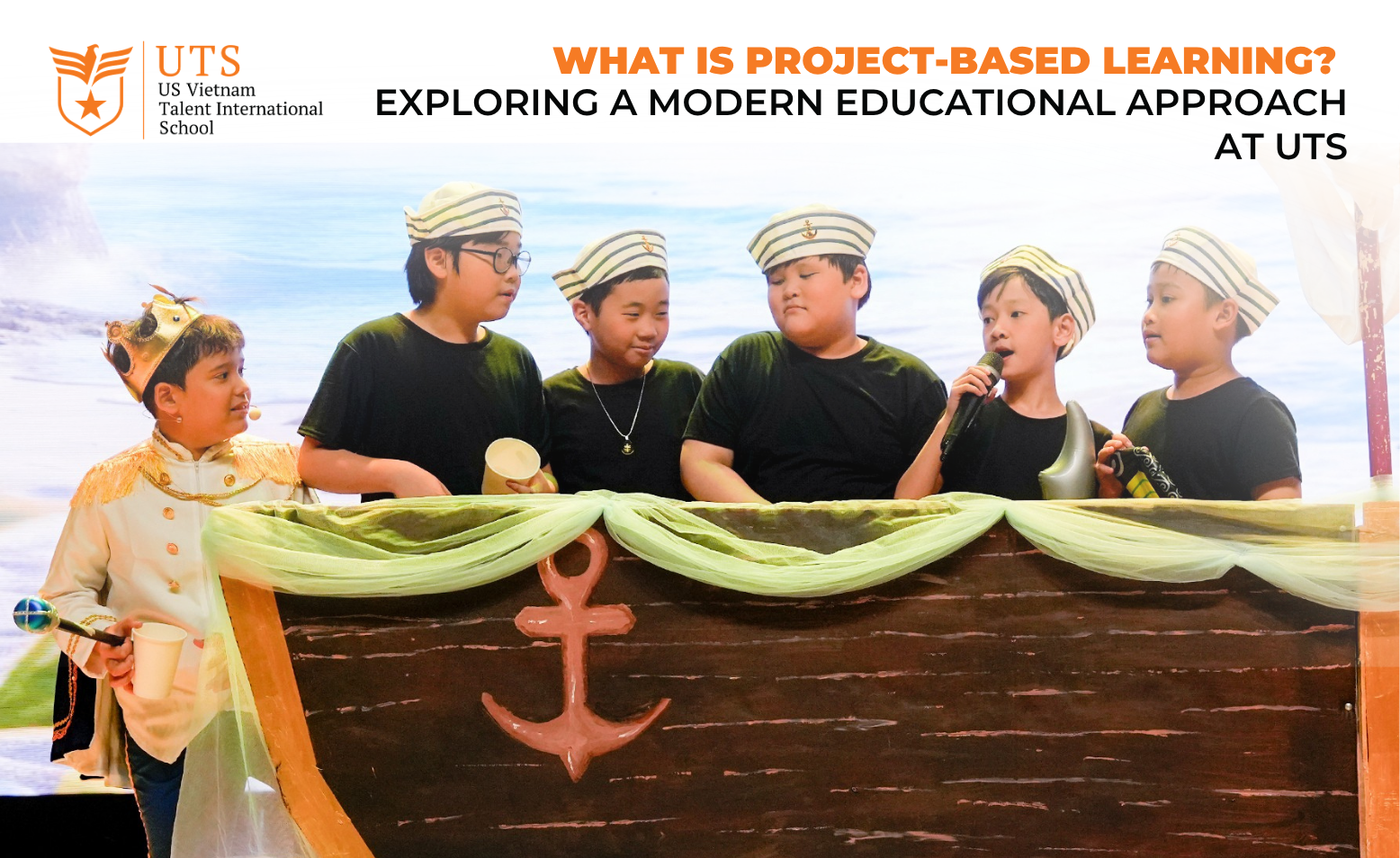
In the context of today’s constantly evolving education landscape, Project-Based Learning (PBL) has become one of the approaches adopted by many international schools to support students’ holistic development. At UTS International School of South America, students do not only acquire knowledge from textbooks, but also take part in real-world projects, actively explore ideas, and create their own learning products. So, what is project-based learning, and how is it applied to optimise students’ learning outcomes? This article will help parents and students better understand this learning model. What Is Project-Based Learning (PBL)? Project-Based Learning (PBL) is a student-centred educational approach in which students actively explore, research, and solve real-world problems through learning projects. Instead of only learning theories, students combine knowledge with practical experiences to develop thinking skills, teamwork, and problem-solving abilities.. Project-Based Learning is becoming increasingly popular in modern education The 5-Step Cycle of a Learning Project (*) A learning project following the Project-Based Learning (PBL) approach is often implemented through a clear process, helping students gradually transform knowledge into practical products. Below are the key steps: Step 1: Identifying Ideas and Driving Questions Students begin with a real-world problem or a guiding question under the teacher’s guidance, then define the goals and scope of the project. Step 2: Planning and In-Depth Research Students divide tasks, search for information, analyse data, and develop a suitable implementation plan. This stage requires students to apply critical thinking, problem-solving, and teamwork skills. Step 3: Implementation, Testing, and Adjustment During the implementation process, students apply what they have learned, test their solutions, and improve their products based on feedback. Step 4: Completing the Practical Product Based on their ideas and research outcomes, students complete products that can be presented, applied, or shared with others. Students create practical models and products in each project Step 5: