
Do you know? How Does A Sentimental Bond Between Parents And Children Work?
There is always a natural bond that is made up of the family love between parents and children. Parents tolerate and sympathize with their kids and their children are grateful for growing up in their parents’ warm embrace every single day.
Authentic bonds can be affected by several factors and have a significant impact on children’s maturity, especially in the mental health aspect.
According to parents’ perspective, what is the root cause of making such a generation gap? UTS had comprised the common reasons through accompanying and talking with families about their daily lives.
1. Factors affecting the relationship between parents and children
An affectionate and sentimental attachment between parents and children is formed from 3 leading elements:
Communication
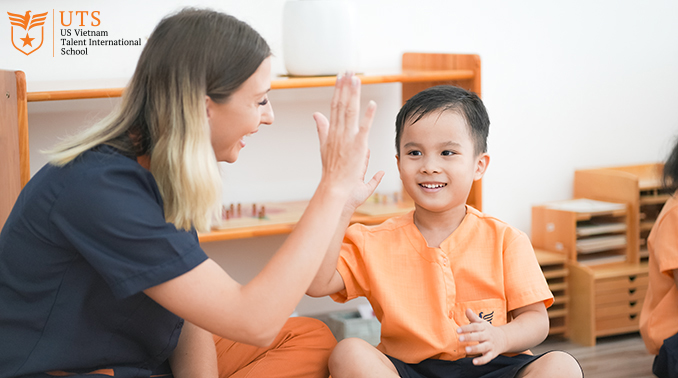
Communication between parents and children plays a key role in developing parent-child intimacy. Besides, it is beneficial that the root principle is to listen to their children’s confidence. In fact, effective communication is straightforward, stemming from the way parents interact with their children. Children will find it sympathetic when parents are eager to listen to their thoughts and give advice with a compassionate listening attitude.
Just take a closer look at a scenario when being asked by parents after going home from school: “Have you done your homework?” rather than “Did you enjoy your school today?”. Children’s innermost feelings will immediately start wondering: “My parents just care about my homework but my emotion!”. They are not able to express their inner true thoughts confidently which gradually weakens the parent-child communication bond because of 2 different standpoints.
Caring in child rearing

This factor will form the incentives and encouragement of what children do in order to help parents express sincere feelings and respect their children’s decisions. Meanwhile, it also signifies a companion by giving children proper advice and solutions when they encounter challenges in life.
Parents often criticize their kids: “Your grades are unacceptable!” and are likely to forget how much effort they put into achieving that outcome. Although children got 7 points today, it is way more noticeable by measuring the attempt to achieve a higher score than 4 points from the previous day. Because children try their best to become a better version of themselves day after day.
Parental sympathy

Since parents are the ones making children feel safe and sound, this factor will strengthen the parent-child relationship. Having said that, children will wonder: “Do parents know what I really need?”. That is definitely not about materialistic presents or excursions, but sympathy and empathy parenting is what children deeply yearn for to make them feel loved.
2. How does the bonding between parents and a child develop?
To be able to build a sentimental attachment between parents and children, every parent needs to take small steps to get along with their children – for those with individualities and countless emotional states throughout maturation.
Give children time to settle down
This is the ideal opportunity for parents and kids to share their personal stories. Therefore, children are easy to speak up, express their feelings about life, and listen to their parents’ advice – the ones who suffered from challenges in life that children are encountering.
Moreover, the ideal time frame is likely to be a cozy atmosphere of family meals or soft-spoken bedtime storytelling. In addition, despite the moment when mom smiles and greets their kids after going home from school is short, it also signifies the affection between parents and kids.
Parents should listen and sympathize with their children
“How was your test? Did you get 9 or 10? What was your rank in class?”. All these types of questions are putting a lot of stress weighing on children’s shoulders, which made them feel exhausted while trying to pursue their overall goal in the “academic race”. Instead, parents should spend time listening to and acknowledging their children’s progress day by day because children have spent so much effort in everyday growth.
Parents’ empathy and sympathy are not made up of a complicated strategy but a simple question: “Did you enjoy your school today?” or “What would you like to eat today?”. All these questions are considered “a cure” to help children get over all the sorrows after a long day. What can be done to bridge the generation gap is to let their voices be heard and get sympathy.
Encourage children to have a sense of identity
Children should pursue their own passion and hobbies to live happily. Likewise, parents also play a crucial role in encouraging children to explore and develop their hobbies. They may find it hard to navigate their interests, however, they will motivate themselves and figure out novel things thanks to their parents’ encouragement.
The more children cope with setbacks, the more they need their parents’ incentive to rebound. The more children do wrong things, the more encouragement they need to own their mistakes. The more dreams they have, the more support they need to make dreams come true. A parent used to be a child too, therefore, let your child be wrong in order to realize what he/she needs to develop. Parents should be companions, not commanders accompanying children in educating them right from wrong.
3. Conclusion
A sentimental bond between parents and children is formed from efforts, sympathy, and empathy. With the above useful information, UTS hopes that each parent can understand their children better in the journey of “growing talents with care”. Let the “seeds” in your children grow and grow into robust “massive trees”.

UTS Marks Five Consecutive Years as a Microsoft Showcase School

Welcoming Ms. Ariana Akhavan – Principal of UTS Saigon South Campus

Back to School 2026 – 2027: Ready to Grow, Lead and Make a Meaningful Impact at UTS

Professional Development Weeks 2026: Ready for a year of quality and growth