Why students should be exposed to STEM education early on?
In an era of rapid technological development, equipping students with critical thinking, creativity, and problem-solving skills is more essential than ever. STEM education is the key to helping the younger generation adapt and thrive in the future. At UTS, STEM is not only an academic component but a comprehensive educational approach that enables students to apply knowledge in real life, nurture a love of learning, and build global citizenship from an early age.

What is STEM Education?

STEM education is an integrated teaching philosophy that combines four disciplines: Science, Technology, Engineering, and Mathematics. This multidisciplinary approach equips students with practical knowledge and skills, in contrast to traditional academic teaching methods. STEM encourages students to apply interdisciplinary knowledge to solve real-world problems and situations.
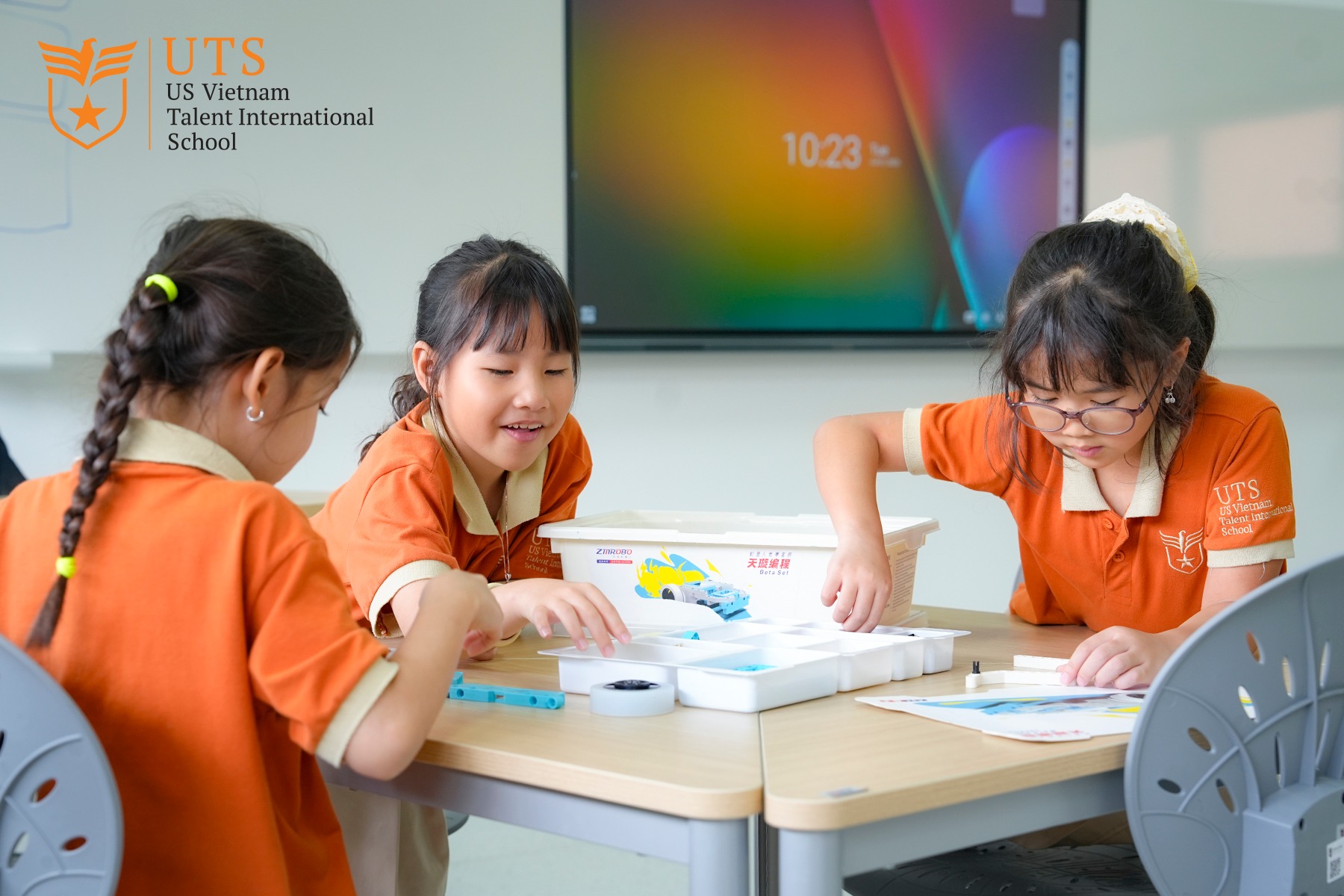
STEM giúp học sinh kết nối kiến thức lý thuyết với các tình huống thực tế

STEM connects theoretical knowledge with real-life application

Why is STEM education important for your child’s future?

In a world constantly transformed by technology, STEM education has become a foundational element to help children adapt and develop. Early exposure to STEM not only helps them understand the connection between academic knowledge and daily life but also prepares them with a strong foundation for entering future career paths.

Below are the key benefits STEM education offers students in the 21st century:

Developing practical problem-solving skills

STEM goes beyond abstract concepts by focusing on real-life application. Students are encouraged to analyze situations, ask questions, experiment, and find solutions—critical thinking skills that help them proactively and flexibly respond to various challenges.
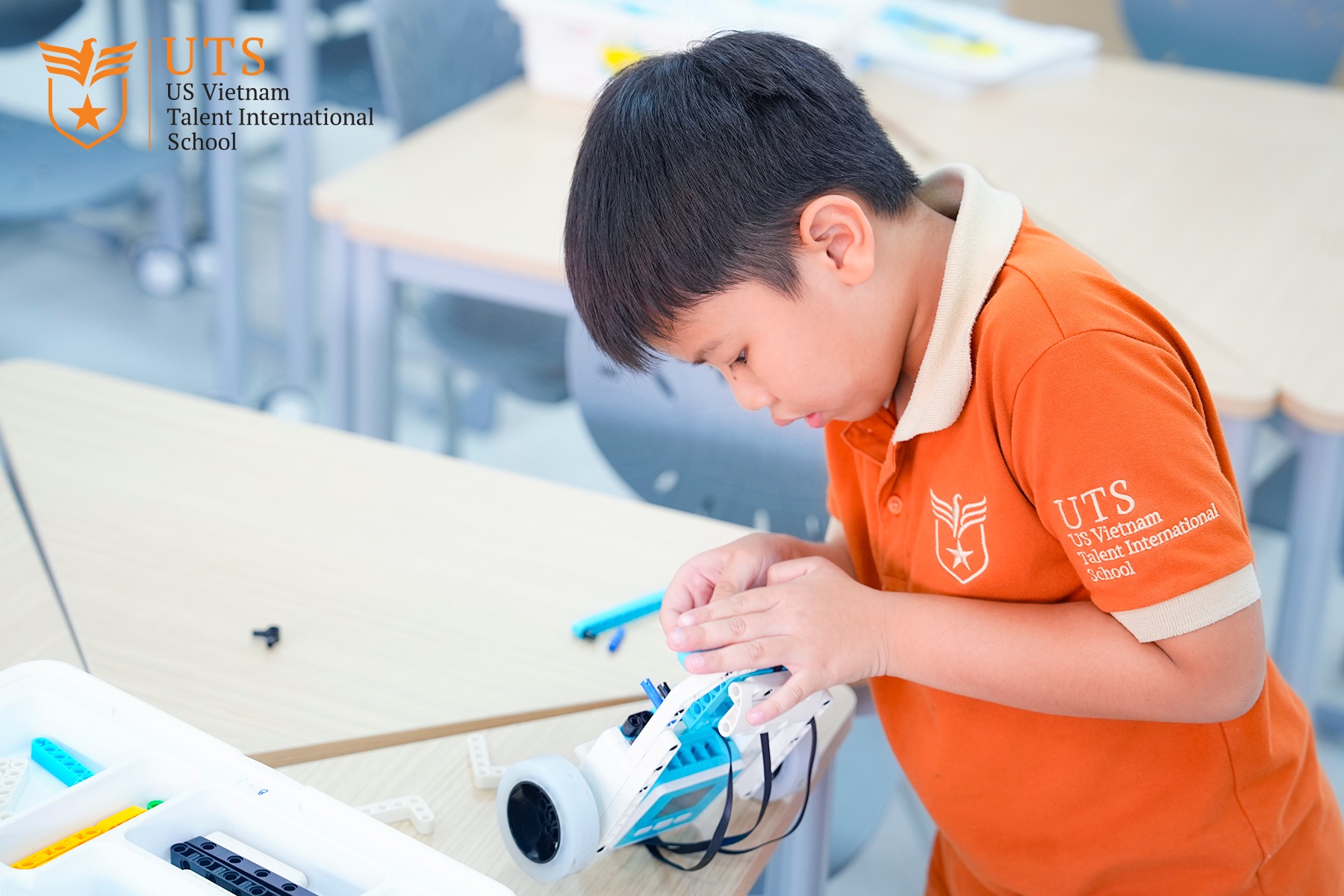
Học sinh thực hành phân tích tình huống và tìm giải pháp

Students practice analyzing situations and seeking solutions

Fostering unlimited creativity

STEM education empowers students with multidimensional thinking by encouraging them to approach problems from different perspectives. Instead of learning theory alone, students participate in hands-on activities such as model design, robotics programming, and scientific projects. These experiences enhance critical thinking, imagination, and creativity, which is essential for thriving in a technology-driven era.
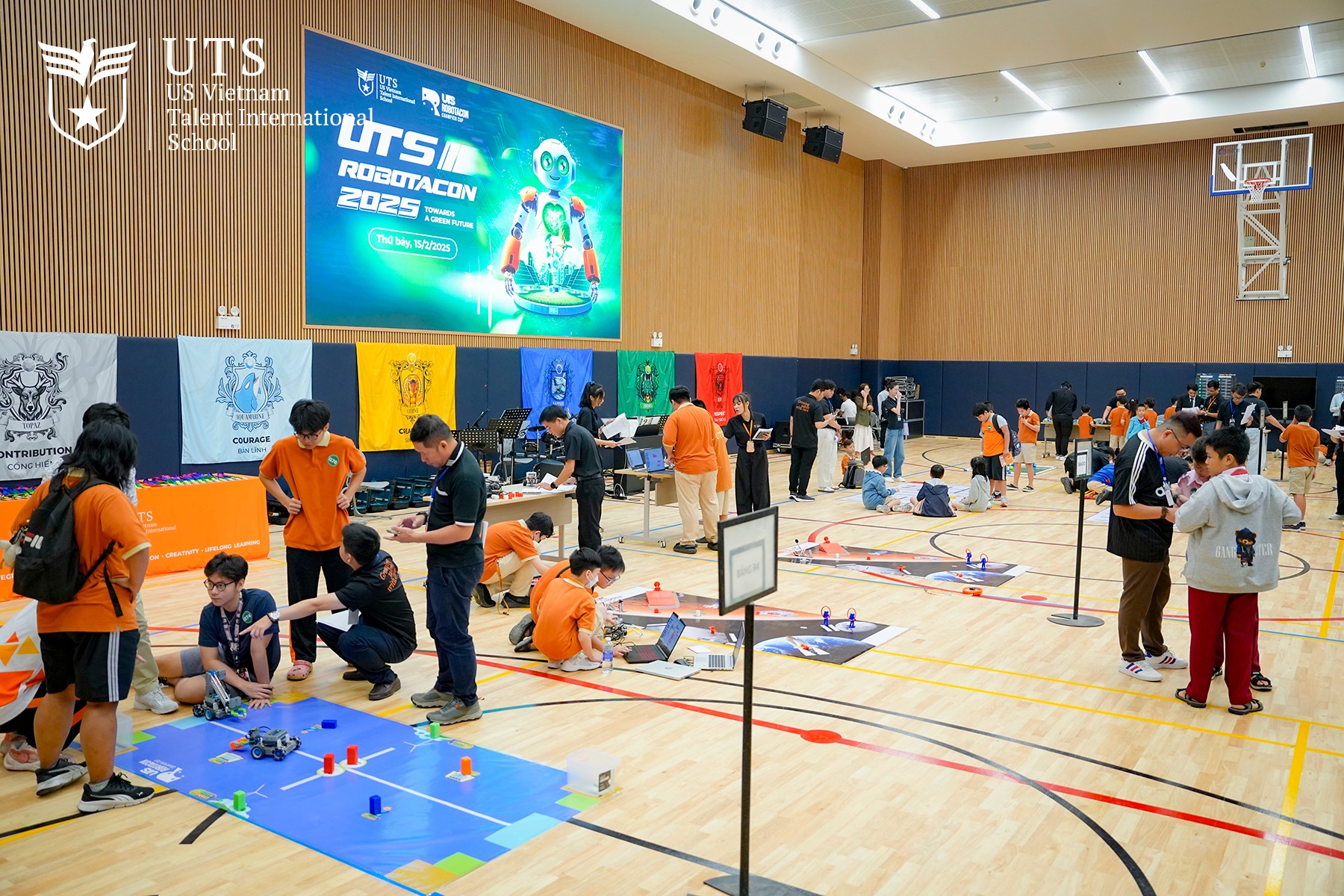
Vòng chung kết cuộc thi UTS Robotacon 2025 tại cơ sở Nam Sài Gòn

Each STEM project is a chance for students to explore and express unique ideas.

Building a strong foundation for future careers

In the digital age, careers related to technology, data, and engineering will continue to grow rapidly. STEM equips students with scientific thinking and digital skills from an early age, opening doors to high-potential fields such as artificial intelligence, biotechnology, renewable energy, and space exploration.
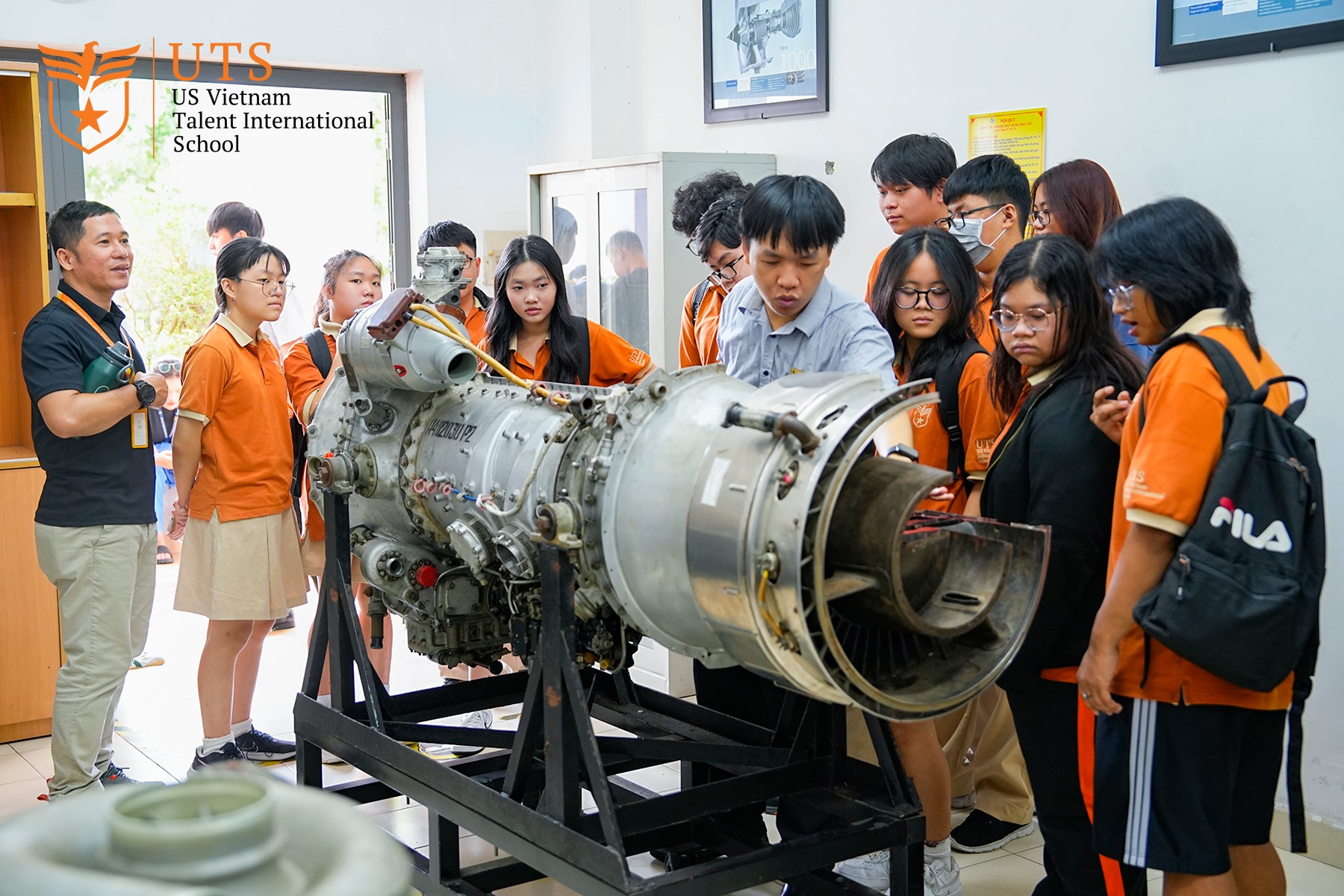
Giáo dục STEM mở ra cánh cửa đến với các ngành nghề tiên phong của tương lai

STEM education opens pathways to pioneering industries of the future

Enhancing teamwork and effective communication

Collaboration and coordination among team members are essential for project success. STEM learning often involves group work, where students explore, discuss, and solve problems together. This cooperative process strengthens listening, idea-sharing, and task delegation—naturally cultivating teamwork and communication skills vital for both academic and professional environments.
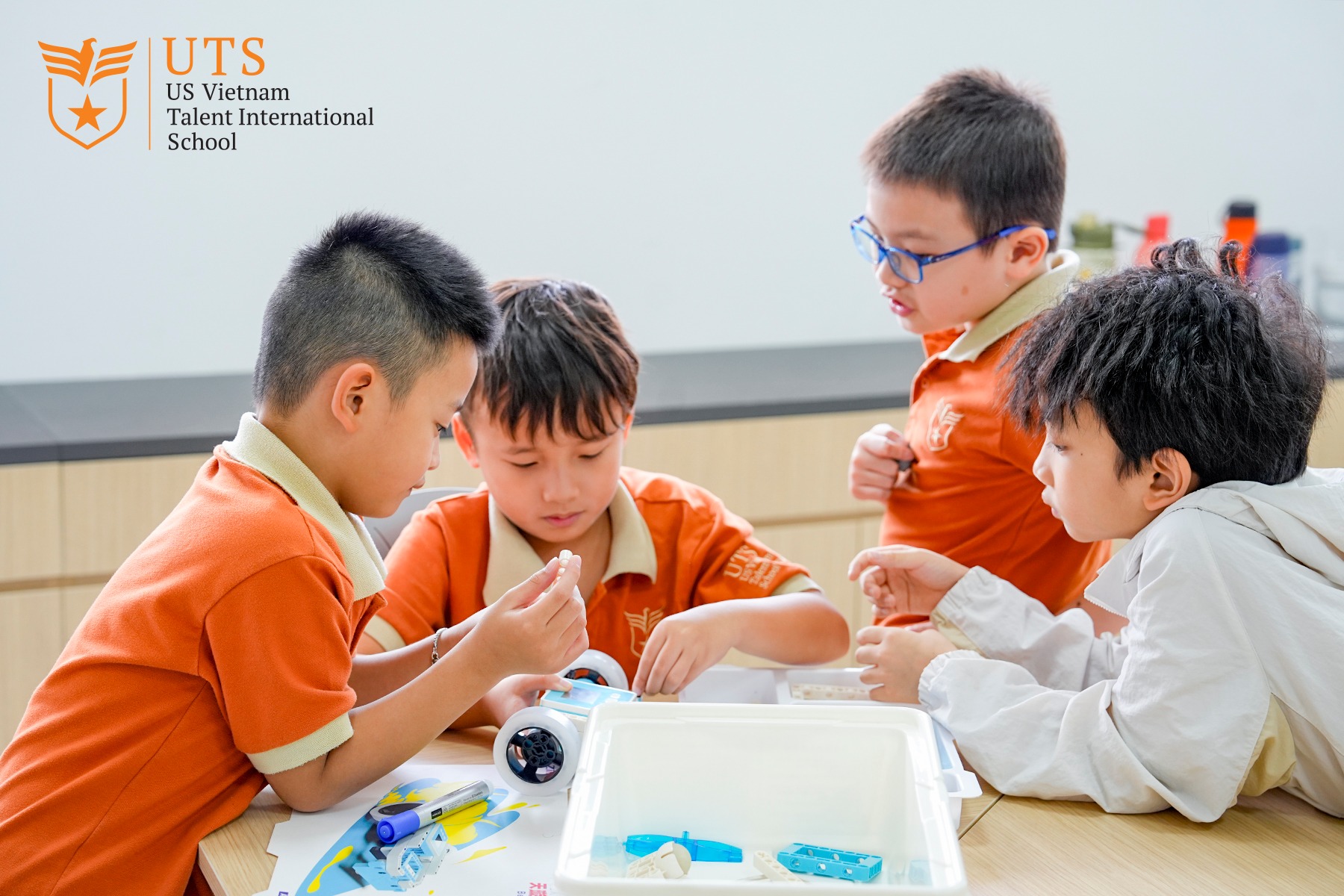
Làm việc nhóm giúp học sinh học cách lắng nghe và chia sẻ ý tưởng hiệu quả

Working in teams teaches students how to listen and share ideas effectively

What makes STEM education at UTS unique?

Recognizing the significance of STEM education, the US Vietnam Talent International School (UTS) actively integrates this approach into the core curriculum. At UTS, students learn in an environment that is both creative and practical, allowing them to develop applicable skills and knowledge as a strong foundation for becoming global citizens.

Learn more: UTS Curriculum

Teaching and Learning Approaches at UTS

UTS adopts a competency-based approach that emphasizes real-world learning and experiential engagement. Activities are designed to help students take initiative in exploring knowledge, develop critical thinking, problem-solving abilities, and personal creativity. Through interdisciplinary projects, students not only acquire knowledge flexibly but also foster curiosity, a passion for discovery, and a lifelong learning mindset.
Học sinh học cách hợp tác, sáng tạo và áp dụng kiến thức vào tình huống thực tế.

Students learn to collaborate, innovate, and apply knowledge in real-life contexts.

Alongside the curriculum, the school offers various extracurricular clubs such as Robotics and ICT to expand learning beyond the classroom. UTS also encourages students to participate in city-wide STEM competitions, providing more real-world experiences and enhancing applied skills in competitive environments.
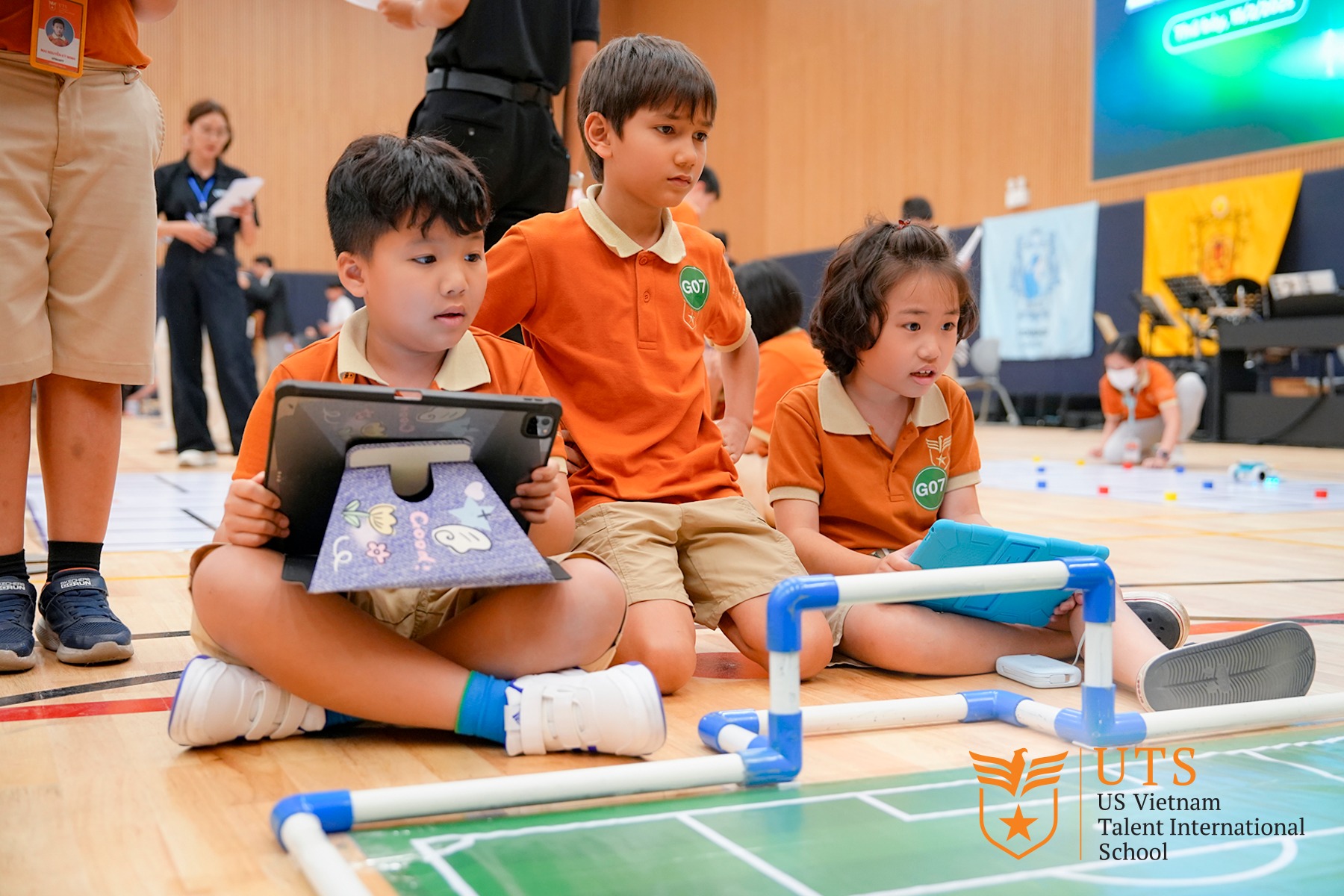
UTS empowers students to grow holistically both in and out of the classroom

Modern facilities

To create the best learning conditions, UTS prioritizes investment in facilities, equipping all functional classrooms with modern tools and ensuring convenience for every subject. The school also integrates advanced technology into teaching, enabling students to become familiar with tech applications from an early age.
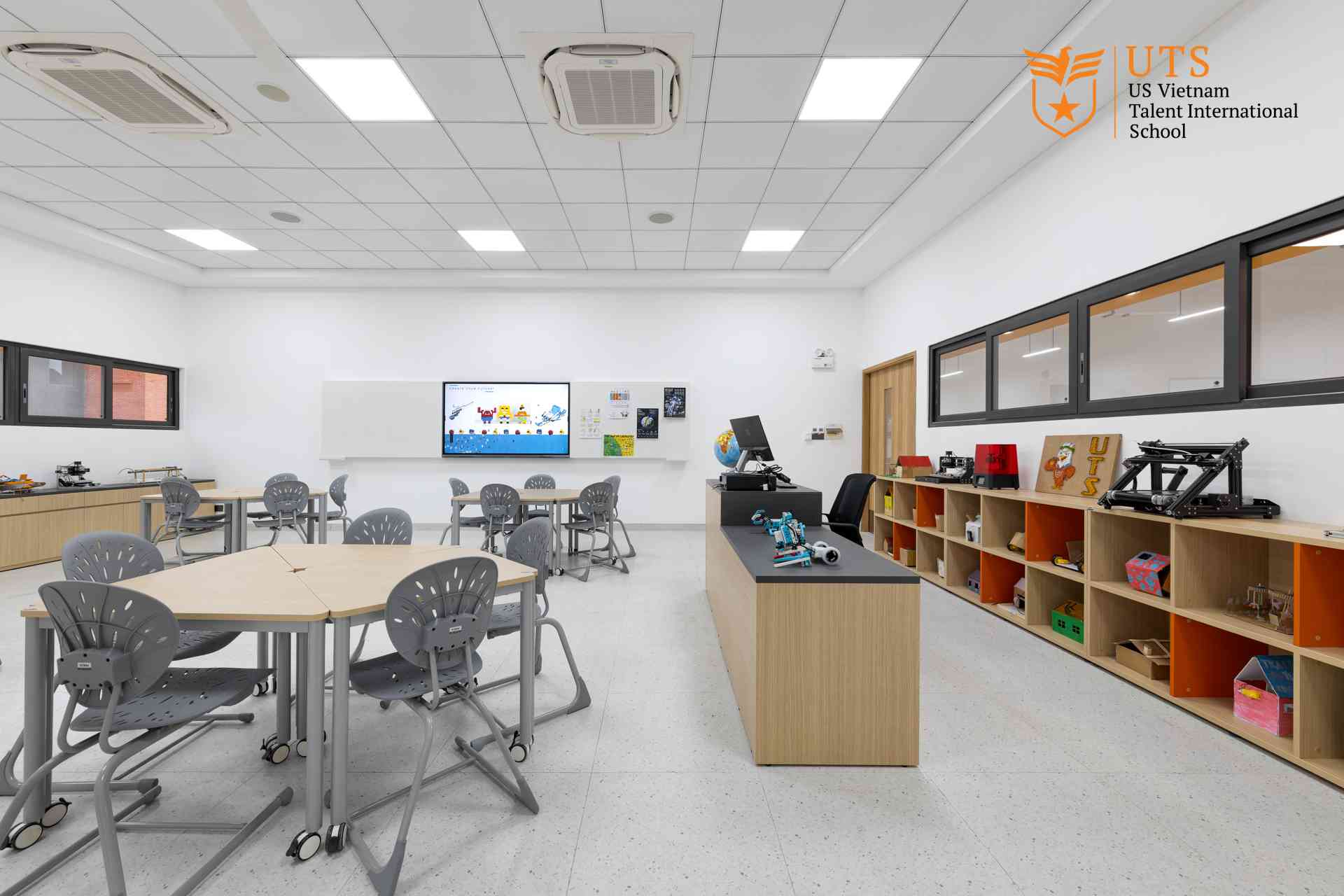
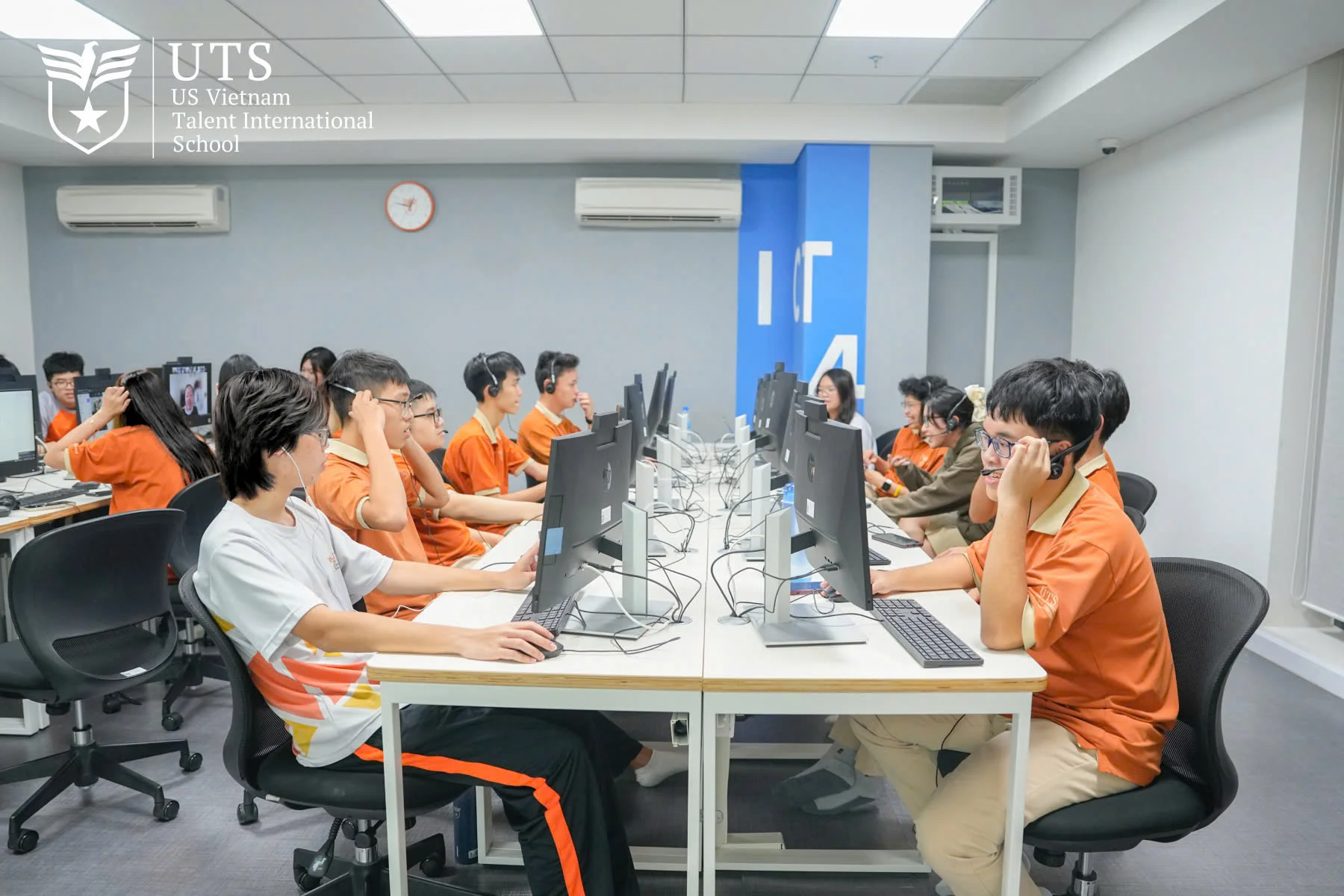
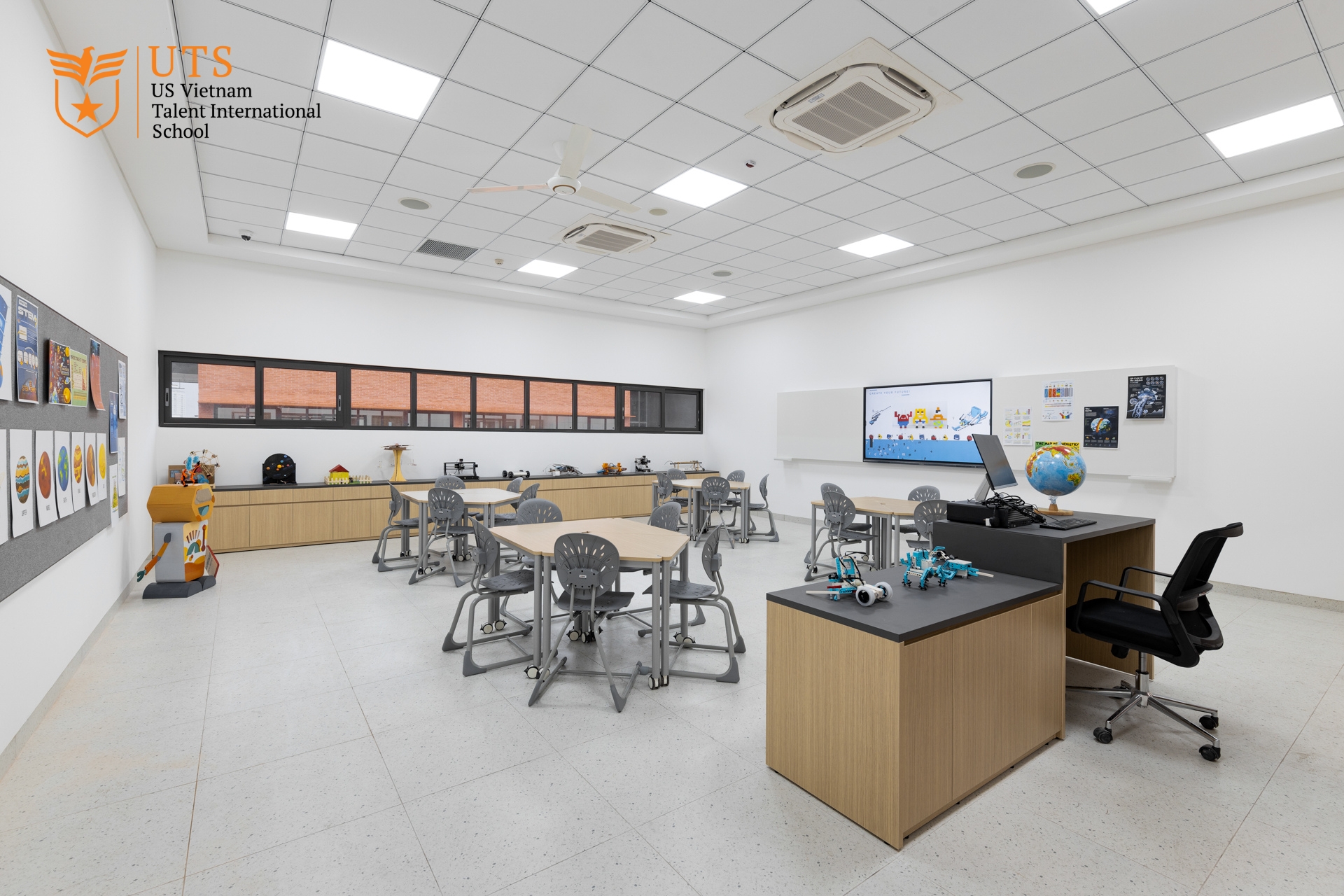
Phòng STEM tại SGS

Khám phá thế giới số cùng môn Khoa học máy tính

Functional classrooms at UTS are fully equipped with modern facilities

Learn more: UTS Facilities

Highly qualified and experienced faculty

At UTS, teachers play a vital role in delivering effective STEM education. The faculty continuously updates teaching methods and flexibly designs activities to match each student’s abilities and interests.
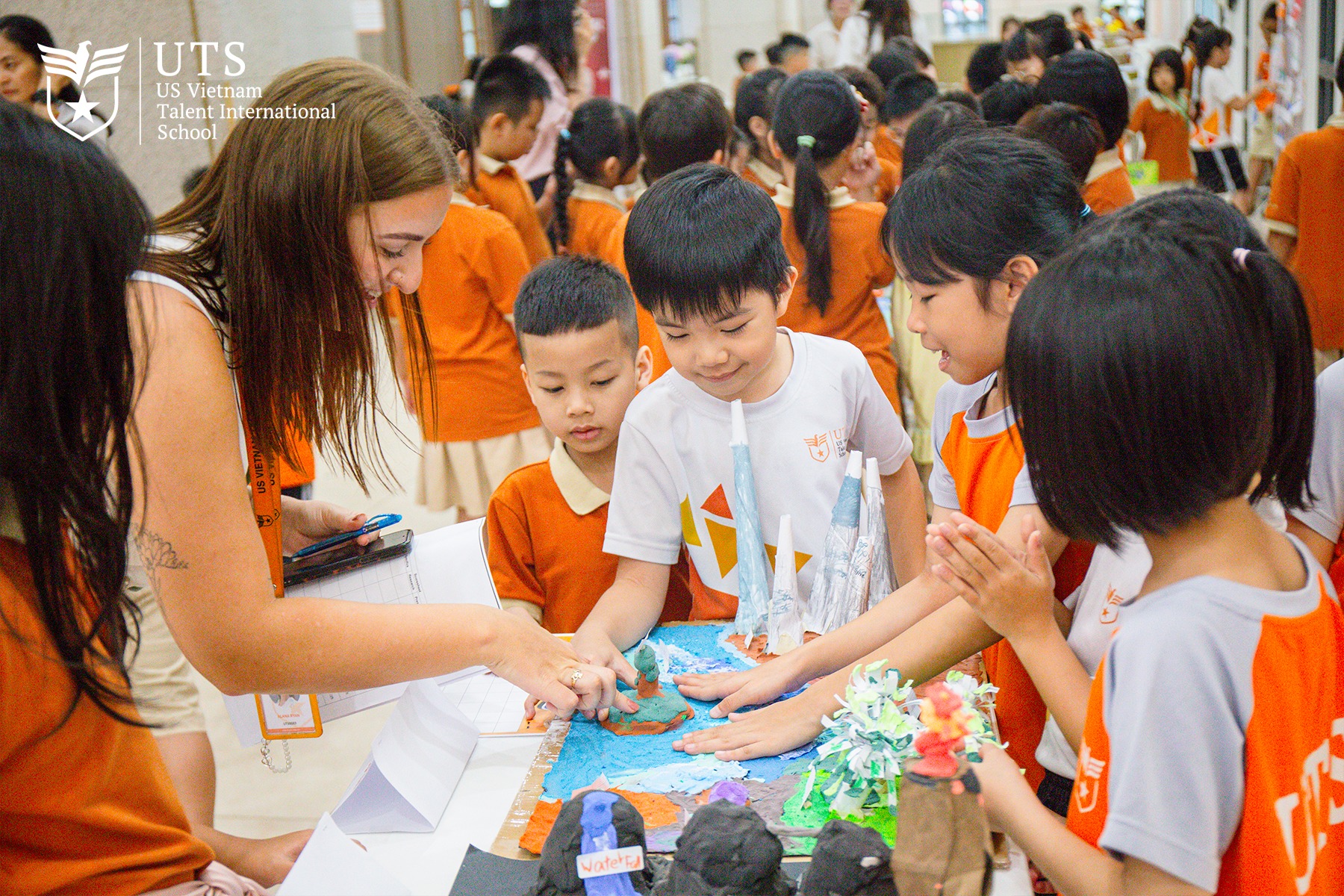
UTS teachers accompany students through each project, providing guidance and encouragement

Highlighted projects

Project: “Automation for the Environment”

As part of an interdisciplinary STEM–Science project, Secondary UTS-ers collaborated over four weeks to design AI-powered models that contribute positively to the environment. Outstanding projects presented at the showcase included: automatic vacuum cleaners, automated watering systems, air pollution warning devices, and smart trash bins. 
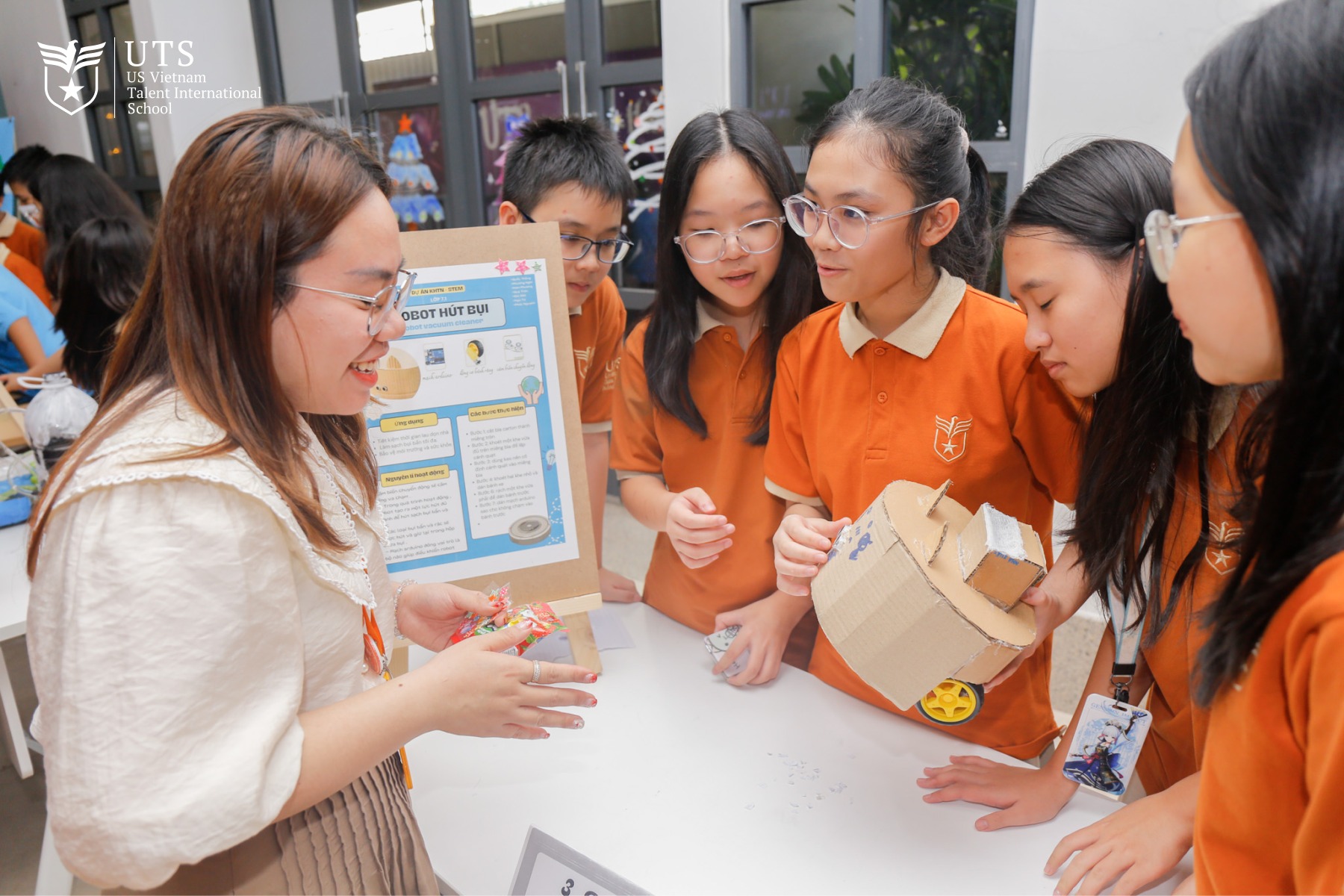
Học sinh UTS giải đáp thắc mắc

Project: “Automation for the Environment”

Through this project, students developed skills in research, model design, programming, and teamwork toward a shared goal—all aligned with the competencies required in the 21st century and the mission of nurturing global citizens.

Project: “Wave Breaker Engineering”

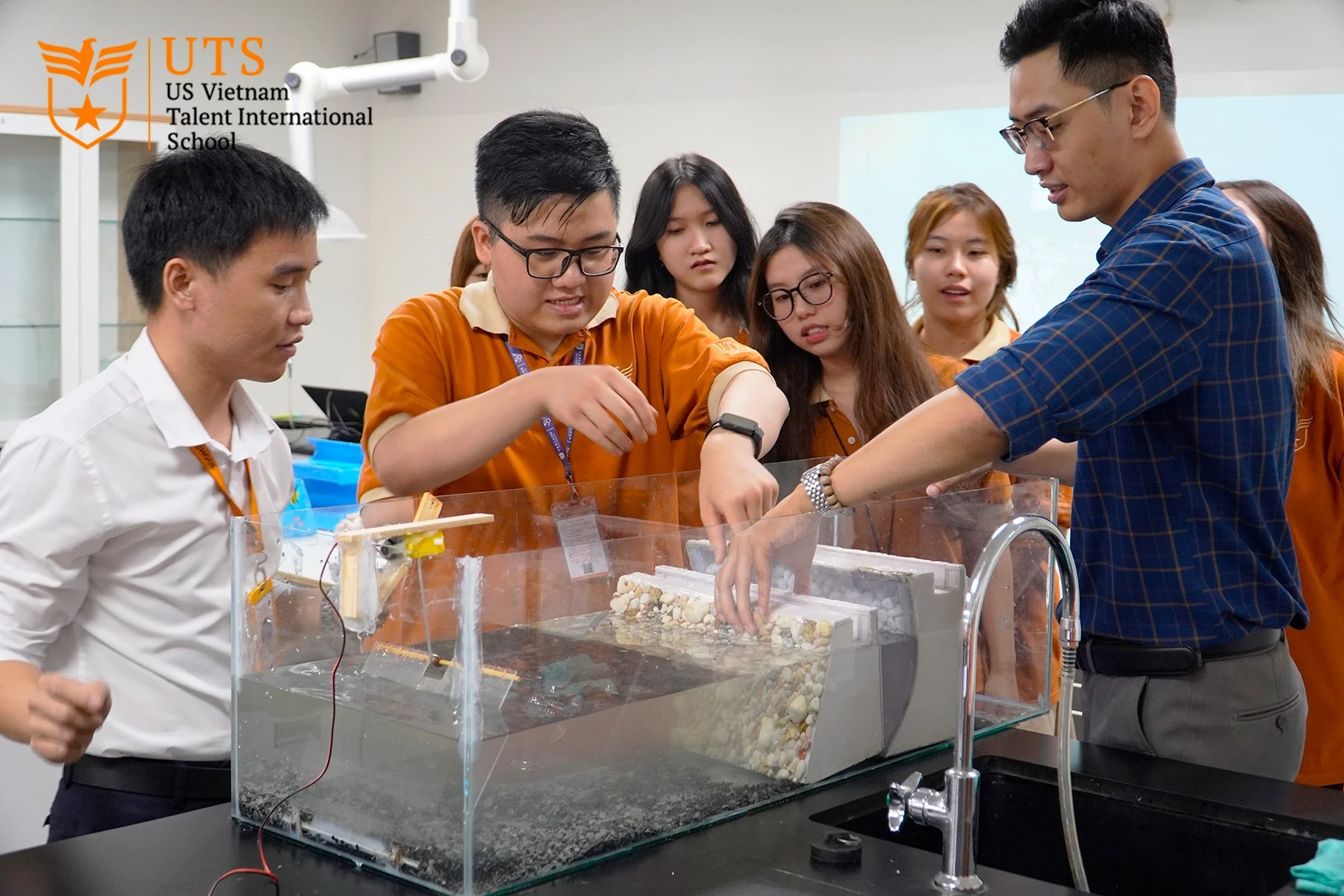
In February, Grade 11 students joined the interdisciplinary “Wave Breaker” project – a STEM-integrated learning activity that challenged students’ creativity and real-world problem-solving skills.
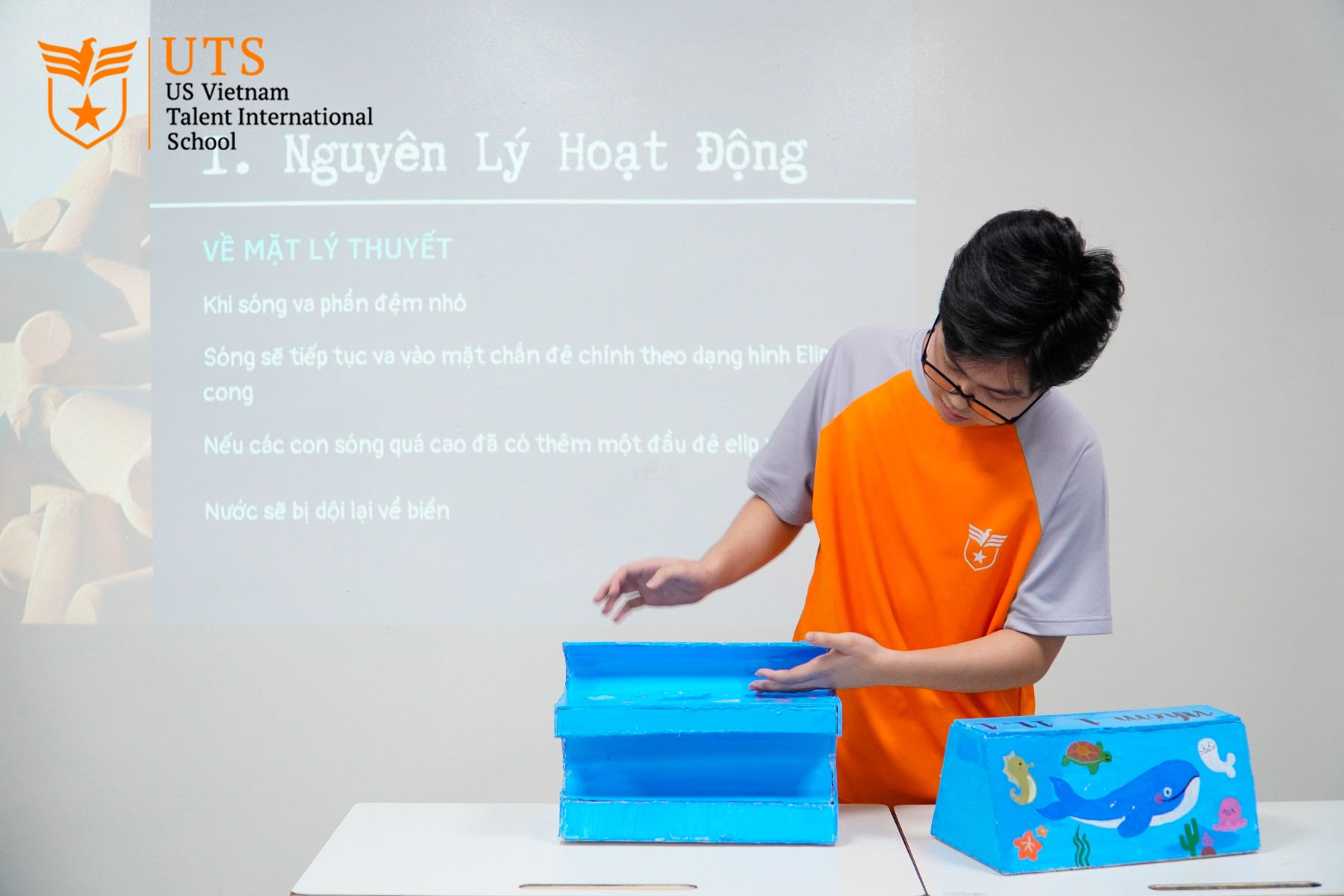
Nguyên lý hoạt động đê chắn sóng

Project: “Wave Breaker Engineering”

By researching and building wave breaker models, students applied knowledge flexibly from theory to practice. This is a clear example of the project-based learning approach UTS champions, helping students gain deep understanding, enhance applied skills, and deliver meaningful contributions to society.

UTS Science Fair

At this year’s UTS Science Fair, Primary students showcased innovative science models developed through the Common Core and Oxford International Curriculum (OIC). Projects such as the Solar System, chain reactions, earthquake-proof houses, crystals, and the circulatory system demonstrated how students apply academic knowledge in practice. They also cultivated creativity, problem-solving skills, teamwork, and confident presentation.
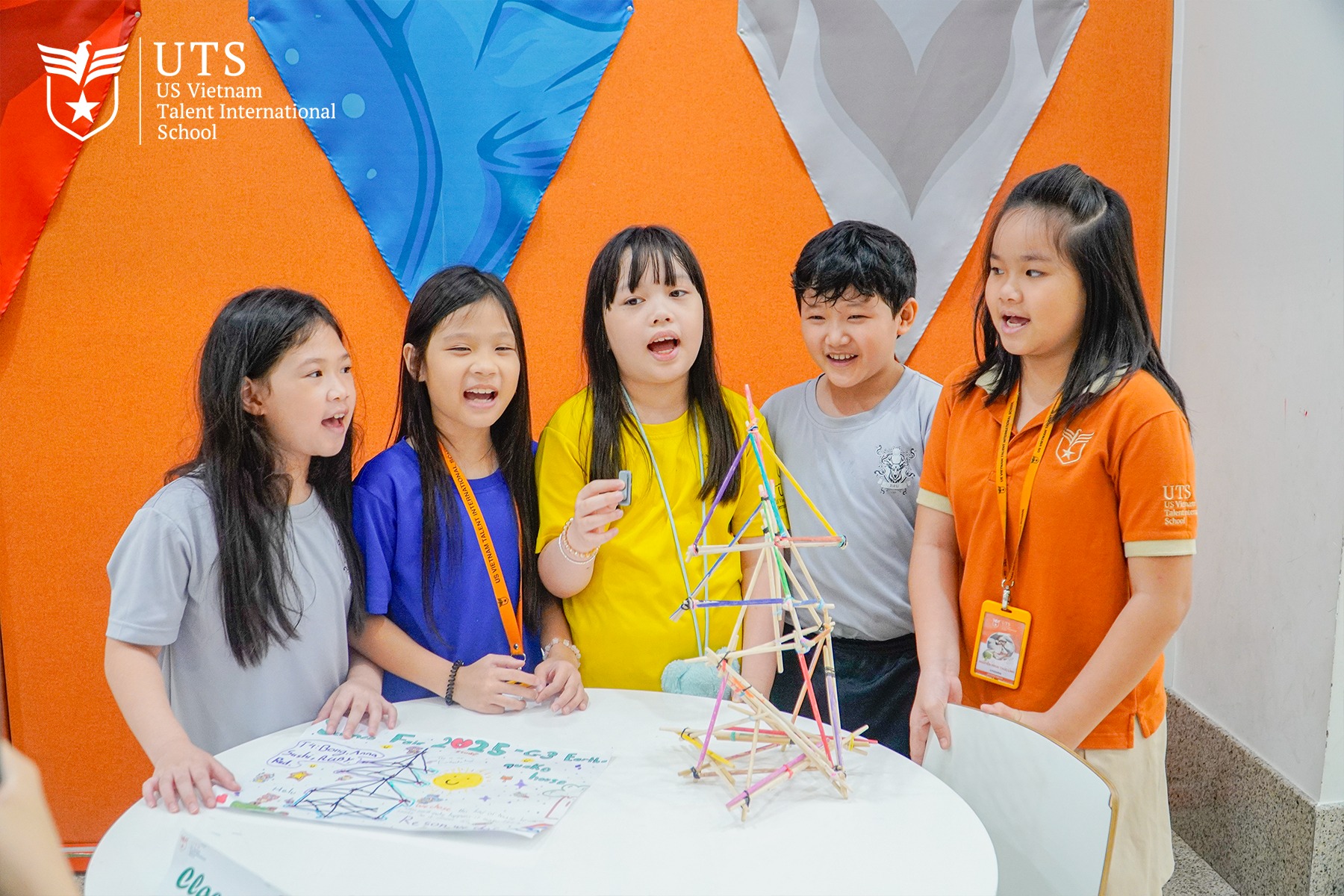
Science Fair là sân chơi khám phá và ứng dụng khoa học thực tiễn

Science Fair provides a hands-on playground for students to explore and apply science in real life

Frequently Asked Questions (FAQ) about STEM education

At what age is STEM education appropriate?

STEM education is suitable for all age groups, from early childhood to high school and even higher education. However, its content and teaching methods should be tailored to each developmental stage.
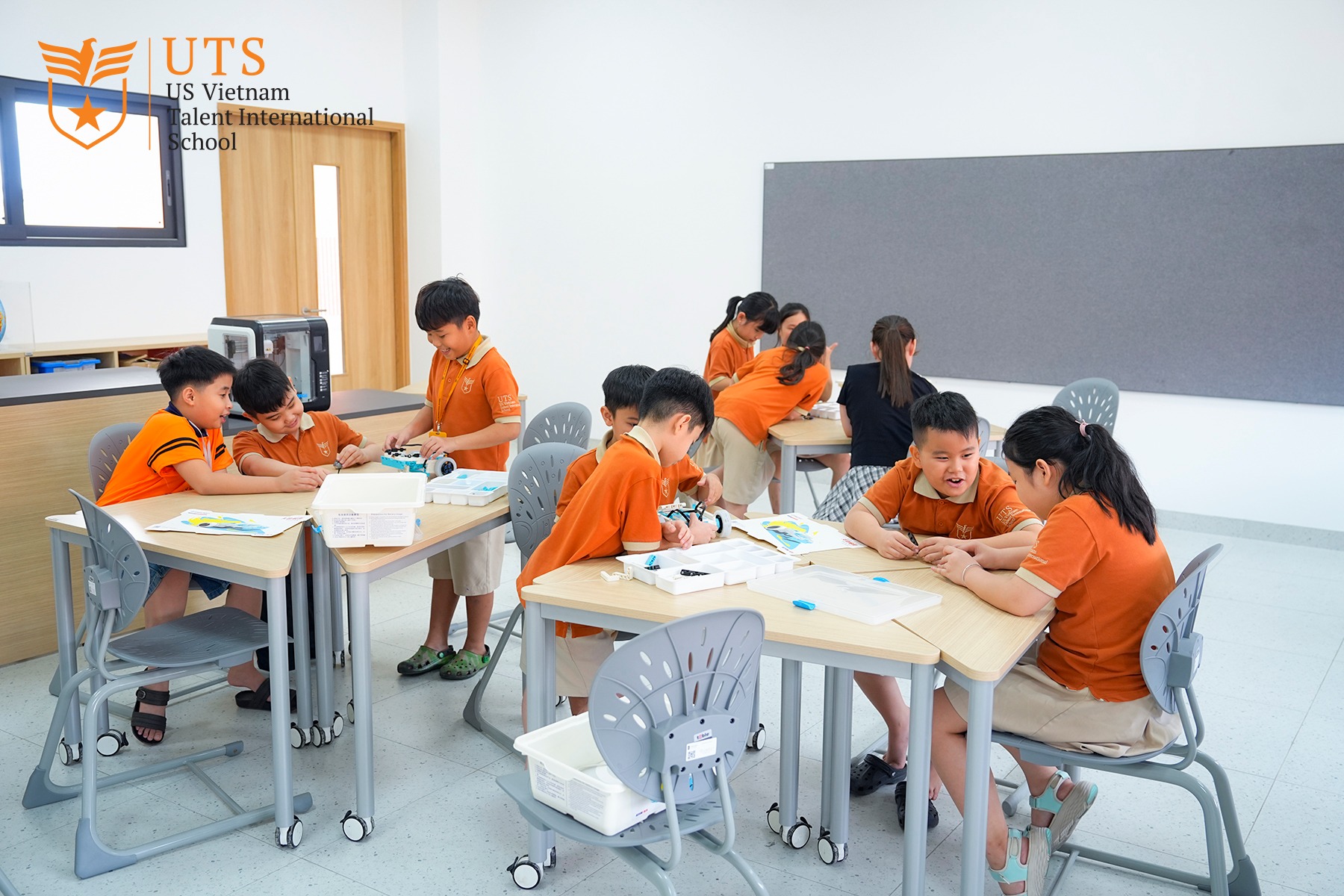
Giáo dục STEM được thiết kế linh hoạt, phù hợp với từng cấp học từ mầm non đến trung học.

STEM programs are designed with flexibility to fit every learning level.

What is the difference between STEM and STEAM?

Below is a short comparison that highlights the difference between the two modern educational models.

Criteria STEM STEAM
Definition An integrated education model combining Science, Technology, Engineering, and Mathematics An expanded STEM model that incorporates Art into the curriculum
Main objective Focuses on developing logical thinking, problem-solving skills, and technological competence Combines logical reasoning with creative thinking, nurturing emotional intelligence and aesthetic appreciation
Suitable learners Best suited for students inclined toward science, technology, and engineering Ideal for students who enjoy both science and the arts

Do students need to be strong in science to study STEM?

STEM education emphasizes more than just academic knowledge—it values critical thinking, creativity, and real-world application. Students can contribute their strengths through teamwork, idea generation, model design, or tech application. The most important factors are curiosity, initiative, and a love of learning.
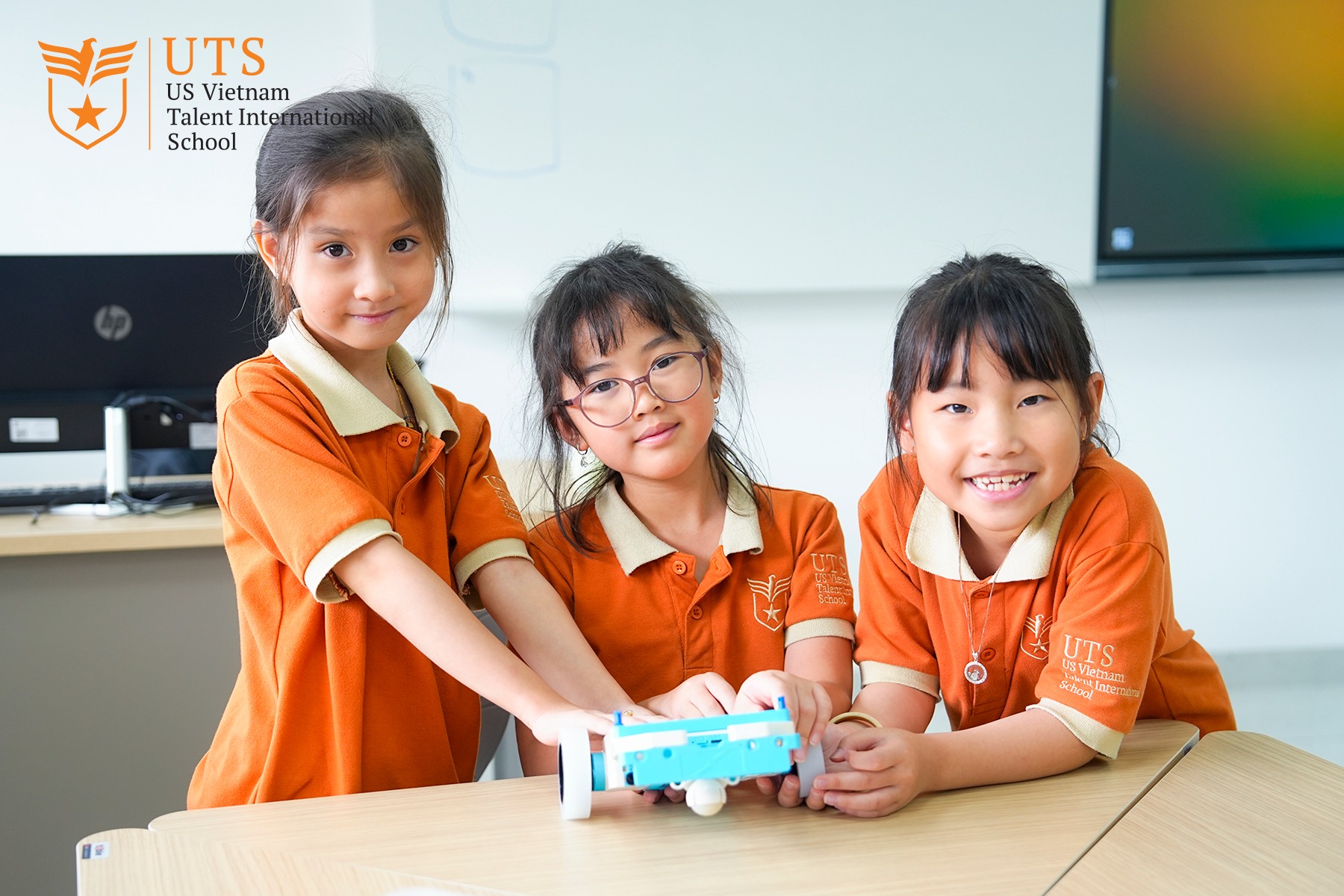
Giáo dục STEM khuyến khích sự chủ động và tinh thần khám phá của mỗi học sinh.

STEM encourages active exploration and discovery in every learner.

Studying STEM at UTS – A launchpad for global citizens

UTS is committed to creating impactful learning experiences and inspiring students from within. Through STEM education, the school not only nurtures a love for lifelong learning but also equips students with the capacity to make positive contributions to the community and beyond.

If you’re looking for a high-quality educational environment that focuses on holistic thinking and skills development through STEM programs, UTS is a worthy choice.

To learn more or receive personalized consultation, please visit HERE or call 028 710 78887.
Other news
What Is Project-Based Learning? Exploring a Modern Educational Approach at UTS
News

What Is Project-Based Learning? Exploring a Modern Educational Approach at UTS

In the context of today’s constantly evolving education landscape, Project-Based Learning (PBL) has become one of the approaches adopted by many international schools to support students’ holistic development. At UTS International School of South America, students do not only acquire knowledge from textbooks, but also take part in real-world projects, actively explore ideas, and create their own learning products. So, what is project-based learning, and how is it applied to optimise students’ learning outcomes? This article will help parents and students better understand this learning model. What Is Project-Based Learning (PBL)? Project-Based Learning (PBL) is a student-centred educational approach in which students actively explore, research, and solve real-world problems through learning projects. Instead of only learning theories, students combine knowledge with practical experiences to develop thinking skills, teamwork, and problem-solving abilities.. Project-Based Learning is becoming increasingly popular in modern education The 5-Step Cycle of a Learning Project (*) A learning project following the Project-Based Learning (PBL) approach is often implemented through a clear process, helping students gradually transform knowledge into practical products. Below are the key steps: Step 1: Identifying Ideas and Driving Questions Students begin with a real-world problem or a guiding question under the teacher’s guidance, then define the goals and scope of the project. Step 2: Planning and In-Depth Research Students divide tasks, search for information, analyse data, and develop a suitable implementation plan. This stage requires students to apply critical thinking, problem-solving, and teamwork skills. Step 3: Implementation, Testing, and Adjustment During the implementation process, students apply what they have learned, test their solutions, and improve their products based on feedback. Step 4: Completing the Practical Product Based on their ideas and research outcomes, students complete products that can be presented, applied, or shared with others. Students create practical models and products in each project Step 5:
UTS – A Leading International Education Environment in Binh Thanh
News

UTS – A Leading International Education Environment in Binh Thanh

Located in Binh Thanh District — formerly Binh Thanh District and now Binh Loi Trung Ward is a trusted choice for many parents seeking a high-quality international education environment for their children. With a modern bilingual learning pathway, internationally benchmarked facilities, and a holistic development orientation, UTS offers a learning journey that helps students grow academically, develop essential skills, and build the confidence to integrate into the global community. About US Vietnam Talent International School (UTS) UTS is a bilingual international school system under Van Lang Education Group, which has over 30 years of experience in education in Vietnam. Established in 2018, UTS was built with the vision of becoming a modern educational environment where students can develop holistically in academics, skills, and mindset in the context of global integration. UTS is a bilingual international school system under Van Lang Education Group, with more than 30 years of experience in education Key advantages of UTS Van Lang Complex in the Binh Thanh area Convenient location UTS Van Lang Complex is located in Binh Thanh, one of Ho Chi Minh City’s dynamic central areas, with convenient access to nearby districts such as Phu Nhuan, Tan Binh, and District 12. Thanks to its accessible location and safe environment, parents can easily pick up and drop off their children while feeling assured throughout their learning journey. Modern facilities Located within the Van Lang education complex, UTS is equipped with modern facilities that create an inspiring learning environment and support students’ holistic development. From classrooms and libraries to sports and creative spaces, every area is designed to meet students’ learning, experiential, and exploratory needs. The laboratories at UTS are fully equipped with modern learning tools and equipment The music room offers a wide range of instruments and a creative space for students The UTS
UTS OFFICIALLY ACHIEVES FULL CIS ACCREDITATION
News & Events

UTS OFFICIALLY ACHIEVES FULL CIS ACCREDITATION

US Vietnam Talent International School System (UTS) has officially achieved full accreditation from the Council of International Schools (CIS), one of the world’s leading international education accreditation organizations, recognized for its rigorous standards in evaluating schools that meet global benchmarks. This milestone reaffirms UTS’s comprehensive educational quality and its long-standing commitment to sustainable development aligned with international standards. UTS officially achieves full CIS Accreditation CIS Accreditation – A Global Benchmark for Educational Quality and Transparency As parents increasingly seek international education opportunities within Vietnam, independent accreditations from globally recognized organizations have become an important measure of a school’s quality and transparency. Achieving CIS accreditation is not only a recognition of UTS’s continuous efforts, but also opens opportunities for students to access an internationally recognized education. CIS accreditation serves as evidence of the internationally benchmarked educational quality at UTS. The Council of International Schools (CIS) is an international organization dedicated to evaluating and accrediting schools worldwide, with a network of more than 1,300 schools across over 120 countries. It can be understood as a “global benchmark” that helps parents and students identify trustworthy educational environments. To receive CIS accreditation, a school must meet high standards in educational quality and undergo a multi-year evaluation process with rigorous reviews. Every essential aspect — from curriculum and teaching quality to student experience, school culture, and operational systems — is carefully assessed. The goal is to ensure that all elements of the school operate cohesively and meet international standards, creating a reliable, consistent, and student-centered learning environment. A comprehensive transformation journey toward international standards UTS’s journey toward CIS accreditation has been a persistent and meaningful process marked by many important milestones and the collective efforts of the entire school community. In August 2022, UTS officially became a member of CIS, marking the beginning of its
2025–2026 Closing and Graduation Ceremony: A Journey of Growth and Proud Milestones
News

2025–2026 Closing and Graduation Ceremony: A Journey of Growth and Proud Milestones

Closing the 2025–2026 academic year, US Vietnam Talent International School held its Closing Ceremony under the theme “The Journey We Became”. This was an opportunity for the UTS community to look back on a learning journey filled with effort, growth, and meaningful emotions, while also celebrating graduating students as they prepared to move forward with the message “Ready for What’s Next”. Grade 5 Graduation Ceremony for the 2025–2026 academic year at UTS In a solemn and heartfelt atmosphere, the ceremony was attended by the School Leadership Team, teachers, parents, and nearly 2,000 students across different grade levels. The Closing and Graduation Ceremony took place in a warm and memorable atmosphere Closing Ceremony 2025–2026: A remarkable year for UTS-ers The 2025–2026 academic year, guided by the spirit of “Grow – Lead – Impact”, became a meaningful journey for the UTS community, as each student made their own progress in learning, experience, and personal growth. As the journey came to a close, the Closing Ceremony was not only an occasion to reflect on proud achievements, but also a moment to recognise how students had grown, taken the lead, and learned to create positive impact. UTS students confidently explored and grew through every learning experience Notably, this was also the first Closing Ceremony for the pioneering generation of students at UTS Saigon South Campus, marking a meaningful milestone in the campus’s journey of formation and development. After a school year filled with experiences and emotions, students gradually grew in knowledge, confidence, and the positive values nurtured each day. The first Closing and Graduation Ceremony at UTS Saigon South Campus Recognising the proud efforts of UTS-ers One of the most meaningful moments of the Year-End Ceremony was the recognition and award presentation for students who achieved outstanding accomplishments throughout the school year. The proud
[Education Seminar] GCSEs – Your Passport to the World’s Leading Academic Institutions
News & Events

[Education Seminar] GCSEs – Your Passport to the World’s Leading Academic Institutions

Are you investing in the right educational pathway to help your child grow with confidence and be ready for an international future? Find out here