Comprehensive Guide to the High School Admissions Process at Bilingual International Schools
The High School stage marks a crucial stepping stone in the academic journey, especially for students aiming to study abroad or enter international universities. However, the admissions process at these institutions often involves specific requirements. The following article will help parents and students gain a clear understanding of the complete high school admissions process for the 2025–2026 academic year at bilingual international schools, particularly in Ho Chi Minh City.
Detailed overview of the High School admissions process at Ho Chi Minh City Bilingual International School
Admission to the high school level at bilingual international schools is a well-structured process designed to select students who are well-suited for an integrated learning environment.

Parents and students should research the admissions process early to ensure proper preparation
Admission requirements
To be eligible for high school admission at bilingual international schools, students are generally expected to meet the following basic criteria:
- Age: Students must have completed lower secondary education (equivalent to middle school), typically from the age of 15 and above.
- Academic record: A certificate confirming the completion of lower secondary education is required.
- English proficiency: Many schools require entrance exam results or international certifications such as IELTS, TOEFL, or the school’s own English placement test to ensure the student can keep up with the bilingual curriculum.
- Interview: Some schools may require an interview to assess the student’s abilities and compatibility with the school environment.
Application documents
Parents should first prepare all necessary documents to ensure a smooth registration process. The typical required documents include:
- A completed application form (provided by the school)
- Lower secondary school report cards or transcripts from previous academic years
- A copy of the student’s birth certificate or passport
- Passport-sized photos
- English proficiency certificates (if available)
Certified copies of key documents such as the report card, birth certificate, and academic certificates are recommended. All documents should be neatly organized and submitted in the order specified by the school to facilitate a smooth review process.
The application period usually runs from February to May each year. Some schools may offer early or supplementary admission rounds if seats remain available, so it is important for parents to stay updated with the school’s announcements.
Key stages in the High School admissions process at Bilingual International Schools
To ensure a smooth admissions journey into the high school level at bilingual international schools, parents should clearly understand the major stages, from document preparation and capability assessments to final enrollment. Each step marks a vital milestone in building a well-rounded academic path aligned with the student’s future aspirations — especially for those aiming to study abroad or join an international program from high school.
Stage 1: Conduct in-depth research and begin preparing the application early
Define academic goals and post-high school pathways
Clearly defining academic goals after high school—such as studying abroad or enrolling in a domestic university—is a crucial first step in choosing the right educational pathway aligned with future aspirations. Parents and students are encouraged to actively explore potential university majors and familiarize themselves with entry requirements for top institutions, including SAT, ACT, IELTS, or TOEFL scores, to ensure early and well-directed preparation.
Choose a suitable high school program
Bilingual international schools often offer various academic pathways such as the Oxford (UK) curriculum, Common Core (US), GCSEs/A-Levels, or integrated bilingual programs. Understanding each program’s subject structure, language of instruction, certification outcomes, and global recognition will help students make informed decisions that align with their abilities and long-term ambitions.
Explore information on prospective schools
When selecting a bilingual international high school, parents should carefully evaluate factors such as teaching quality and faculty expertise, including qualifications, international teaching experience, and the ratio of international teachers. In addition, a school’s academic environment, culture, and offerings in extracurricular activities, clubs, and leadership opportunities also play an essential role in nurturing the student’s holistic development.

Carefully review the teaching quality and academic activities of potential schools
In addition to academic programs, international schools often provide career counseling and university admissions support, helping students shape a clear post-high school roadmap. Tuition fees, scholarships, and financial aid packages are also critical considerations to ensure alignment with the family’s needs and financial capacity.

Students can participate in career orientation sessions at bilingual international schools
Stage 2: Prepare the initial application package
Once academic goals are defined and a suitable program is selected, the next step in the admissions process is to prepare and submit a complete, accurate application package. This typically includes: application form, academic transcripts, personal identification documents, English certificates (if available) and letters of recommendation.
Parents are advised to carefully review the school’s requirements to avoid missing any documents and to submit everything on time.
Stage 3: Comprehensive student assessment
After submitting the application, students will enter the comprehensive assessment phase — a critical step in the high school admissions process at bilingual international schools.
Academic Entrance Exam
Students will take a subject-based entrance exam, often covering Mathematics, Science, and Language/Reading Comprehension. These tests not only evaluate foundational knowledge but also assess logical reasoning and analytical skills, typically at a level more advanced than middle school. As the exam is usually administered in English, students should practice with sample tests in advance.
English Proficiency Test
Students will also be required to take an Academic English proficiency test, assessing all four skills: Listening, Speaking, Reading, and Writing. Entry requirements typically align with a B1–B2 level or an IELTS score of 5.0 and above. These tests evaluate not only language proficiency but also a student’s ability to function in an English-medium learning environment. Therefore, early preparation for academic English is essential.
Reasoning and Aptitude Test
Some schools also require a Reasoning Test to evaluate a student’s cognitive ability, including logical reasoning, information processing, and independent thinking. This type of test does not rely on textbook knowledge but rather measures a student’s natural intellectual potential — a growing focus in international education systems.
Stage 4: Admissions Interview
After completing entrance assessments, students and parents will be invited to attend an admissions interview. For students, this is an opportunity to demonstrate confidence, communication skills, reflective thinking, and self-awareness. The admissions committee uses the interview to evaluate how well the student aligns with the school’s educational philosophy and cultural environment.

The admissions interview is designed to assess the overall compatibility between the student and the school
The interview also allows parents and the school to connect — discussing mutual expectations, family involvement in the child’s education, and addressing any remaining questions.
To prepare effectively, both students and parents should research the school’s academic programs and student life. Students are encouraged to practice answering open-ended questions about their goals, interests, and personal development. Proactively asking questions during the interview also shows genuine interest and a growth mindset — qualities highly valued by international schools.
Stage 5: Application Review and Admission Results
The admissions board will conduct a holistic review of each application, taking into account academic records, essays, interviews, and extracurricular achievements. Some schools may give preference to outstanding applicants with strong academic performance, artistic or athletic talents, or clearly defined study goals.
Admissions decisions will be communicated through an official Letter of Admission, sent via email or the school’s online portal. The timeline for results typically ranges from 1 to 4 weeks after the final evaluation stage, depending on the school’s processing schedule.
Stage 6: Finalize enrollment procedures
Upon receiving the Letter of Admission, students and parents must promptly complete the enrollment procedures to secure the placement. Schools will request original documents such as Lower secondary school transcripts, birth certificate, medical examination report, additional forms as required. Parents are also expected to pay tuition and associated fees to confirm enrollment
Finally, students will attend a start-of-year orientation session to get acquainted with their teachers, peers, and the learning environment — an important step before officially beginning the new academic year.

The start-of-year orientation helps students confidently transition into an international learning environment
Important notes when applying for High School admission at Bilingual International Schools
Prepare academics and English proficiency early
Strengthening academic foundations and practicing academic English from as early as Grade 8 or 9 helps students confidently pass entrance exams and keep up with the bilingual curriculum at the high school level. This preparation is essential for students who plan to study abroad or follow rigorous international programs.
Build an impressive personal portfolio
In addition to academic results, schools assess applications based on extracurricular activities, personal talents, soft skills, and clear study goals. Students should begin participating in social projects, clubs, and personal initiatives to stand out in the eyes of the admissions committee.
Understand scholarship opportunities thoroughly
Many bilingual international schools offer scholarships to students with outstanding academic performance or exceptional talents. Understanding the eligibility criteria, deadlines, and application procedures enables families to prepare more strategically and make use of available financial support.

Bilingual international schools often offer various scholarships to recognize academic and creative excellence
High School admissions timeline at Bilingual International Schools
Unlike public schools, international institutions typically open admissions early in the prior academic year (January–March) and may hold multiple admission rounds. Staying up to date with the school’s announcements ensures families submit applications on time and don’t miss important opportunities.
Detailed High School admissions process at US Vietnam Talent International School (UTS)
Admission criteria
Some basic eligibility requirements concerning age, academic background, and nationality:
- Age: Students applying for Grade 10 are typically 15 years old (based on year of birth). Exceptions may apply for students who have skipped or repeated grades.
- Academic background: Students must have completed lower secondary education and hold a certificate of completion.
- Nationality: Both Vietnamese and international students are eligible to apply. International students must provide a passport, translated and notarized birth certificate, transcripts from Grades 1 to 9, and equivalency certification as required by Vietnamese education authorities.
Additional requirements
- For schools offering advanced English-language programs, students may need to demonstrate proficiency through IELTS, TOEFL, or a school-administered placement test.
-
Special guidance is provided for overseas Vietnamese returning to Vietnam, foreign students residing in Vietnam, students from non-mainstream educational backgrounds.
Required application documents
Applicants must submit a complete dossier as per school regulations, including:
- Completed application form
- Original elementary school report card
- Notarized copy of birth certificate
- Passport-sized student photo
- Certificate of completion for lower secondary school (original)
- Enrollment form
Step-by-Step High School Admissions Process at UTS Bilingual International School
Step 1: Submit application form.
Parents fill out the application form provided by the school. Upon receiving the form, the school will contact the family to confirm the application and available spots.
Step 2: Participate in Entrance Assessments
The admissions team will schedule a school tour, counseling session, and entrance assessment for the student. The assessment includes:
- English proficiency assessment
- Vietnamese language proficiency assessment
- Academic subject proficiency assessment
Following the assessments, the school will provide feedback and advise on suitable learning pathways. Early submission of documents is recommended to avoid being placed on a waiting list.
Step 3: Complete Enrollment Documentation
Once admission is approved, parents are required to complete and submit all official documents as requested by the school. This must be done within the timeline specified or no later than 10 days after full payment of fees.
Step 4: Class Placement and Enrollment
Before the academic year begins, the school will send out a survey form for parents to register additional services such as transportation, meals, and uniforms. Detailed information will be sent via email, along with guidance for accessing the ManageBac system for registration.
For more infomation: See full admission policy
Tuition policy
Tuition at UTS Bilingual International School is designed to be flexible, with multiple discounts for early or lump-sum payments. The school is committed to transparency in disclosing all fees, helping families plan their finances with clarity and confidence.
|
Education |
Tution fees | Payment options | ||
| Full-year payment | Two-installment payment | Four-installment payment | ||
| Grade 10 | 297,200,000 | 282,300,000 | 145,600,000 | 74,300,000 |
| Grade 11 | 297,200,000 | 282,300,000 | 145,600,000 | 74,300,000 |
| Grade 12 | 320,800,000 | 304,800,000 | 157,200,000 | 80,200,000 |
| First payment deadline |
31/07/2025 | |||
Parents can choose from a range of flexible payment methods, including annual, semester-based, or monthly installments. The school’s finance department is available to assist families in managing tuition payments conveniently and proactively, ensuring a smooth financial planning process.
For more information: Tutuin fees & Discount policies for the 2026-2027 academic year
Benefits of studying High School at US Vietnam Talent International School (UTS)
UTS is one of the top choices in Ho Chi Minh City for families seeking a modern, bilingual, and holistic learning environment. At UTS, the curriculum is a fusion of international and national programs, helping students develop a balanced foundation of knowledge, critical thinking skills, and English proficiency. This prepares them for higher education, especially international universities.

A glimpse into UTS
Internationally-standardized, diverse curriculum
UTS offers a comprehensive high school program that integrates both the Vietnamese National Curriculum and International Programs, empowering students to pursue multiple post-graduation pathways.
- Oxford International Curriculum (UK-based): Tailored for students planning to study in the UK, Australia, or Europe. Fully taught in English, the program aligns with GCSEs and A-Levels, featuring subjects like Math, Science, Global Skills, Wellbeing, and Technology.
- Common Core Curriculum (U.S. Standard): Ideal for students aiming for universities in the U.S. or Canada. The program follows CCSS and NGSS standards, focusing on Math, English, Science, and preparation for exams like SAT and AP.
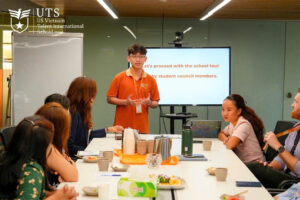
UTS offers personalized learning pathways aligned with global academic standards
For more information: Overview of UTS High School curriculum
Experienced and dedicated teaching faculty
UTS is proud to have a team of highly qualified local and international teachers, passionate about bilingual education. International teachers bring modern teaching methods and global perspectives, while Vietnamese teachers ensure students maintain a strong cultural identity, native language skills, and academic foundation.

The teaching staff at UTS is highly experienced
Many UTS teachers are experienced in delivering recognized programs such as Common Core, Oxford, GCSEs, and A-Levels (OxfordAQA), using effective methods such as project-based learning, real-world application, and skill development.
State-of-the-Art facilities that inspire learning
UTS is equipped with internationally standardized facilities designed to support holistic student development—academically, physically, and socially. Facilities include tech-integrated classrooms, modern science labs, bilingual library, art and music studios, multi-sport complex. These spaces promote active learning, creativity, and personal growth
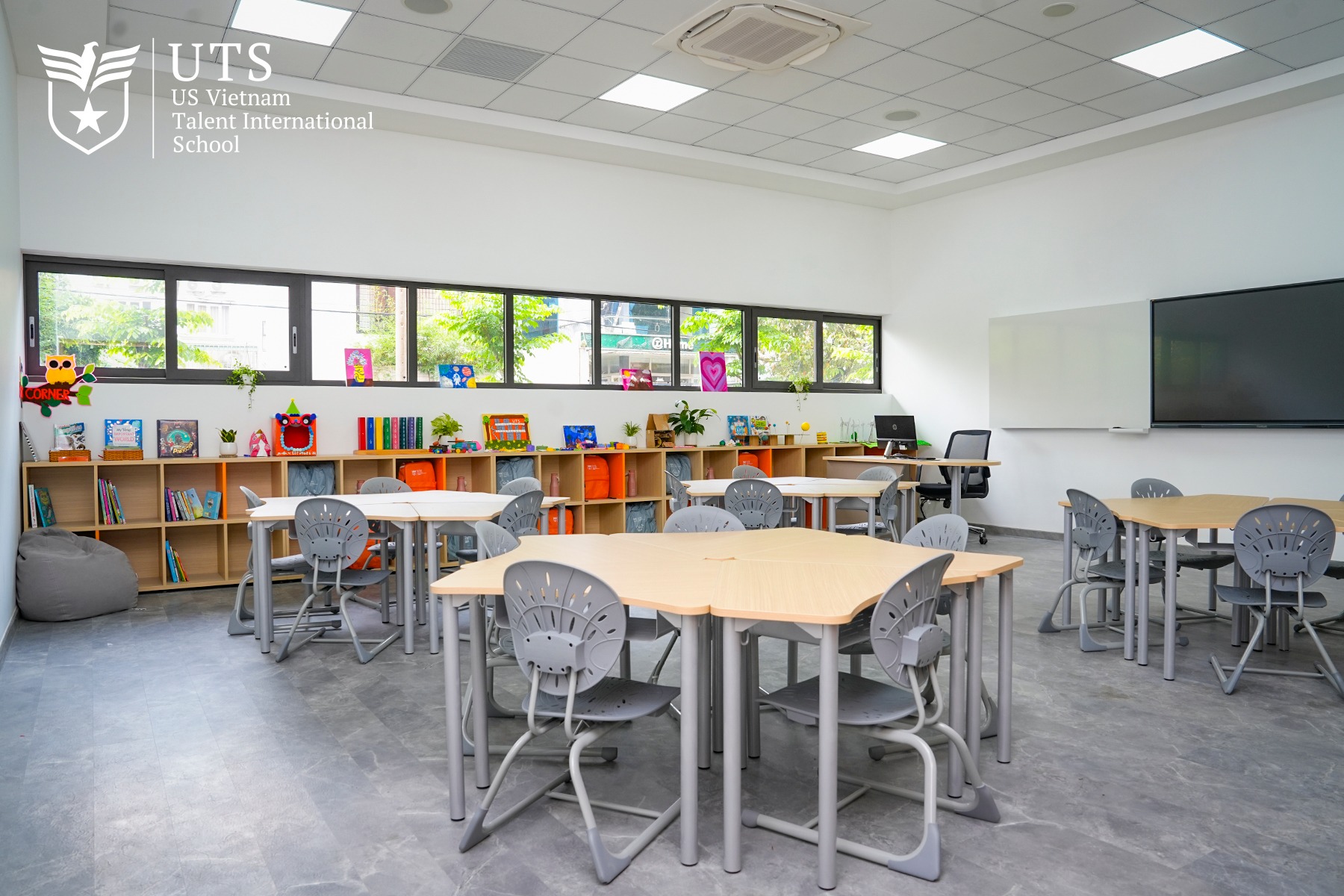
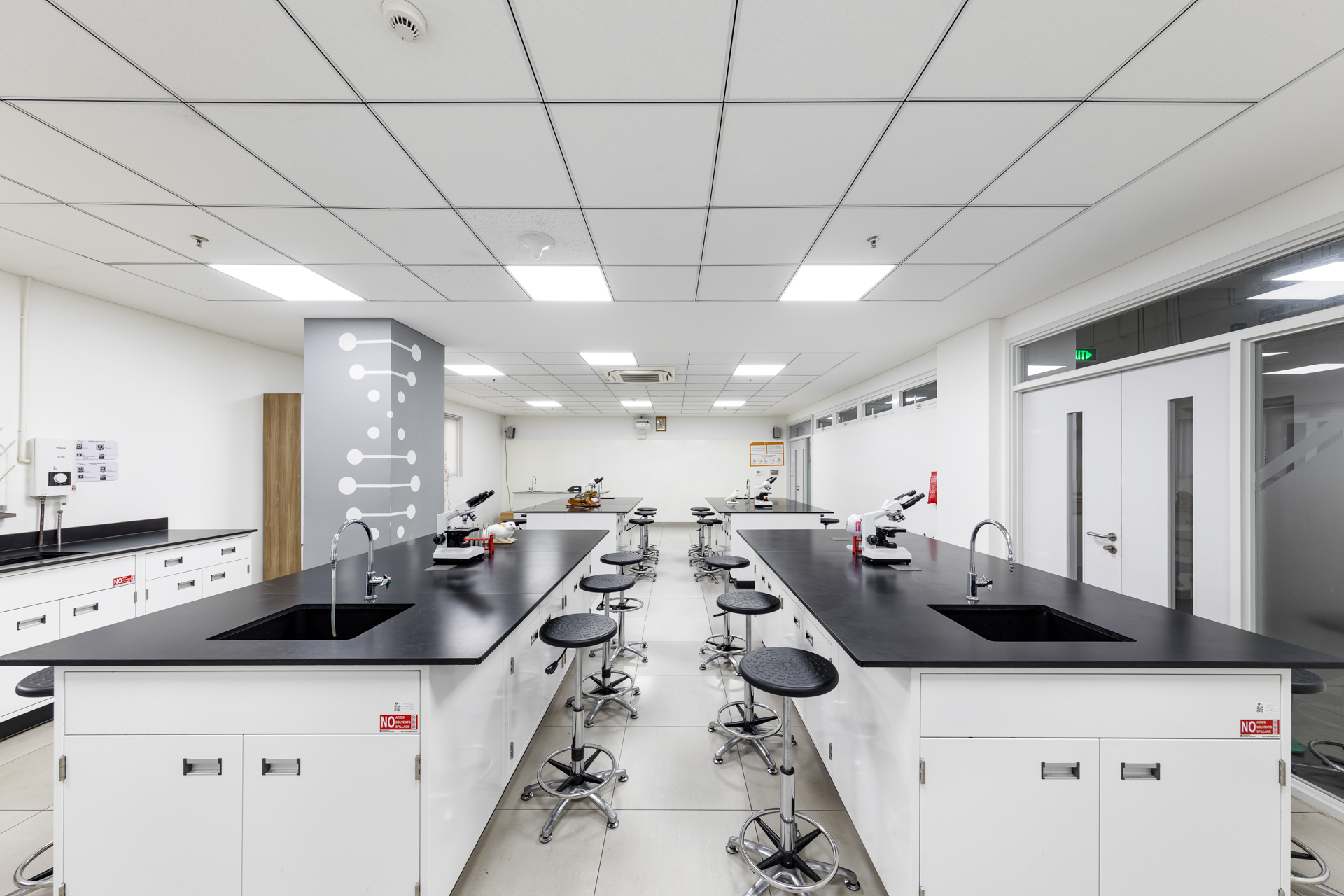
Classrooms are fully equipped with modern facilities
For more information: UTS campus & facilities
Frequently Asked Questions About UTS High School Admissions
What are the criteria for UTS’s high school entrance exam?
The entrance exam is a vital part of the admissions process, ensuring that students have the academic foundation needed to succeed in UTS’s integrated bilingual program.
- Grade 10: Selection is based on lower secondary graduation results (Math & Vietnamese Literature), plus an English placement test covering all four skills: Listening, Speaking, Reading, and Writing. Total test time: 2–2.5 hours.
- Grades 11 & 12: Students will take assessments in Math, Vietnamese Literature, and English (4 skills). Total duration: 4.5–5 hours.
Can students retake the entrance exam if they don’t pass?
Passing the entrance exam is required for official enrollment. If a student doesn’t meet the requirements in the first attempt, the school will inform parents of the subjects that need improvement.
Students will be given time for self-review and can reschedule the test when ready. If the student passes some sections, only the remaining subjects need to be retaken.
Your child’s international future begins at UTS High School
Applying for high school at a bilingual international school like UTS is a transformational step—laying the foundation for academic growth, personal development, and global university opportunities.
Parents and students are encouraged to research programs, international pathways, and standardized tests early, while also taking advantage of UTS’s strong support system for career orientation and university admissions. Choosing the right learning environment in high school is a powerful investment in a bright and boundless future.
For more information or admissions counseling, please visit HERE or contact us at 028 710 78887.
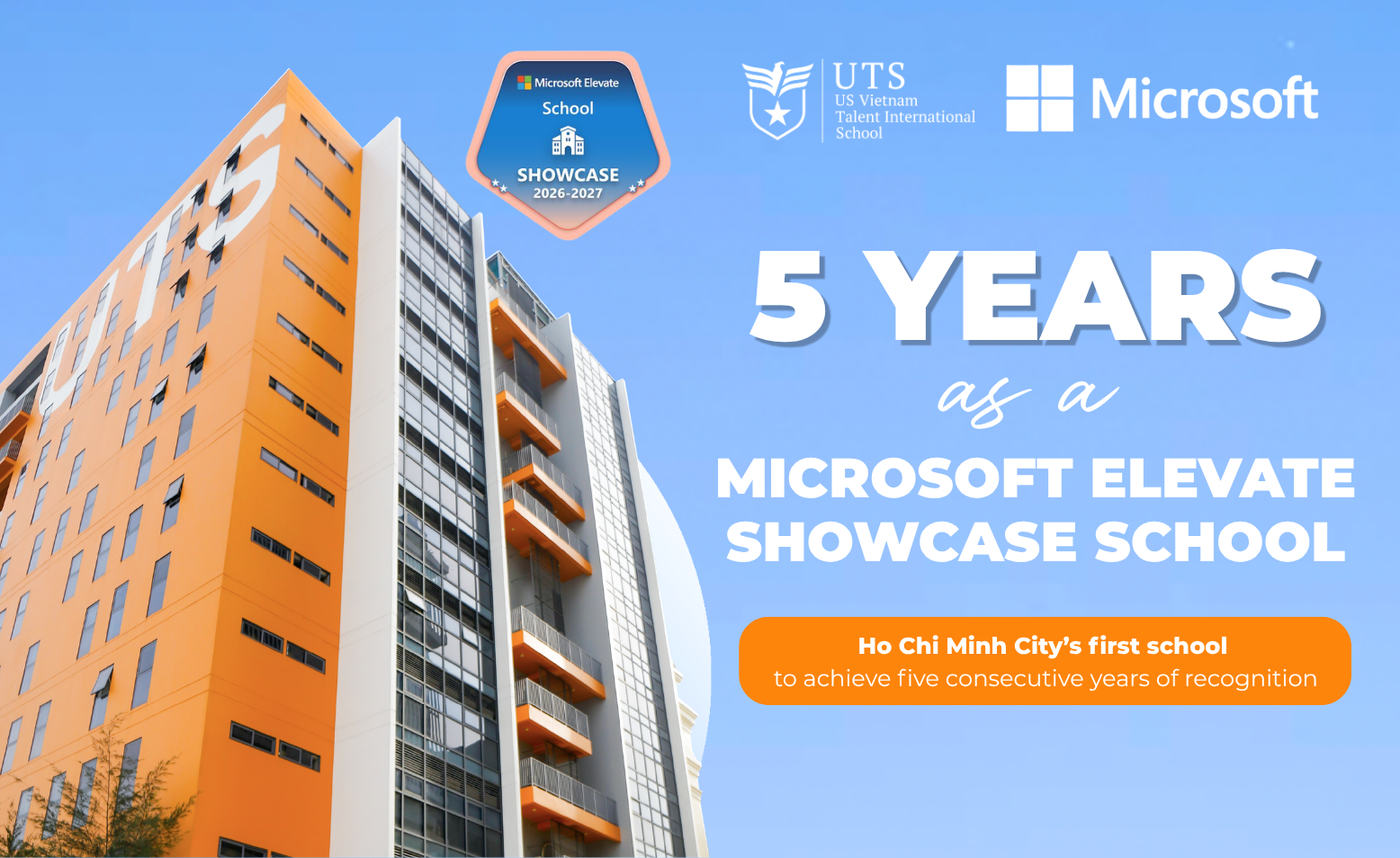
UTS Marks Five Consecutive Years as a Microsoft Showcase School
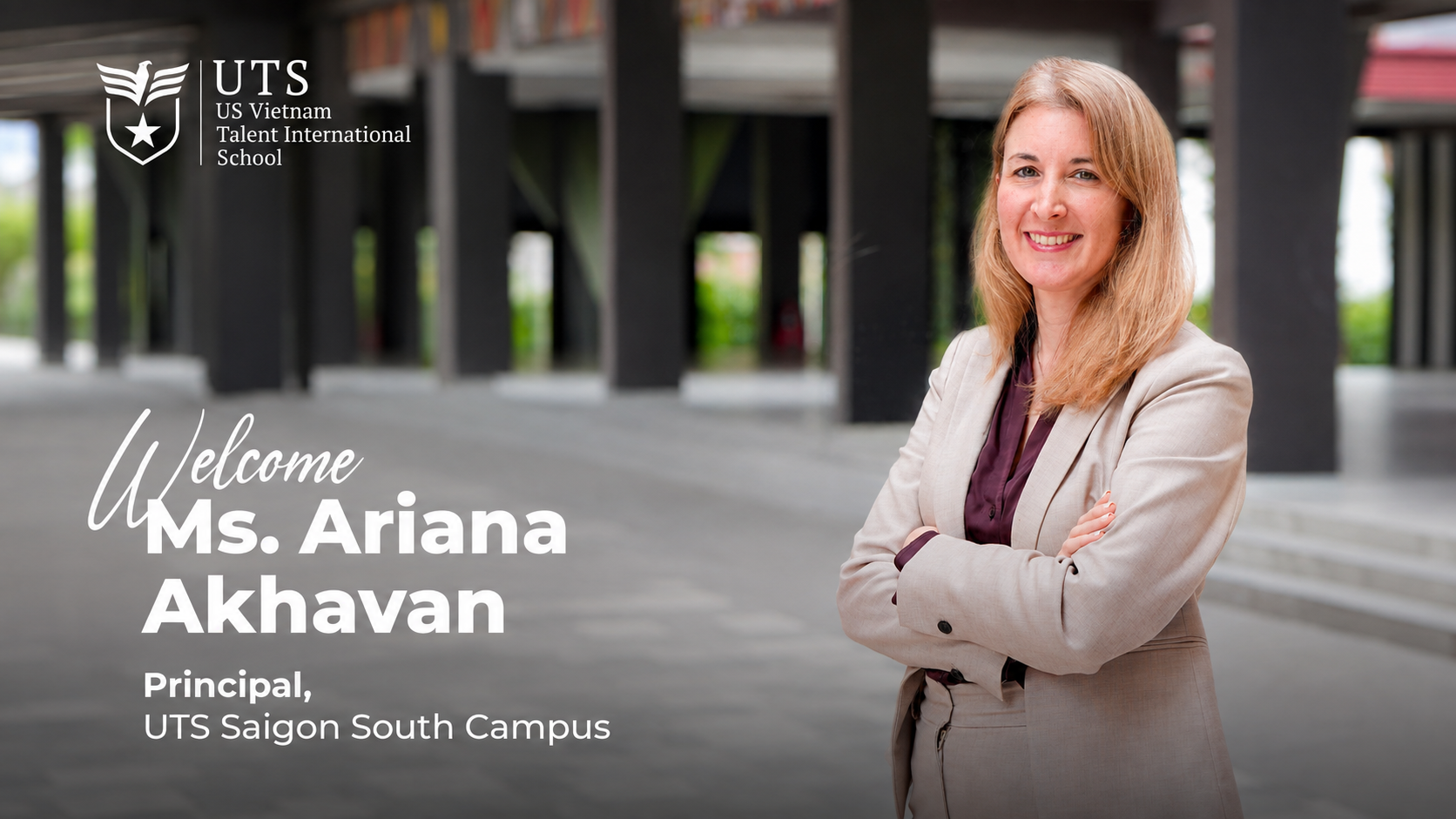
Welcoming Ms. Ariana Akhavan – Principal of UTS Saigon South Campus

Back to School 2026 – 2027: Ready to Grow, Lead and Make a Meaningful Impact at UTS
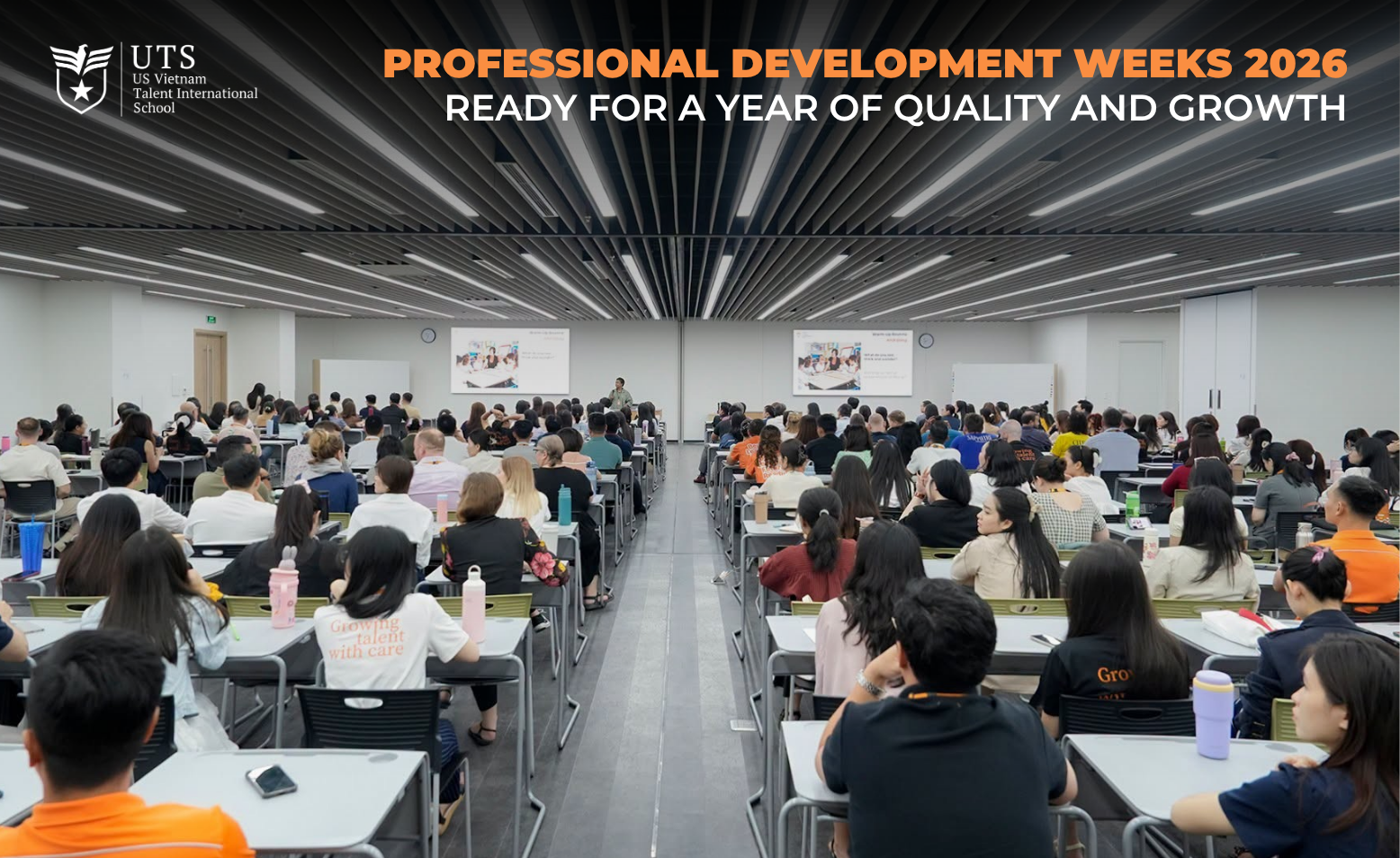
Professional Development Weeks 2026: Ready for a year of quality and growth